FPV Drones: A Drone Pilot’s Guide to First-Person View Flying
BY Zacc Dukowitz
11 June 2026When most people first hear about FPV drones, they see videos of drones diving down mountains, racing through abandoned buildings, or weaving through forests at high speed.
But what they may not realize is that FPV isn’t a specific drone. It’s a different way of flying.
Instead of watching your drone from the ground, you wear goggles that show a live video feed from an onboard camera. The result feels less like piloting a drone and more like sitting inside one.
That’s part of what makes FPV so addictive. It creates a level of immersion that traditional drones just can’t match.
But getting started can be hard. There are several types of FPV drones—including a lot of DIY setups—multiple video systems, specialized gear, and a learning curve that’s very different from flying an off-the-shelf drone for the first time.
This guide covers what FPV drones are, how they work, the best options on the market, and advice on how to get started.
Here’s everything we cover:
- What Is an FPV Drone?
- The Top 5 FPV Drones on the Market
- FPV Drones vs. Regular Drones
- Common Types of FPV Flying
- Learning FPV: What the First Few Months Look Like
- FPV Drones FAQ
What Is an FPV Drone?
FPV stands for First Person View.
In FPV flying, the pilot sees what the drone’s camera sees in real time, usually through a pair of goggles. Instead of watching the drone from the ground and occasionally glancing at a phone screen, you’re flying from the drone’s perspective.
In practice, that can look like this:

For many pilots, flying FPV is thrilling because it feels like you’re literally inside the drone, flying along with it.
You’re banking through turns, diving terrain, following moving subjects, and reacting to the environment as if you’re actually onboard—so much so that it can be tempting to move your body and react to the things in your path.
And that’s why FPV videos look so different from footage captured by a traditional camera drone. The movements are faster, more dynamic, and often much closer to obstacles than what you’d typically see from a GPS-assisted drone.
Why People Love FPV
Most drone pilots remember their first successful FPV flight.
Not because the footage was amazing, but because the experience felt different from anything they’d done with a traditional drone.
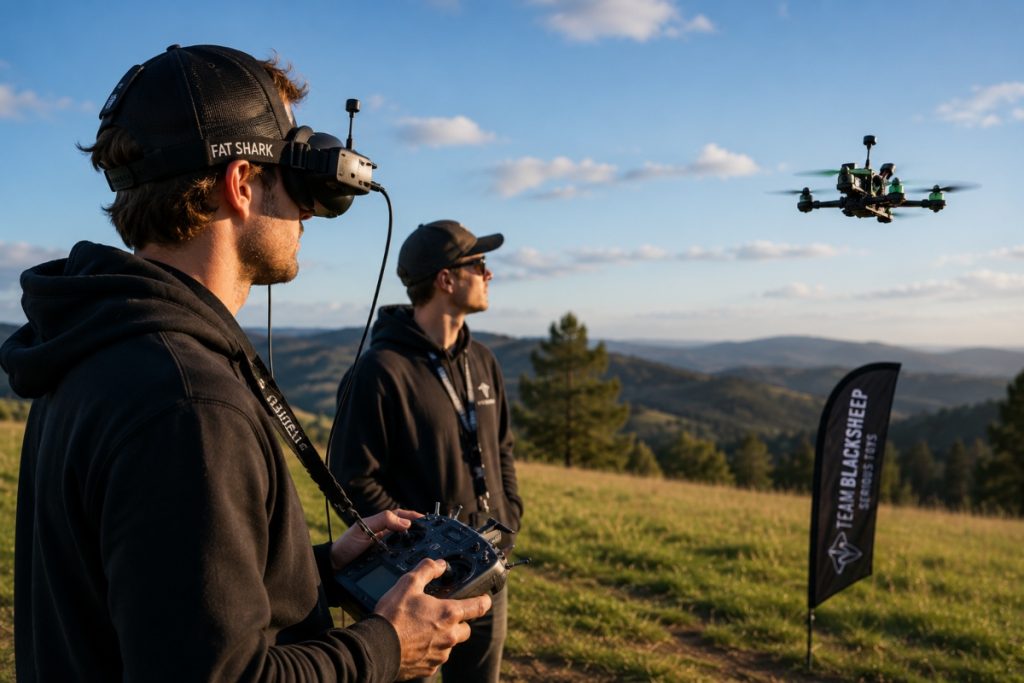
FPV combines elements of aviation, gaming, filmmaking, engineering, and outdoor adventure into a single hobby.
Some pilots enjoy the challenge of manual flight. Others enjoy building and repairing aircraft. Some are drawn to racing, while others simply want to explore landscapes from a completely new perspective.
And there is also a strong community element to FPV.
Local flying groups, online forums, races, freestyle meetups, and simulator communities have become an important part of the hobby. Many pilots who initially buy an FPV drone for the technology end up staying because of the people they meet and the skills they develop along the way.
An FPV Drone Is Actually a System
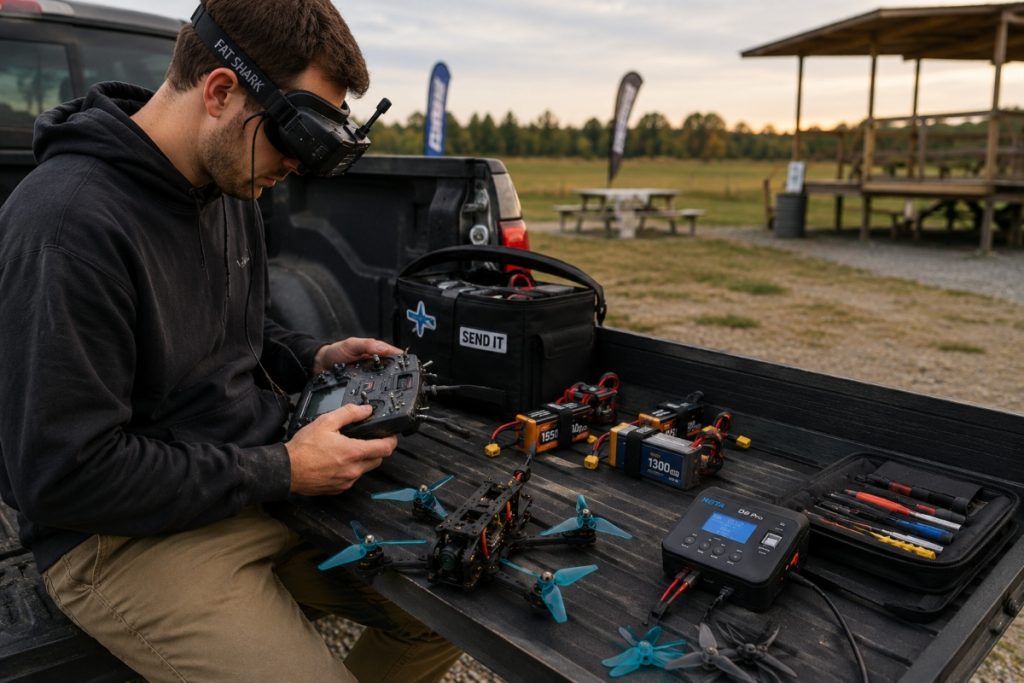
One thing that surprises beginners is that an FPV setup usually involves more than just a drone.
Unlike most consumer camera drones, FPV systems are made of several components working together:
| Component | What It Does |
|---|---|
| FPV Drone | The aircraft itself |
| FPV Goggles | Show the live video feed from the drone |
| Radio Controller | Controls the aircraft |
| Batteries & Charger | Power the drone and support multiple flights |
| Video System | Transmits video from the drone to the goggles |
Unlike a camera drone, you’ll often upgrade or replace individual components over time rather than replacing the entire system.
The good news is that you don’t need to become an electronics expert to get started. Many modern FPV kits come with most of the required components, making the learning process much simpler than it used to be.
The Top 5 FPV Drones on the Market
Here are some of the most popular FPV drones on the market, with their type and target use cases listed to help you find what you’re looking for.
Note: These FPV drones are listed in no particular order.
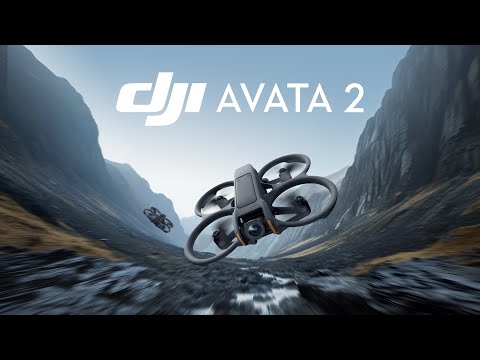
1. DJI Avata 2
Type: Cinewhoop FPV Drone
The DJI Avata 2 is one of the easiest ways to get started with FPV flying.
Unlike traditional FPV drones, which can require pilots to assemble the drone and learn manual flight controls, the Avata 2 is a complete system with integrated goggles, safety features, and beginner-friendly flight modes. And that makes it a popular option for drone pilots who want the FPV experience without the complexity often associated with the hobby.
Key Specs:
- Flight time. Up to 23 minutes
- Camera. 4K video up to 100 fps
- Video system. DJI O4 transmission
- Integrated propeller guards. Yes
- Beginner flight modes. Yes
See pricing for the DJI Avata 2.
2. DJI FPV

Type: Hybrid FPV Drone
The DJI FPV sits somewhere between a traditional camera drone and a dedicated FPV drone.
It offers a more immersive flying experience than a typical camera drone while retaining many of the safety features and conveniences DJI pilots are accustomed to.
It’s a little older now, but for pilots who want to experiment with FPV without fully committing to the traditional FPV ecosystem, it’s still a solid option.
Key Specs:
- Flight time. Up to 20 minutes
- Top speed. Up to 87 mph (140 kph) in Manual Mode
- Camera. 4K video up to 60 fps
- Emergency brake and hover. Yes
- Integrated video system. Yes
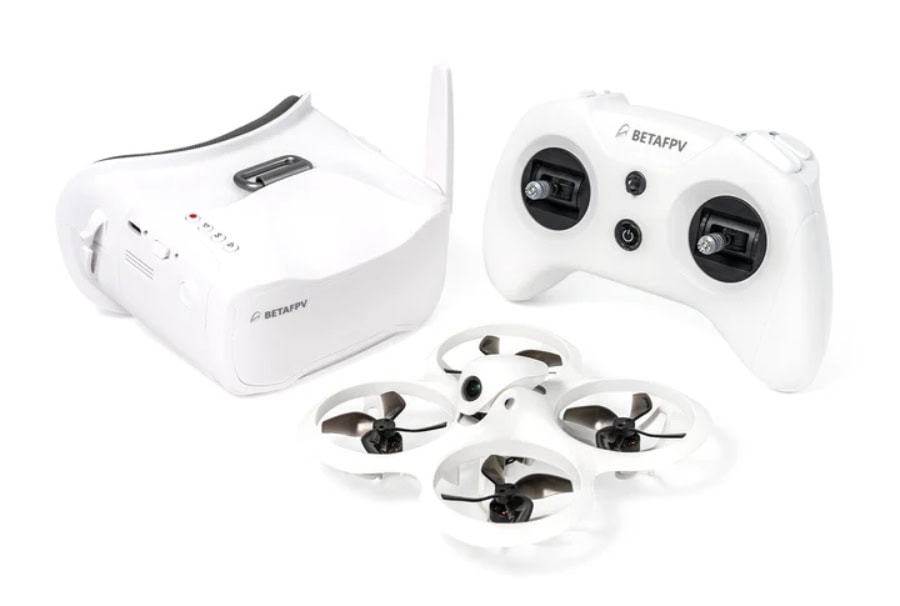
3. BetaFPV Cetus X Kit
Credit: BetaFPV
Type: Beginner FPV Kit
The Cetus X kit is designed specifically for people who are new to FPV.
It includes the drone, controller, goggles, batteries, and charger, eliminating much of the complexity that can make FPV difficult for beginners.
For someone who wants an affordable entry point into FPV flying, it’s one of the most accessible options available.
Key Specs:
- Drone included. Yes
- Controller included. Yes
- Goggles included. Yes
- Flight modes. Multiple beginner-friendly modes
- Ready to fly. Yes
See pricing for the BetaFPV Cetus X Kit.
4. EMAX Tinyhawk III

Type: Tiny Whoop FPV Drone
The Tinyhawk series has become one of the most recognizable names in beginner FPV.
The Tinyhawk III is small, durable, and relatively forgiving, making it a strong choice for pilots who want to build skills without worrying about damaging a larger aircraft. And its size also allows for flying in spaces that would be unsuitable for larger FPV drones.
Key Specs:
- Drone size. Tiny whoop class
- Indoor capable. Yes
- Beginner friendly. Yes
- Durability. High for its size
- Repairability. Good
See pricing for the EMAX Tinyhawk III.
5. iFlight Nazgul Evoque F5

Type: Freestyle FPV Drone
The Nazgul Evoque F5 is one of the most popular freestyle FPV drones available today.
Designed for experienced pilots, it offers the speed, responsiveness, and durability needed for aggressive freestyle flying while remaining capable of capturing high-quality cinematic footage.
It’s often recommended once pilots have moved beyond beginner platforms and are ready for a more capable aircraft.
Key Specs:
- Frame size. 5-inch freestyle platform
- Flight style. Manual and freestyle focused
- Action camera compatible. Yes
- Repairability. Excellent
- Pilot level. Intermediate to advanced
See pricing for the iFlight Nazgul Evoque F5.
FPV Drones vs. Regular Drones
One of the easiest ways to understand FPV is to compare it to the drones most people already know.
If you’ve flown a DJI Mini or similar camera drone, many of the assumptions you have about flying won’t apply to FPV.
Here’s an overview of the key differences:
| Category | FPV Drone | Traditional Camera Drone |
|---|---|---|
| Primary Goal | Immersive flying experience | Aerial photography and video |
| Flight Style | Manual, pilot-controlled | GPS-assisted and highly automated |
| Camera Movement | Fixed camera that moves with the aircraft | Stabilized gimbal keeps footage level |
| Learning Curve | Steeper; simulator training is common | Generally beginner-friendly |
| Crashes | Expected part of the learning process | Less common during normal operation |
| Maintenance | Often involves repairs and replacement parts | Usually minimal |
| Best For | Freestyle, racing, cinematic fly-throughs, and pilots who enjoy flying itself | Photography, inspections, mapping, real estate, and travel content |
Among all these differences, the three big ones are: how the drone is controlled, how its camera moves (or doesn’t), and the learning curve required to get proficient.
Here’s more information on each of these three differences:
1. Control: Manual Flying vs. GPS-Assisted Flying
Most consumer camera drones are built to make flying easier.
GPS positioning, obstacle sensing, automatic hovering, return-to-home functions, and flight stabilization help the drone stay stable, even if the pilot makes mistakes.
In contrast, FPV drones can actually be fairly hard to fly.
Many FPV pilots like to fly in what’s commonly called Manual Mode (sometimes called Acro Mode), where the drone doesn’t automatically level itself.
In this mode, the drone pilot controls every bank, pitch, roll, and turn. That gives you a lot of freedom, but it also makes flying more challenging, which is why crashing a lot is typically part of learning how to fly FPV.
2. Camera Movement: Fixed Camera vs. Stabilized Gimbal
A traditional camera drone is designed to keep footage smooth. Even when the drone tilts or changes direction, the gimbal works to keep the camera level and stable.
But FPV drones typically use fixed cameras that tilt with the aircraft.
As a result, the pilot—and the viewer of FPV footage—will actually see the drone banking into turns, diving terrain, and accelerating through gaps.
This makes the footage feel more dynamic, because the camera reflects what the aircraft is actually doing. And that’s why FPV footage is commonly used to capture high-energy, immersive activities—things like action sports, cinematic fly-throughs, or even chase sequences in movies.

3. Learning Curve, Crashes, and Repairs
A beginner flying a camera drone can often take usable footage on the first day.
FPV usually takes a lot longer, and can involve a lot of crashing until you develop solid skills. This is also why a lot of FPV pilots spend time with simulators to build up their pilot chops.
Experienced FPV pilots generally view crashing as normal, and just part of learning.
In fact, many of them say that learning to recover from mistakes is part of what makes FPV so fun and rewarding. Because there’s a real risk of crashing, pulling off a fast, tricky flight can give you a real sense of accomplishment.
When a Camera Drone Is the Better Choice
FPV isn’t automatically the right choice for every pilot.
If your primary goal is to do work—things like aerial photography, real estate work, inspections, or mapping— a traditional camera drone is probably the better tool.
These drones are easier to learn, require less maintenance, and typically produce more stable footage with less effort.
For FPV, the flying experience itself is part of the goal.
Common Types of FPV Flying
One of the biggest misconceptions about FPV is that it’s a single activity.
In reality, FPV is more like a collection of related flying disciplines.
Some pilots spend their weekends practicing tricks in local parks. Others race through gates at high speed. Some use FPV to film real estate walkthroughs and commercial videos, while others explore mountains and remote landscapes.
Also, the type of drone you want often changes depending on the type of FPV flying you want to do.
Here’s a quick overview:
| Type of FPV Flying | Primary Goal | Typical Aircraft | Good Beginner Path? |
|---|---|---|---|
| Learning & Close-Proximity FPV | Build skills and capture immersive footage in tight spaces | Tiny whoops, cinewhoops | Yes |
| Freestyle FPV | Creative flying and aerial tricks | Freestyle quad | Eventually |
| Racing FPV | Speed and competition | Racing quad | No |
| Long-Range FPV | Exploration and scenic flights | Long-range build | No |
1. Learning and Close-Proximity FPV
Best for: New pilots, indoor flying, and capturing immersive footage in places where larger drones don’t work well.
This is where many FPV pilots begin.
Learning and close-proximity FPV focuses on developing control skills while flying in smaller, lower-risk environments. It also includes many of the commercial applications people associate with modern cinematic FPV, such as real estate fly-throughs and indoor tours.
Tiny Whoops
Tiny whoops are small, lightweight FPV drones that are inexpensive, durable, and surprisingly fun to fly. Because crashes are usually low consequence, they’re one of the best ways to learn Manual Mode and build confidence.
Many experienced FPV pilots still fly tiny whoops regularly, even after moving on to larger aircraft.
Common use cases:
- Indoor flying
- Backyard practice
- Learning Manual Mode
- Winter flying sessions
Cinewhoops
Cinewhoops are designed for controlled, cinematic flying around people, buildings, vehicles, and other obstacles. They typically use ducted propellers and prioritize smooth footage over aggressive performance.
Many of the real estate fly-throughs, hotel tours, event videos, and commercial FPV projects you see online are filmed with cinewhoops.
Common use cases:
- Real estate fly-throughs
- Hotel, resort, and venue tours
- Event coverage
- Commercial marketing videos
2. Freestyle FPV
Best for: Pilots who enjoy trick flying for the pure fun of it.
Freestyle is the style of FPV most people recognize from YouTube and social media. It’s built around creativity, precision, and pushing your flying skills rather than reaching a destination or capturing a specific shot.

Freestyle pilots perform dives, flips, power loops, split-S maneuvers, and countless other tricks while creating smooth, flowing flight paths through the environment.
For many people, freestyle becomes the heart of the FPV hobby because every flight is an opportunity to improve.
Common use cases:
- Freestyle tricks and acrobatics
- Park flying
- Bando flying
- Action-sports footage
- Skill development and practice
3. Racing FPV
Best for: Pilots who love competition, speed, and precision.
Racing FPV strips away almost everything except performance. The goal is simple: get through a course as quickly as possible while maintaining complete control of the aircraft.
Racing drones are optimized for acceleration, responsiveness, and cornering speed. The skills developed through racing often translate into stronger overall stick control, even for pilots who later focus on other styles of FPV flying.
Common use cases:
- Organized drone races
- Practice gate courses
- Time trials
- High-speed skill development
4. Long-Range FPV
Best for: Exploring landscapes and experiencing places from a perspective few people ever see.
Long-range FPV focuses on covering distance rather than performing tricks or racing through courses. Pilots often fly along mountain ridgelines, coastlines, canyons, and other remote locations while capturing expansive scenery.
Some of the most breathtaking FPV videos online come from long-range flights. But they also require careful planning, specialized equipment, and a strong understanding of risk management.

For most pilots, long-range flying is something they grow into after developing solid foundational skills.
Common use cases:
- Mountain surfing
- Remote exploration
- Scenic landscape footage
- Adventure and travel flying
Learning FPV: What the First Few Months Look Like
Most FPV pilots learn the same way: simulator time, beginner mistakes, crashes, and a lot of practice.
The good news is that there is a fairly predictable path from your first simulator session to flying confidently in the real world.
Here are four tips to help you get started:
1. Start With a Simulator
If experienced FPV pilots could give every beginner one piece of advice, it would probably be this: spend time in a simulator first.
FPV drone simulators let you practice takeoffs, turns, landings, recovery techniques, and manual flight without risking real equipment.
The goal isn’t to become an expert before flying outdoors. The goal is to develop enough muscle memory that your first real flights feel familiar instead of overwhelming.
Many pilots save hundreds of dollars in repair costs simply by learning the basics in a simulator before flying a real drone.
2. Focus on Control Before Tricks
Most new pilots focus too much on tricks and not enough on fundamentals.
The first goal shouldn’t be flips, dives, power loops, or cinematic mountain runs. The first goal should be smooth control.
Practice maintaining altitude. Practice coordinated turns. Practice flying predictable lines and returning to the same spot consistently.
These skills may not look impressive, but they create the foundation for everything that comes later.
In practice, the pilots who progress fastest are usually the ones who spend time mastering the basics before chasing advanced maneuvers.
[Just getting started? Check out our guide to learning how to fly a drone.]
3. Start Small and Expect Mistakes
When it’s time to fly a real drone, resist the temptation to buy the biggest or fastest one you can afford.
A small, solid platform gives you room to make mistakes while keeping repair costs manageable. That’s one reason tiny whoops and beginner-friendly FPV kits remain popular recommendations year after year.
And remember, crashes are a normal part of the learning process. Most experienced pilots have broken propellers, repaired frames, and spent time searching for crashed drones in tall grass.
4. Learn in Open Spaces and Let Your Interests Guide You
Your first successful flights will probably look boring to experienced pilots. That’s fine!
Wide-open fields and other low-risk environments give you room to build confidence without constantly worrying about obstacles.
As your skills improve, you’ll start discovering what you enjoy most about FPV.
Some pilots gravitate toward freestyle flying. Others become interested in racing, cinematic work, long-range exploration, or building their own aircraft.
There’s no need to decide all of that upfront. Just spent time flying, getting comfortable in the air, and seeing what you like.
Safety Tips Before Your First FPV Flight
FPV flying is a lot of fun, but it comes with a few challenges that traditional camera drone pilots may not be used to.
Because you’re focused on the view through your goggles, it’s easier to miss things happening around the aircraft itself. That’s one reason experienced FPV pilots place so much emphasis on safe flying practices.
Keep these safety tips in mind:
- Start in a large, open area. Your first flights don’t need dramatic scenery. Open fields give you room to make mistakes and focus on building control skills.
- Understand the visual observer requirement. In the United States, FPV drone operations generally require the drone to remain within visual line of sight. Many FPV pilots satisfy this requirement by flying with a visual observer. Make sure to review the FAA’s recreational flying rules before flying. Also, check out guidance from organizations like the FPV Freedom Coalition for FPV-specific considerations.
- Don’t rush into long-range flying. The mountain-diving videos on YouTube are impressive, but long-range FPV requires additional equipment, planning, and experience. Most pilots build toward it over time.
- Treat safety as part of the hobby. The best FPV pilots aren’t just skilled drone pilots. They’re good decision-makers who know when, where, and how to fly responsibly.
FPV Drones FAQ
Here are answers to some of the most commonly asked questions about FPV drones and flying FPV.
What does FPV mean in drones?
FPV stands for First Person View. It refers to flying a drone using a live video feed from the aircraft’s camera, typically viewed through goggles.
Are FPV drones harder to fly than regular drones?
In most cases, yes. FPV drones often require more manual control and have fewer automated flight aids than traditional camera drones. However, simulators and beginner-friendly equipment can make the learning process much easier.
Can beginners learn FPV?
Absolutely! Many FPV pilots start with no prior RC or aviation experience. The key is to begin with realistic expectations, spend time in a simulator, and progress gradually.
How much does it cost to get into FPV?
Big picture, the cost varies significantly depending on the equipment you choose. A beginner setup typically includes a drone, goggles, controller, batteries, and a charger, making FPV more expensive than simply buying a drone alone.
But many beginners can get started for a few hundred dollars, while more advanced digital FPV setups can cost well over $1,000.
Do FPV drones take better video than regular drones?
Not necessarily. Traditional camera drones often produce smoother footage straight out of the aircraft because they use stabilized gimbals. FPV drones excel at capturing dynamic movements and perspectives that are difficult to achieve with conventional drones.
Do you need goggles to fly FPV?
Most FPV pilots use goggles because they provide the immersive experience that defines FPV flying. Some systems can also display the video feed on monitors or screens.
Can you make money flying FPV drones?
Some pilots earn income through cinematic filming, event coverage, commercial video production, inspections, and other specialized services. Like any drone niche, success depends on skill, experience, market demand, and compliance with applicable regulations.