Commercial Drones: Types, Uses, Top Models & More
BY Zacc Dukowitz
23 July 2026Commercial drones—also called professional drones—are high-quality, industrial tools used for a wide range of work.
When it comes to defining what a commercial drone is, how a drone is used is as important as the drone’s specs and design.
A small drone used for real estate photography, a thermal drone used for utility inspections, and an autonomous drone monitoring an oil refinery are all commercial drones.
Whether it’s capturing images, collecting measurements, inspecting equipment, or supporting emergency response, these drones are chosen based on the specific job they need to perform.
As drone technology has matured, organizations across nearly every industry are using commercial drones to collect better data, improve safety, and make faster decisions.
In this guide, we’ll go over what commercial drones are in more detail, the top models on the market, how to become a commercial drone pilot, and more.
Here’s everything we cover:
- What Are Commercial Drones?
- The Top Commercial Drones on the Market
- 9 Common Ways Commercial Drones Are Used
- Types of Commercial Drones
- Commercial Drone Operations
- 4 Commercial Drone Features That Matter
- How to Choose a Commercial Drone
- Commercial Drones FAQ
What Are Commercial Drones?
Commercial drones are uncrewed aircraft used by businesses, government agencies, and other organizations to collect data, improve workflows, and complete work more safely and efficiently.
They support everything from bridge inspections and land surveys to crop monitoring, emergency response, and infrastructure management.
But the biggest difference between consumer and commercial drones isn’t the drone itself. It’s the workflow built around the drone.
A commercial drone program typically includes much more than the aircraft itself, including:
- Specialized payloads, including thermal cameras, LiDAR scanners, multispectral sensors, and zoom cameras
- Longer flight times and greater reliability for routine operations
- Automated flight planning and repeatable mission execution
- Software for mapping, inspections, reporting, and asset management
- Standardized data collection processes that produce consistent results over time
Commercial vs. Consumer Drones
Consumer drones are designed primarily for personal use in activities like aerial photography or flying for fun.
And many consumer drones now include advanced features like impressive cameras, obstacle avoidance, and automated flight features.
Commercial drones, on the other hand, are built around specific operational needs.
That may include carrying specialized payloads to capture specific types of data, integrating with mapping software, operating in challenging environments, or supporting repeatable missions across a large area.
For example, a real estate photographer may be able to complete a job with a high-end consumer drone, because all they need are high-quality images and video. But a utility company inspecting transmission lines may need a drone with specific features like thermal imaging, zoom capability, and compatible software designed for asset management.
The right choice depends less on whether a drone is labeled “commercial” and more on if it can reliably complete the work you need it to do.
The Top Commercial Drones on the Market
There isn’t one single “best” commercial drone. That’s because different drones are made for different types of work.
A drone built for inspecting industrial equipment has different requirements from one designed for mapping large areas, or for supporting emergency response.
The commercial drones below represent some of today’s leading platforms across the major enterprise categories, from industrial inspections and surveying to public safety and autonomous operations.
Rather than ranking these platforms from best to worst, we’ve selected representative drones that excel in different commercial applications.
1. DJI Matrice 400

Best for: Enterprise Industrial Operations
The DJI Matrice 400 represents the larger enterprise drone category, where operators need longer flight times, heavier payload support, and the ability to carry advanced sensors. Platforms in this class are commonly used for infrastructure inspection, utilities, public safety, and industrial data collection.
For organizations building repeatable drone programs, the Matrice 400 is designed around more than individual flights. It supports workflows where aerial data becomes part of inspection, maintenance, and operational decision-making.
2. WingtraOne II
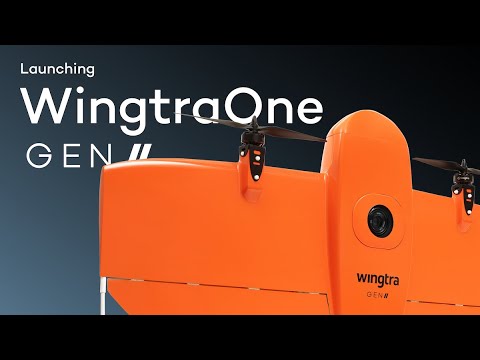
Best for: Surveying and Mapping
The WingtraOne II represents the fixed-wing VTOL category of commercial drones, combining vertical takeoff and landing capability with efficient flight over large areas. This makes it suited for surveying, mapping, and other projects where covering significant terrain matters.
Compared with smaller multirotor drones, fixed-wing platforms are often better suited for large-area data collection because they can typically cover more ground per flight.
3. Skydio X10

Best for: Autonomous Enterprise and Public Safety Operations
The Skydio X10 is built around autonomous flight capabilities, including advanced obstacle avoidance and automated workflows. It’s used by organizations that need repeatable missions in complex environments, including public safety agencies, infrastructure teams, and inspection operators.
For these operators, autonomy can help reduce pilot workload and make it easier to collect consistent data across repeated missions.
4. BRINC Responder
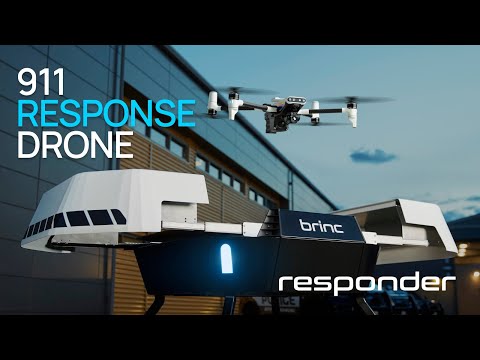
Best for: Public Safety / Drone as First Responder
The BRINC Responder is a commercial drone designed specifically for emergency response applications, including Drone as First Responder (DFR) programs. Unlike general-purpose enterprise drones, it’s built around the operational needs of law enforcement and public safety teams.
Features like two-way communication and purpose-built response capabilities make systems like this an example of how some commercial drones are designed around a single mission rather than a broad range of uses.
5. Flyability’s Elios 3
httpv://www.youtube.com/watch?v==-37jFJx7tdY&list=PLhdfG8lI4JrZpjOPZVs4T8Qy-Rn28CFWFBest for: Confined-Space Inspection
The Flyability Elios 3 is designed for inspections in confined-space environments where traditional drones can struggle, including tanks, tunnels, and other confined areas in industrial facilities. Its protective cage lets you fly close to structures while collecting visual and LiDAR data.
Caged drones like the Elios 3 are useful when the challenge isn’t simply getting a camera into the air, but safely collecting high-quality data in challenging scenarios.
6. Percepto Sparrow

Best for: Continuous Monitoring / Drone-in-a-Box Operations
The Percepto Sparrow represents the drone-in-a-box category, where an aircraft, docking station, and software platform work together to support automated missions. These systems are designed for organizations that need regular monitoring or inspections without sending a pilot to the site for every flight.
Drone-in-a-box platforms are increasingly used for applications like industrial inspections, perimeter monitoring, and asset management at remote or large-scale facilities.
9 Common Ways Commercial Drones Are Used
Commercial drones are used across a growing range of industries, from infrastructure inspections and construction to agriculture and emergency response.
While every organization has different operational needs, the use cases below represent some of the most common ways commercial drones are being used today.

1. Infrastructure Inspection
Infrastructure drone inspection is one of the most mature commercial drone applications.
Utilities, energy companies, transportation agencies, and industrial facilities use drones to inspect assets like bridges, transmission lines, pipelines, cell towers, wind turbines, and storage tanks.
Instead of relying on scaffolding, bucket trucks, rope access, or manual inspections, organizations can collect visual, thermal, and other data remotely, allowing personnel to avoid working in hazardous environments for data collection.
Representative commercial drones:
- DJI Matrice 400
- Flyability Elios 3
How drones support infrastructure inspections:
- Capture repeatable visual, thermal, LiDAR, and other data
- Reduce time spent inspecting large assets
- Improve worker safety by limiting work at height or in confined spaces
- Create digital inspection records for long-term asset management
2. Surveying and Mapping
Commercial drones have transformed surveying and mapping by letting operators collect accurate aerial imagery over large areas in a fraction of the time required by traditional methods.
These datasets can be processed into orthomosaics, digital elevation models, and 3D reconstructions for engineering, mining, land development, and infrastructure projects.
For mapping missions, positioning accuracy and workflow integration are often more important than camera resolution alone.
Representative commercial drones:
- WingtraOne II
- DJI Matrice 4E
How drones support surveying and mapping:
- Cover large areas quickly
- Produce accurate geospatial datasets
- Create 2D maps and 3D models
- Reduce field time compared to traditional surveying methods
3. Construction
Construction companies use drones throughout the lifecycle of a project, from pre-construction planning to final documentation.
Regular flights provide a consistent aerial record that helps project teams monitor progress, communicate with stakeholders, and compare actual work against design plans.
Representative commercial drones:
- DJI Matrice 400
- DJI Matrice 4E
How drones support construction:
- Document project progress
- Create site maps and 3D models
- Measure stockpiles and earthwork
- Improve communication across project teams
4. Public Safety
Police, fire departments, and emergency management agencies use commercial drones to improve situational awareness during incidents.
Live aerial video can help responders assess hazards, locate missing people, monitor wildfires, or evaluate disaster damage before personnel enter potentially dangerous areas.
Many agencies are also deploying Drone as First Responder (DFR) programs, where drones launch automatically to provide aerial intelligence while responders are still en route.
Representative commercial drones:
- Skydio X10
- BRINC Responder
How drones support public safety:
- Provide rapid aerial situational awareness
- Support search and rescue operations
- Improve officer and firefighter safety
- Reduce response times through DFR programs
5. Agriculture
Rather than replacing traditional field scouting, agricultural drones help prioritize where additional attention is needed.
These days, farmers are using specialized multispectral and thermal drone sensors to reveal crop conditions that are difficult to detect from the ground.
Representative commercial drones:
- DJI Mavic 3 Multispectral
- DJI Agras T100
How drones support agriculture:
- Monitor crop health throughout the growing season
- Identify irrigation and drainage issues
- Detect pests and disease earlier
- Support precision farming decisions
6. Security and Perimeter Monitoring
Commercial drones are increasingly used for security, helping monitor large industrial facilities, ports, utilities, and critical infrastructure.
Many security drone programs now use autonomous drone-in-a-box systems that can launch remotely or on a scheduled basis.
Representative commercial drones:
- Percepto Sparrow
- Skydio X10
How drones support security:
- Monitor large facilities more efficiently
- Investigate alarms remotely
- Reduce routine patrol time
- Improve situational awareness during security incidents
7. Mining
Mining companies use drones to map active sites, calculate stockpile volumes, inspect equipment, and monitor environmental conditions. Frequent aerial surveys help operators track changes across large sites while improving the accuracy of operational planning.
Drones also reduce the need for personnel to access hazardous or difficult terrain.
Representative commercial drones:
- WingtraOne II
- DJI Matrice 400
How drones support mining:
- Survey large mine sites efficiently
- Calculate stockpile volumes
- Monitor excavation progress
- Improve safety by reducing field exposure
8. Environmental Monitoring and Conservation
Government agencies, researchers, and conservation organizations use drones to monitor ecosystems, wildlife populations, forests, coastlines, and wetlands. Repeated aerial surveys make it easier to document environmental change while minimizing disturbance to sensitive habitats.
Drones also provide an efficient way to collect data from remote areas that are difficult to access on foot.
Representative commercial drones:
- DJI Matrice 400
- WingtraOne II
How drones support environmental monitoring:
- Track ecosystem changes over time
- Monitor wildlife populations
- Survey remote or protected areas
- Support scientific research and conservation planning
9. Delivery
Drone delivery is one of the fastest-growing commercial applications, although it remains more specialized than many other use cases. Organizations are using drones to transport medical supplies, consumer goods, industrial equipment, and emergency materials where speed or accessibility provides a clear advantage.
As regulations and aircraft capabilities continue to evolve, delivery drones are playing an ever larger role in logistics, healthcare, and remote operations.
Representative commercial drones:
- DJI FlyCart 100
- Zipline P2
How drones support delivery operations:
- Transport supplies to remote locations
- Reduce delivery times for critical shipments
- Improve access during emergencies and disasters
- Support last-mile logistics in selected markets
Types of Commercial Drones
Commercial drones come in several different configurations, and each type is designed for a different kind of work.
Some are optimized for close inspections around infrastructure, while others are built to survey hundreds of acres, inspect confined spaces, or operate autonomously from a remote docking station.
Here’s a quick overview of the main types of commercial drones:
| Drone Type | Best For | Key Advantages | Example Platforms |
|---|---|---|---|
| Enterprise Multirotor | Inspection, construction, utilities, public safety | Versatile, easy to deploy, precise hovering | DJI Matrice 400, DJI Matrice 350 RTK, Skydio X10 |
| Fixed-Wing / VTOL | Surveying, mapping, agriculture | Long flight times, efficient large-area coverage | WingtraOne II |
| Confined-Space Inspection | Tanks, tunnels, boilers, industrial facilities | Operate safely in GPS-denied and enclosed environments | Flyability Elios 3 |
| Drone-in-a-Box Systems | Remote inspections, security, autonomous monitoring | Automated deployment and repeatable missions | Percepto Sparrow, DJI Dock 3 |
Enterprise Multirotor Drones
Enterprise multirotors are the workhorses of the commercial drone industry.
Their ability to hover, maneuver precisely around structures, and carry a wide range of payloads makes them suitable for everything from infrastructure inspections and construction documentation to public safety operations.
Compared with fixed-wings, multirotors typically have shorter flight times but offer much greater flexibility around individual assets.
For organizations inspecting equipment, capturing imagery, or responding quickly to changing conditions, they are often the best all-around choice.
Examples of enterprise multirotors:
- DJI Matrice 400
- DJI Matrice 350 RTK
- Skydio X10
Best for:
- Infrastructure inspections
- Construction documentation
- Utility inspections
- Public safety operations
- General enterprise aerial data collection
Fixed-Wing and VTOL Drones
Fixed-wing drones are designed to cover large areas efficiently.
Instead of hovering like a multirotor, they generate lift through their wings, allowing them to remain airborne longer and survey significantly more ground during a single flight.
Many commercial mapping drones combine fixed-wing efficiency with vertical takeoff and landing (VTOL), eliminating the need for a runway while maintaining the endurance needed for surveying, agriculture, and large-scale infrastructure projects.
Example of fixed-wings and VTOLs:
- WingtraOne II
Best for:
- Surveying and mapping
- Agriculture
- Mining operations
- Large construction projects
- Corridor mapping
Confined-Space Inspection Drones
Some commercial drones are purpose-built for environments where traditional aircraft cannot safely operate.
These systems typically feature protective cages, specialized lighting, LiDAR sensors, and designs that allow them to fly inside tanks, tunnels, boilers, mines, and other enclosed industrial spaces.
Instead of replacing enterprise drones, they solve a different problem: collecting inspection data from locations that are difficult, dangerous, or impossible for conventional drones—or people—to access.
Example of confined-space drones:
- Flyability Elios 3
Best for:
- Tank inspections
- Tunnels and underground infrastructure
- Boilers and pressure vessels
- Confined industrial spaces
- GPS-denied environments
Drone-in-a-Box Systems
Drone-in-a-box (DIAB) systems combine a drone, automated docking station, and software platform into a single autonomous solution.
Rather than requiring a pilot to travel to every flight location, these systems can automatically deploy, recharge, and prepare for the next mission with minimal human involvement.
Drone-in-a-box platforms are increasingly being adopted for security, infrastructure inspections, and Drone as First Responder (DFR) programs, where organizations need repeatable flights and rapid deployment from fixed locations.
Examples of drone-in-a-box systems:
- Percepto Sparrow
- DJI Dock 3 with Matrice 4D/4TD
Best for:
- Remote infrastructure inspections
- Security and perimeter monitoring
- Drone as First Responder (DFR)
- Critical infrastructure
- Scheduled autonomous missions
Commercial Drone Operations
A commercial drone operation is any flight conducted for work, business, or another non-recreational purpose.
This could be anything from a photographer taking aerial images for a client, to a contractor documenting roof damage for an insurance company, to a firefighter using a drone during an emergency response.
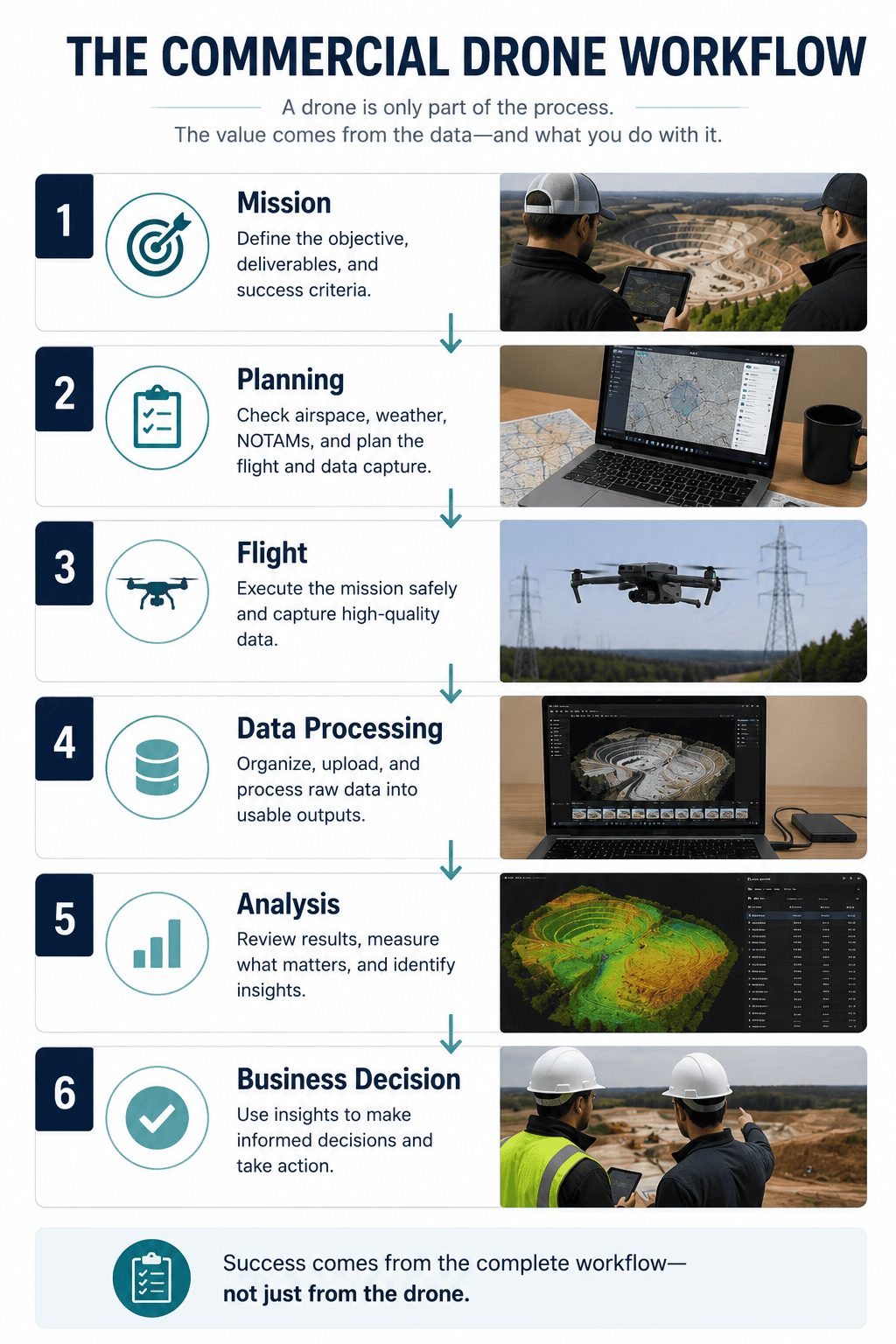
Regardless of the type of work, commercial drone operations usually follow a standard workflow:
The Regulatory Foundation for Commercial Drone Flights
In the U.S., most non-recreational flights with drones weighing less than 55 pounds are conducted under the FAA’s Part 107 rules.
These rules require you to obtain an FAA Remote Pilot Certificate in order to conduct commercial drone operations.
The certificate is tied to the pilot, not to a particular employer or type of work.
The same Part 107 pilot could legally fly for their own photography business, complete an assignment for a national inspection network, or operate a drone for an employer—as long as each flight follows the rules that apply to the operation.
Part 107 requirements include:
- Obtaining and maintaining a current Remote Pilot Certificate
- Registering each drone used under Part 107 with the FAA
- Meeting applicable Remote ID requirements
- Following airspace, altitude, visibility, and operating rules
- Obtaining authorization before flying in controlled airspace when required
The Three Models for Commercial Drone Operations
Commercial drone work is typically done in one of three ways:
| Work Model | Common Types of Work | Best Fit For | Main Tradeoff |
|---|---|---|---|
| Own a Drone Business | Aerial photography, real estate, mapping, inspections, media production | Pilots who want control over clients, services, and pricing | You are responsible for finding clients and running the business |
| Freelance or Contract Work | Insurance documentation, roof imagery, telecom inspections, standardized site capture | Pilots who want individual assignments without building every client relationship themselves | Work volume, rates, and availability may be inconsistent |
| In-House Drone Operations | Public safety, utilities, construction, surveying, infrastructure inspection | Pilots who want to use drones inside an established organization | The drone may be only one part of a broader job |
Here’s a closer look at each of these three models:
Model 1: Run Your Own Drone Business
Running a drone service business gives you the most control over the work you pursue.
You choose your market, find clients, set prices, select equipment, and decide which services to offer.
This model is common in fields where individual operators can sell a clear deliverable directly to a local client.
Aerial photography is a natural example: a self-employed pilot may shoot real estate listings, commercial properties, weddings, tourism campaigns, or marketing content.
Mapping and inspection work can also support independent businesses, but those services usually require more specialized equipment, software, and subject-matter knowledge.
Common owner-operated drone services include:
- Real estate photography and video
- Construction progress documentation
- Mapping and 3D modeling
- Roof, solar, and basic infrastructure inspections
- Aerial media for marketing, film, and events
- Agricultural imaging and property monitoring
The advantage to this model is control: you can build recurring client relationships, specialize in higher-value work, and keep the revenue generated by the business.
The limitation is that flying may end up being a small part of your job. You’re also responsible for sales, pricing, insurance, contracts, scheduling, editing, data delivery, and equipment costs.
Model 2: Complete Freelance or Contract Assignments
Contract pilots complete individual missions for another company rather than selling the entire service directly to the end client.
A drone services network, inspection company, insurer, or data platform may define the assignment, specify the required images or flight pattern, and send the work to a qualified local pilot.
Insurance documentation is a common example.
After a storm or property claim, a pilot may be assigned to capture standardized roof imagery and upload it through a platform for review by an insurer or inspection provider.
Similar network models are used for real estate, telecom, construction, and other repeatable data-capture jobs. Zeitview, formerly DroneBase, has used a nationwide pilot network for assignments that include insurance inspections and other commercial missions.
Contract assignments commonly include:
- Insurance and roof documentation
- Real estate photography
- Cell tower and telecom data collection
- Construction site capture
- Solar and property inspections
- Mapping or imagery collected to a predefined standard
This model can help newer pilots gain experience without finding every customer themselves.
But it can be unreliable. Assignments may depend on location, weather, client demand, equipment requirements, and competition within the pilot network.
Contract pilots also have less control over pricing and deliverables. The platform or client may specify the aircraft, camera settings, shot list, upload process, turnaround time, and payment for the mission.
Model 3: Fly as Part of a Full-Time Job
Many commercial drone pilots work inside companies or government agencies.
In these roles, the organization owns or manages the drone program, and employees fly missions that support its day-to-day work.
But your job title may not be “drone pilot.”
A utility inspector might use a drone to examine transmission infrastructure. A surveyor may use one to collect mapping data. And a firefighter may fly during search and rescue calls.
Fields that commonly support in-house drone work include:
- Public safety work, including police, fire, emergency management, and search and rescue
- Utilities and energy infrastructure
- Construction and engineering
- Surveying and geospatial data collection
- Industrial and infrastructure inspection
- Mining, agriculture, and environmental monitoring
- Media production and corporate communications
In-house drone work typically offers more stability and organizational support than independent assignments.
The tradeoff is that drone proficiency alone may not qualify you for the role. Employers often need pilots who also understand the work being performed—whether that means firefighting, surveying, construction, or asset inspection.
Which Commercial Drone Work Model Is Right for You?
The right path depends on whether you want to build a business, add contract missions to your existing income, or use drones inside a larger career.
- Run your own business if you want control over your services, pricing, clients, and growth—but are prepared to handle sales and business operations.
- Take freelance assignments if you want flexible mission-based work and a lower barrier to finding individual jobs—but can tolerate inconsistent volume and limited control over rates.
- Pursue an in-house role if you want more stable work, access to employer-provided equipment, and the chance to develop deeper industry expertise.
These models can also overlap. A pilot might work full-time for a construction company, photograph real estate on weekends, and accept occasional inspection assignments through a contractor network.
Whichever path you choose, Part 107 certification is the entry point—not the entire qualification.
The pilots who build lasting careers usually combine safe flight skills with another capability, such as photography, mapping, thermography, emergency response, or infrastructure inspection.
[Need help preparing for the Part 107 test? Over 85,000 pilots have used our Part 107 test prep course and achieved a 99%+ success rate on the test. Learn more about how we can help you get prepared.]
4 Commercial Drone Features That Matter
The most important features are the ones that help a drone complete the mission reliably.
A surveying company, inspection team, and emergency response agency may all value different capabilities.
Here are the four most important things to look for when evaluating different platforms.
1. Payloads and Sensors
The payload is one of the biggest factors that separates commercial drones from consumer models.
A payload is the tool a drone carries to collect information—this could be a camera, thermal sensor, LiDAR scanner, or specialized inspection tool.
For example, a utility company inspecting electrical equipment may need thermal imaging to identify heat patterns, while a survey team may prioritize cameras and sensors designed for accurate mapping data.
2. Flight Time and Range
Flight time affects how efficiently a drone can complete a mission.
A drone that stays airborne longer may require fewer battery swaps and can cover more area during a single operation.
For some applications, however, maximum flight time is less important than other factors. An indoor inspection drone may only need a short flight if it can safely access an area that would otherwise be difficult to reach.
3. Software and Data Workflows
Commercial drone operations often depend on the software behind the drone.
Flight planning tools, automated missions, mapping platforms, and data management systems can determine how useful drone information is after the flight is complete.
A drone that collects excellent imagery but creates a difficult data workflow may not be the best choice for an organization running frequent operations.
4. Reliability and Support
Professional drone operators need equipment they can depend on. Reliability, replacement parts, training resources, and manufacturer support can all affect whether a drone program succeeds over time.
This matters especially for organizations using drones as part of regular operations.
A platform that works well for a single demonstration may not be the right fit for a team flying hundreds of missions each year.
How to Choose a Commercial Drone
Choosing a commercial drone should start with the operation, not the aircraft.
The goal isn’t just to find the drone with the longest flight time or the most advanced camera—it’s to find a system that can do the actual work you need it to do.

Here are six steps to follow in choosing a commercial drone:
Step 1: Define the Mission
Start by identifying the specific problem you want the drone to solve.
Be as specific as possible. “We want to use drones for inspections” is a starting point, but “we need to inspect transmission structures without sending workers up every tower” gives you a much clearer basis for comparing platforms.
Questions to answer:
- What task will the drone perform?
- How often will it fly?
- What result should the operation produce?
- What problem with the current process are you trying to improve?
Step 2: Identify the Data You Need
Once the mission is clear, determine what information the drone must collect.
This decision will usually define the payload requirements and may eliminate many aircraft immediately.
Common data requirements include:
- High-resolution visual imagery
- Thermal data
- LiDAR point clouds
- Orthomosaics and 3D models
- Live video
- Specialized inspection measurements
Step 3: Evaluate the Operating Environment
The environment where the drone will fly can matter as much as the payload.
Wind, weather, obstacles, GPS availability, flight distance, and available launch space all affect which systems are practical.
Operational conditions to consider:
- Indoor or outdoor flight
- Available takeoff and landing space
- Wind, rain, dust, and temperature
- Obstacles and proximity to structures
- GPS-denied or low-light conditions
- Required flight distance and area coverage
Step 4: Match the Drone to the Full Workflow
A commercial drone is only one part of the system.
The aircraft must also work with the software, reporting tools, storage systems, and operational processes your team uses before and after each flight.
For example, a mapping company needs more than a drone capable of taking sharp photos. It also needs mission planning, accurate positioning, processing software, and a way to deliver usable maps or models.
Evaluate the full workflow:
- Mission planning and flight automation
- Data processing and reporting
- Compatibility with existing software
- File storage and data security
- Ease of sharing results with clients or internal teams
Step 5: Plan for Training, Regulations, and Staffing
Before choosing a platform, confirm that your team can operate it safely and legally.
In the U.S., commercial drone flights are conducted under the FAA’s Part 107 rules, and some operations may require additional approvals, waivers, or operating procedures.
More complex systems may also require manufacturer training, additional crew members, or specialized knowledge.
A drone-in-a-box program, confined-space inspection operation, or advanced mapping workflow may demand much more than basic flight proficiency.
Questions to answer:
- Who will fly or supervise the drone?
- Does the operation fit within Part 107?
- Will additional FAA approval be required?
- Does the manufacturer require specialized training?
- How will pilots maintain proficiency?
Step 6: Compare Total Ownership Requirements
The purchase price is only part of the cost of a commercial drone program.
Batteries, sensors, software subscriptions, training, insurance, maintenance, replacement parts, and technical support can all affect the long-term investment.
Support also matters more when the drone becomes part of a regular business process.
A platform used occasionally for photography has different support requirements than one used every day for public safety or industrial inspections.
Include these factors in the comparison:
- Aircraft and payload costs
- Software and subscription fees
- Batteries and replacement parts
- Training and certification
- Maintenance and downtime
- Manufacturer or dealer support
By the end of this process, you should have more than a list of drones.
You should have a clear set of requirements you can use to compare platforms based on the mission, the operating environment, the data workflow, and the people responsible for running the program.
Commercial Drone FAQ
Here are answers to some of the most commonly asked questions about commercial drones and commercial drone operations.
What is a commercial drone?
A commercial drone is an uncrewed aircraft used for professional or business purposes. “The term describes how the drone is used, not the size, manufacturer, or design of the aircraft.”
A small drone used by a real estate photographer, a thermal drone used for infrastructure inspection, and an autonomous drone system monitoring an industrial facility are all considered commercial drones.
Do you need a license to fly a commercial drone?
Yes. In the U.S., commercial drone operations require certification under the FAA’s Part 107 rules.
If you’re flying for a public safety agency, you could operate under a COA, Part 107, or both. Here’s more information on navigating that decision.
How much does a commercial drone cost?
Commercial drone costs vary widely depending on the aircraft, sensors, software, and support requirements. A basic professional drone may cost several thousand dollars, while specialized inspection platforms, mapping systems, and autonomous drone solutions can cost tens of thousands.
What industries use commercial drones?
Commercial drones are used across many industries, including construction, utilities, infrastructure inspection, surveying, agriculture, public safety, energy, and security.
The most common uses for commercial drones are collecting information faster, accessing difficult locations, or improving safety compared with traditional methods.
Are commercial drones better than consumer drones?
Not always. A consumer drone may be the right choice for some professional uses, especially when the mission is simple and does not require specialized equipment.
Commercial drones become more valuable when an operation requires advanced sensors, repeatable workflows, specialized software, greater reliability, or integration with larger business processes.