HoverAir Aqua Is the First Waterproof Selfie Drone—But You Won’t Be Able to Buy One in the U.S.
BY Zacc Dukowitz
3 June 2026HoverAir has officially launched the Aqua, the first ever waterproof selfie drone.

At first glance, the Aqua looks a lot like HoverAir’s other follow-me drones—the X1, X1 Pro, and X1 Pro Max.
It can track you automatically, fly without a remote controller, and is aimed at people who want drone footage without learning how to fly.
But the Aqua adds something brand new—it’s waterproof.
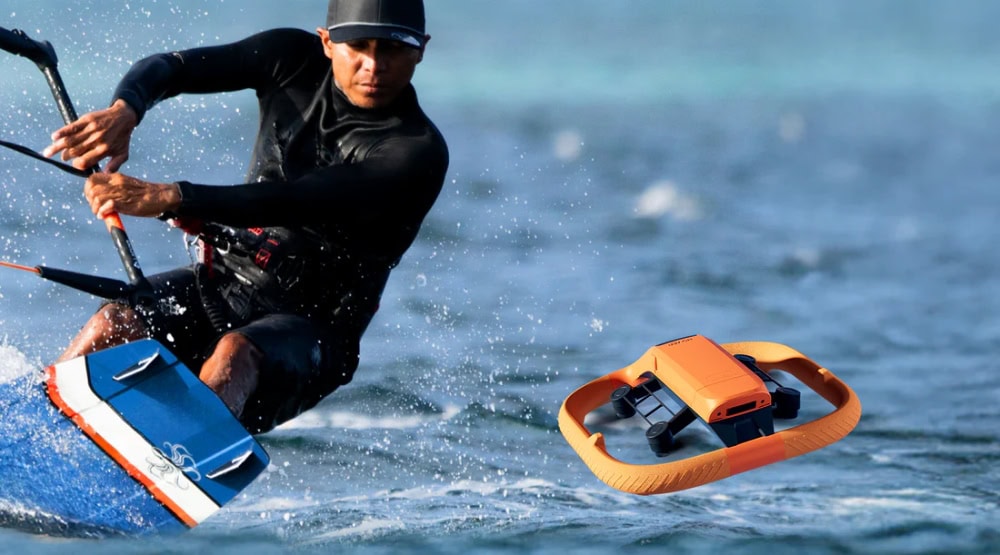
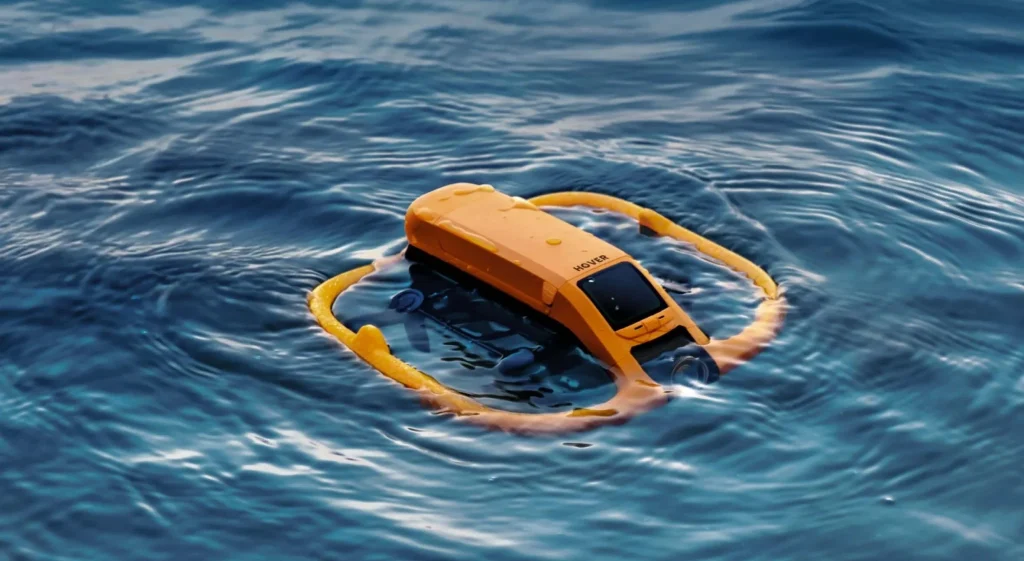
The Aqua can land on water, take off from water, float if it crashes, and keep filming in conditions that would end the flight of a typical drone.
Not for Sale in the U.S.
Although the Aqua launched this week in over 50 countries, it’s not available in the U.S.
HoverAir has cited ongoing regulatory and administrative issues to explain this.
But it seems like the explanation is simple: HoverAir didn’t get FCC authorization to sell the drone in the U.S.
Credit: HoverAir
The First Waterproof Selfie Drone
Surfing, paddleboarding, kayaking, wakeboarding, fishing—these are all scenarios where drone pilots really hesitate, because a crash could mean a lost drone.
By being waterproof, the Aqua changes that equation.
How the Aqua’s Waterproofing Works
Instead of trying to keep water out of a conventional drone design, HoverAir built the Aqua around water use from the beginning.
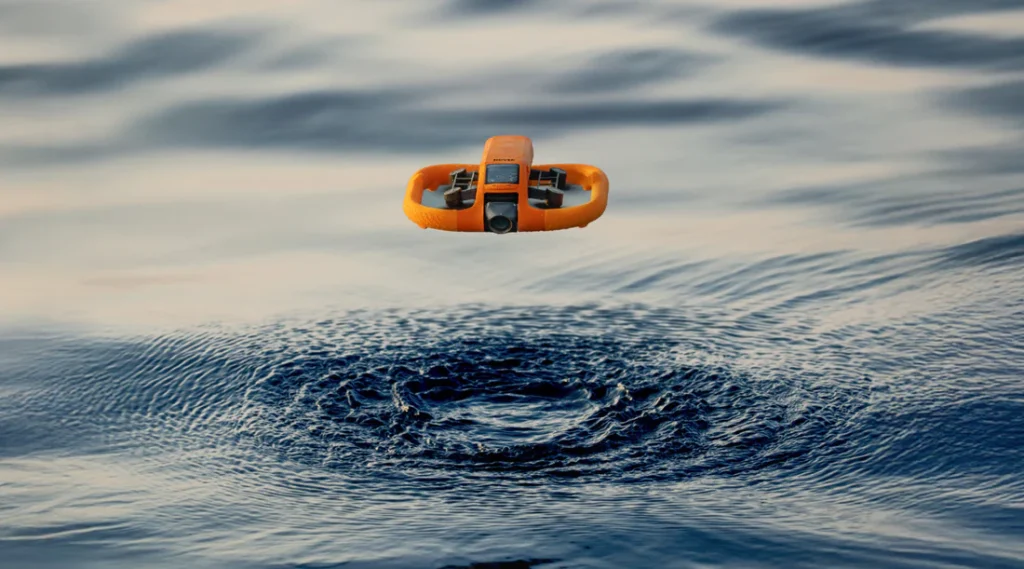
Instead of folding arms and exposed propellers, the Aqua uses a compact enclosed frame that looks more like a floating action camera than a traditional camera drone.
The drone is also buoyant by design, helping it remain upright while floating.
Credit: HOVERAir
The result is a drone that can float, relaunch from the water’s surface, and continue tracking a subject even when waves or splashes get in the way.
If the drone loses power, encounters a problem, or ends up in the water unexpectedly, it floats. And because it can launch directly from the water’s surface, you don’t need a beach, dock, or boat to get airborne again.
Specs & Features for the Aqua
- Weight: Under 249 grams (no FAA registration required for recreational use)
- Water operations: Direct water takeoff and landing
- Waterproof rating: IP67
- Camera: 1/1.28″ sensor
- Video: Up to 4K at 100 fps
- Flight time: Up to 23 minutes
- Top tracking speed: About 34 mph (55 km/h)
- Storage: 128GB internal storage
- Tracking system: Lighthouse wearable beacon and autonomous follow modes
On paper, those specs won’t replace a higher-end camera drone.
But that’s not really the point.
The Aqua’s value isn’t expert-level image quality. It’s the ability to get aerial footage in places where most people simply wouldn’t risk flying a drone at all.
Credit: HOVERAir
Why the Lighthouse Matters
In a lot of ways, the Aqua’s waterproof design is only half the story.
The other half is a small wearable device called the Lighthouse.
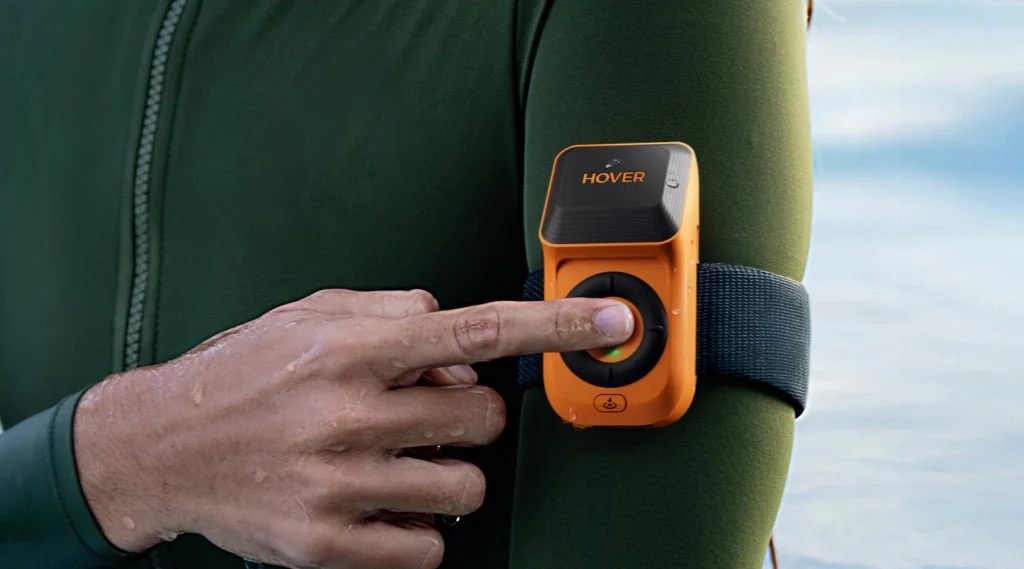
The Lighthouse wearable beacon | Credit: HOVERAir
Like HoverAir’s previous drones, the Aqua is designed primarily as a self-flying camera.
Instead of manually piloting the drone through every shot, users select an autonomous flight mode and let the drone track them automatically.
The Lighthouse improves this process by acting as a dedicated tracking beacon.
By combining visual tracking with the wearable beacon, the Aqua has another source of positioning information to help it stay connected to the person it’s filming.
In practice, the combination of waterproofing, autonomous flight, and wearable tracking makes the Aqua an impressive drone.
Not only can it fly itself and survive water crashes. It can also follow a surfer moving through waves, a kayaker navigating a river, or a wakeboarder moving at speed while maintaining a usable camera angle—all thanks to the Lighthouse.
Why the Aqua Isn’t Coming to the U.S.
For American drone pilots, the biggest downside to the Aqua launch is simple: you can’t buy one.
HoverAir hasn’t given a full public explanation, but the reason is clear from the regulatory record. The Aqua doesn’t have FCC equipment authorization.
After the FCC’s December 22, 2025 expansion of its Covered List, new foreign-made drones face a forward-looking ban on approvals.
The Aqua doesn’t appear in the FCC’s database of approved devices and doesn’t currently have the authorization needed for U.S. sales.
While the DJI Avata 360 and Lito X1 got FCC approval just before the FCC made these changes last year, the Aqua didn’t.
HoverAir has acknowledged the regulatory roadblock on its Indiegogo page, stating that due to a “sudden regulatory change in the United States,” it paused new orders for U.S. addresses while it explores compliance pathways.
The bottom line is, unless the policy reverses or the Aqua receives FCC approval, it can’t launch in the U.S.
Which is a shame, because the Aqua is one of the most innovative drone releases of the year.