FCC Grants First Exemptions to Foreign Drone Crackdown
BY Zacc Dukowitz
7 April 2026As anticipated, the FCC has started granting exemptions to foreign drone companies from its sweeping block.
The block happened late last year.
At the time, we expected the FCC to ban DJI and Autel. Instead, it went several steps further, blocking all new foreign-made drones from getting FCC approval for sale in the U.S.
But even as this was happening, it seemed unlikely that the FCC would really block all foreign drone companies from selling new drones in the U.S.
And now we have confirmation: the first four companies have received exemptions.
What Did the FCC Say Exactly?
In late 2025, the FCC announced that all new drones from foreign companies wouldn’t be able to get FCC approval for sale in the U.S.
But it has also made it clear that there would be several ways to get around this new rule.
Here’s what the FCC has said so far about how companies can get an exemption:
1. Case-by-Case Approval Pathway
The FCC has indicated that companies can seek approval for specific equipment, even if it would otherwise be blocked.
In practice, that means:
- Companies can submit information to the FCC, and it will rely on national security determinations from the Executive Branch (e.g., DoD, DHS, or DoW—the recently renamed Department of War)
- Based on that review, the FCC may allow specific devices to be authorized
2. Categorical Carveouts
Even in the initial rollout—and then more explicitly in follow-up guidance—the FCC signaled that some categories of equipment would be allowed without case-by-case review, including:
- Systems on the Blue UAS Cleared List
- Equipment that qualifies as a “domestic end product” under Buy American rules
These carveouts run through January 1, 2027, which reinforces the sense that the FCC is treating this as an evolving framework rather than a one-and-done policy change.
In Deciding, National Security Is the Key Factor
The FCC has emphasized that exemption decisions will be based on whether equipment poses an “unacceptable risk to national security.”
That means:
- Approval isn’t just about where equipment is made—it’s also about supply chain, ownership, data risk, and affiliations
- The FCC itself isn’t making the core security judgment—it’s deferring to other agencies like the DOW
The Four Drone Companies with Exemptions
The FCC has announced conditional approvals for drones from four companies:
- SiFly’s Q12
- Mobilicom’s SkyHopper line and related equipment
- ScoutDI’s Scout 137
- Verge’s X1
For now, those approvals are temporary and run through December 31, 2026.
How the Companies Got Their Exemptions
All four got their exemptions the same way: they went through the FCC’s conditional-approval process, which relied on a DoW determination that the systems did not pose a national security risk.
And it’s interesting to note that two of these four companies are based in the U.S.
So being U.S.-based alone doesn’t exempt a company from the rule, which looks at how a system is built and sourced—not just where the company is headquartered.
Here’s more information about each company that got an exemption:
1. SiFly

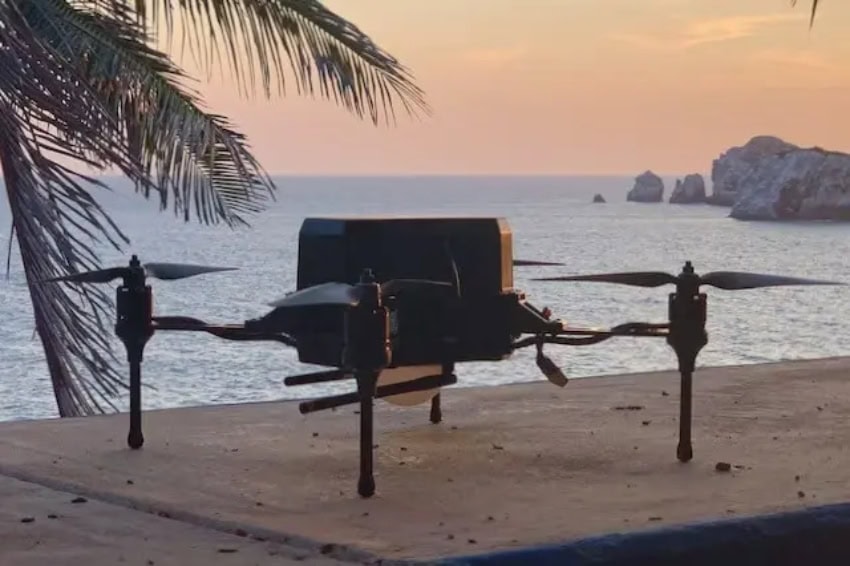
The SiFly Q12
SiFly’s approved system is the Q12, a long-endurance drone from a California-based company focused on mission-ready platforms for demanding commercial work.
Reuters reported that SiFly argued for the Q12 based on security compliance and domestic production plans—factors that likely helped it clear the FCC’s review.
- What they do: Long-endurance commercial drones for industrial and mission-critical use
- Where they’re based: United States (California)
- Why they got through: Emphasis on security compliance and a more U.S.-aligned production and supply chain story
2. Mobilicom

Credit: Mobilicom
Mobilicom is different from the others on this list because its approval covers not just a drone, but a broader stack of communications and cybersecurity hardware and software.
The FCC exemption includes the company’s SkyHopper Series, M Band, Tactical Data Link, and related controllers and software.
- What they do: Cybersecure datalinks and communication systems for drones and autonomous platforms
- Where they’re based: Israel (with global operations)
- Why they got through: Strong positioning around cybersecurity, NDAA compliance, and Blue UAS alignment
3. ScoutDI
Credit: ScoutDI
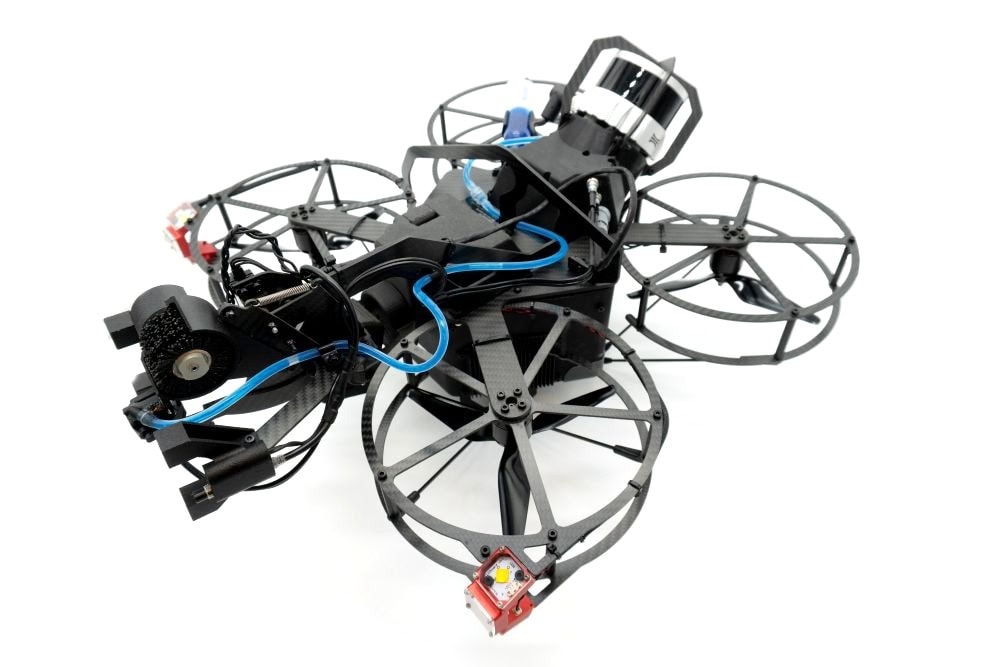
ScoutDI’s Scout 137 is a specialized inspection drone designed for confined spaces and indoor industrial environments.
The Norway-based company focuses on inspection work in places where GPS is unavailable and human entry can be difficult or unsafe.
- What they do: Indoor and confined-space inspection drones
- Where they’re based: Norway
- Why they got through: Niche industrial use case with limited overlap with consumer drone markets
4. Verge
Credit: Verge
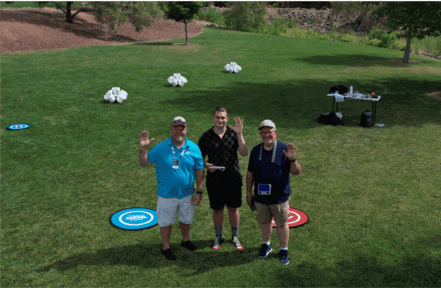
Verge’s X1 comes from a very different part of the drone market: drone shows.
The Texas-based company describes the X1 as a workhorse platform designed for large-scale performances, with an emphasis on reliability and redundancy.
- What they do: Drone light show platforms and systems
- Where they’re based: United States (Texas)
- Why they got through: Specialized use case and clear separation from consumer and surveillance-focused drone categories
Will the Ban Be Reversed?
Probably not.
DJI is suing the FCC, arguing that the move was overly broad and harmful to U.S. users and businesses. But it looks unlikely the case will lead to a reversal from the FCC.
On a related note, a new Pentagon memo urges the FCC to reject DJI’s attempts to reverse its decision.
The memo refers to both classified and unclassified intelligence, including a classified annex submitted to Congress on April 3, 2026. In short, the Pentagon feels that blocking foreign-made drones is vital to national security.
This doesn’t mean every foreign drone company will be blocked. As we saw above, the exemption process exists and is underway.
But it does mean a new reality for drones in the U.S.—one in which DJI probably won’t get future drones approved by the FCC, and all drone companies are held to a higher level of scrutiny for U.S. entry.