The DJI Ban: Everything You Need to Know [New for 2026]
BY Zacc Dukowitz
26 January 2026Is there a DJI ban in the U.S.? No, there is not a blanket ban on DJI drones.
DJI still has permission to import its most recently-released drones, including:
DJI also still has permission to import any other drone that came out before the drones listed above.
The “ban” wording you hear in the drone industry comes from a move the FCC made in late 2025, which effectively blocks DJI and other foreign drone companies from importing new drones going forward.
Here are the key points:
→ So what exactly was banned? Going forward, DJI will most likely not be able to import any new drones.
- Existing DJI drones aren’t banned. Any DJI drone that has received FCC approval, up to the unreleased Avata 360 and Lito X1, are not banned. This is because all of these drones have received FCC approval.
- New DJI drones are banned. Any new DJI drone that hasn’t received FCC approval is effectively banned.
→ How should I think about this? Let’s use the iPhone as an example. The iPhone 17 is the most current model. If the iPhone faced the same “ban” as DJI and other foreign drone companies, then all iPhones from the 17 going back to the 1 can still be imported. But any new iPhones—an 18 or beyond—couldn’t be imported.
Applying this to DJI drones, while the Mavic 4 Pro has FCC approval, and can still be sold in the U.S. a future Mavic 5 Pro does not, and would be effectively banned.
→ Why are new DJI drones banned? DJI wasn’t singled out. Instead, the FCC has added any new (using the definition of new provided above) foreign‑made drones and certain drone components to its national security “Covered List.” This means that all new foreign-made drones can’t receive FCC equipment authorization, and therefore can’t be imported, marketed, or sold in the U.S.—unless they get a special exemption.
This guide to the DJI ban covers everything you need to know, starting with the specific drones that you can still buy, then getting into the important facts about the ban and drilling into what you should consider moving forward now that the ban is in place.
Here’s everything we cover:
- Which DJI Drones Can You Still Buy?
- What Happens Now that DJI Is Banned?
- What Should Current DJI Owners Do?
- What Is the DJI Ban?
- Should I Buy a DJI Drone Right Now?
- Alternatives to DJI
- How the DJI Ban Unfolded
- Who Is Most Impacted by the DJI Ban?
- Is DJI Actually Spying on the U.S.?
- DJI Ban FAQ
Which DJI Drones Can You Still Buy?
DJI can still import and sell all the drones it has already been importing and selling.
Existing drones like the Mini 5 Pro and the Mavic 4 Pro all the way back to classics like the Mavic 2 Pro are all still eligible for import and sale.
Note: Just because a drone can be imported and sold doesn’t mean it’s actually for sale. Some drones are facing supply scarcity
List of Chinese Drones You Can Still Buy
Here’s a full list of all the Chinese drones, including DJI, Autel, and Antigravity, that can still be imported and sold in the U.S. going back to 2018.
All of these drones have been approved by the FCC for import and sale, and still have FCC approval.
Note: This list is organized in reverse chronological order.
| Company | Model Name | FCC Approved | FCC ID | FCC Grant Date |
|---|---|---|---|---|
| DJI | DJI Avata 360 (not launched yet) | ✓Approved | SS3-DVN3NT | 11/19/2025 |
| Antigravity | Antigravity A1 | ✓Approved | 2BO5J-DE001 | 11/18/2025 |
| DJI | DJI Neo 2 | ✓Approved | SS3-DEN225 | 7/16/2025 |
| DJI | DJI Mini 5 Pro | ✓Approved | SS3-MT5MFND25 | 5/21/2025 |
| DJI | DJI FlyCart 100 | ✓Approved | SS3-T100A2411 | 5/9/2025 |
| Autel | Autel EVO Max 4T / 4N / 4T Pro / 4T XE | ✓Approved | 2AGNTMDX600958S | 3/26/2025 |
| Autel | Autel EVO Max 4T V2 / Max 4N V2 / Max 4NZ V2 | ✓Approved | 2AGNTMDX1600958A | 3/25/2025 |
| DJI | DJI Matrice 400 | ✓Approved | SS3-M4002412 | 3/17/2025 |
| Autel | Autel EVO Lite 6K Enterprise / Lite 640T Enterprise | ✓Approved | 2AGNTMDXM2409B | 3/7/2025 |
| DJI | DJI Matrice 4D / 4TD | ✓Approved | SS3-M4D2411 | 2/28/2025 |
| Autel | Autel EVO Max | ✓Approved | 2AGNTMDX240958B | 1/16/2025 |
| DJI | DJI Mavic 4 Pro | ✓Approved | SS3-L3AB2410 | 12/4/2024 |
| DJI | DJI Flip | ✓Approved | SS3-DF1A042424 | 11/29/2024 |
| DJI | DJI Air 3S | ✓Approved | SS3-CZ3SCL24 | 9/16/2024 |
| DJI | DJI Neo | ✓Approved | SS3-DN1A062624 | 7/24/2024 |
| DJI | DJI Mini 2 SE | ✓Approved | SS3-MT2SD22 | 4/1/2024 |
| DJI | DJI Avata 2 | ✓Approved | SS3-QF3W4K23 | 3/18/2024 |
| Autel | Autel Titan | ✓Approved | 2AGNTMDM240958A | 2/17/2024 |
| DJI | DJI FlyCart 30 | ✓Approved | SS3-E2MTR2302 | 9/27/2023 |
| DJI | DJI Mini 4 Pro | ✓Approved | SS3-MT4MFVD23 | 9/5/2023 |
| DJI | DJI Air 3 | ✓Approved | SS3-EB3WBC2303 | 7/6/2023 |
| DJI | DJI Mini 3 Pro | ✓Approved | SS3-MT3M3VZ | 6/9/2023 |
| DJI | DJI Matrice 30T | ✓Approved | SS3-M302110 | 6/2/2023 |
| DJI | DJI Mavic 3 Pro / 3 Pro Cine | ✓Approved | SS3-L2ES2212 | 4/24/2023 |
| DJI | DJI Inspire 3 | ✓Approved | SS3-T7402206 | 4/13/2023 |
| Autel | Autel EVO Max | ✓Approved | 2AGNTMDX240958A | 3/20/2023 |
| DJI | DJI Mavic 3E / 3T / 3M | ✓Approved | SS3-M3E2206 | 11/23/2022 |
| DJI | DJI Mini 3 | ✓Approved | SS3-MT3PD22 | 11/22/2022 |
| DJI | DJI Mavic 3 / 3 Cine | ✓Approved | SS3-L2P2104 | 10/8/2022 |
| DJI | DJI Mavic 3 Classic | ✓Approved | SS3-L2P2104 | 10/8/2022 |
| DJI | DJI Avata | ✓Approved | SS3-QF2W4K22 | 7/26/2022 |
| DJI | DJI Mini 2 | ✓Approved | SS3-MT2WD2007 | 4/1/2022 |
| Autel | Autel EVO Lite / Lite+ | ✓Approved | 2AGNTMDXM2409A | 11/17/2021 |
| Autel | Autel Nano / EVO Nano+ | ✓Approved | 2AGNTMDA2409A | 11/13/2021 |
| DJI | DJI Mini SE | ✓Approved | SS3-MT2SS52010 | 7/6/2021 |
| DJI | DJI Air 2S | ✓Approved | SS3-DA2SUE12011 | 3/15/2021 |
| Autel | Autel EVO II | ✓Approved | 2AGNTMCA2458A | 1/20/2021 |
| DJI | DJI FPV | ✓Approved | SS3-FD1W4K2006 | 12/8/2020 |
| Autel | Autel EVO | ✓Approved | 2AGNTEVOA2400A | 11/29/2018 |
| DJI | DJI Mavic 2 Pro | ✓Approved | SS3-L1P1805 | 8/23/2018 |
What Happens Now that Future DJI Drones Are Blocked?
With the FCC’s addition of new DJI and other foreign-made drones to the Covered List, DJI is now effectively blocked from importing and selling new drones in the U.S.
But what does that actually mean? The impact is less about a single dramatic switch being flipped and more about how U.S. regulatory systems restrict new equipment from entering the market.
How the DJI “Ban” Actually Works
The new restrictions are enforced primarily through the FCC equipment authorization process and the Covered List rules. Any drone sold or imported into the U.S. that uses radio-frequency components must receive FCC authorization.
(These authorizations are often how we learn about new DJI drones—leaks surface a new FCC filing, and news breaks that DJI is getting ready to launch a new drone.)
In practical terms, DJI:
- Can’t receive FCC approval for new foreign-made drone models or new foreign-made RF devices covered by the national security determination
- Can’t legally import or market new foreign-made DJI drone models in the U.S., since those models can’t get the required FCC approval
- Is effectively blocked from entering the U.S. market with new DJI drones and accessories (though previously authorized models and parts remain allowed for now)
Note: This FCC Covered List update covers UAS and certain UAS critical components produced in foreign countries and explicitly names DJI, Autel, and other foreign drone makers, rather than functioning as a DJI-only action. The FCC fact sheet ties this update to a broader interagency finding that foreign‑produced UAS and critical components pose ‘unacceptable risks’ to U.S. national security.
What We Know for Certain
Several outcomes of the ban are already clear:
- No new foreign-made drone models entering the U.S. without special clearance. The pipeline for newly manufactured DJI, Autel, and other foreign-made drone models—and some new foreign-made accessories/components—is now cut off unless specific national security exemptions are granted.
- Existing DJI drones remain flyable. There has been no remote disablement, grounding order, or FAA restriction placed on drones already in use.
- Retail availability will likely shrink over time. Remaining U.S. inventory and previously authorized imports may still appear for now, but some sellers may pull listings due to regulatory and compliance risk and the inability to restock with new models.
- Fleet expansion using DJI will be constrained. Commercial, public safety, and inspection operators should not assume they will be able to buy additional DJI units later.
What Could Happen Next (But Isn’t Certain Yet)
Beyond the immediate effects, the ban also opens the door to additional actions, though these are not automatic and may take time to materialize.
- Broader FCC enforcement. Enforcement scope could evolve, but this update is focused on blocking new equipment authorization. It does not announce FAA grounding or immediate retroactive disabling of DJI drones.
- Restrictions on affiliates or shell brands. Regulators may scrutinize rebrands designed to circumvent restrictions.
- Parts and service challenges. Even if DJI intends to support existing users, sourcing batteries, controllers, and replacement components may become increasingly difficult over time.
- Legislative or regulatory changes. Congress could still modify the law, mandate a formal audit, or create exemptions, but none of these outcomes are guaranteed.
For now, the most important takeaway is this: the DJI ban is not about grounding drones overnight, but about cutting off future availability.
Organizations that rely on DJI should plan accordingly, stabilize their fleets, and evaluate alternative drones to ensure continuity of operations.
What Should Current DJI Owners Do Now?
Existing DJI drones remain legal to own and fly, but the ecosystem around them is changing. How you prepare now will determine how long your fleet remains viable.

The DJI Flip
What Still Works
For current owners, several core things have not changed:
- Your DJI drone will still fly. DJI drones already in the U.S. were not remotely disabled or grounded.
- Part 107 operations with DJI drones are still allowed. The FAA has not restricted recreational or commercial flight of existing DJI aircraft.
- Existing fleets can continue operating. There is no requirement to retire or replace DJI drones you already own.
In practical terms, you can keep using the DJI drones you already have.
What’s at Risk Going Forward
What’s far less certain is the long-term support environment for DJI platforms.
- Firmware and software updates. DJI says it will continue supporting existing users, but updates may slow, stop, or become inaccessible over time.
- Repairs and warranty service. Turnaround times may increase, authorized repair options may shrink, and warranty claims could become more difficult.
- Batteries and spare parts. Consumables like batteries, props, and gimbals are likely to become harder to source as supply tightens and distribution channels change.
- Insurance and compliance risk. Some insurers and enterprise clients may scrutinize or restrict the use of unsupported platforms.
Fleet Documentation and Preservation
Owners—especially commercial operators—should treat their DJI fleet as a fixed asset that needs to be preserved.
- Document serial numbers and configurations. Keep records of aircraft, controllers, batteries, payloads, and firmware versions.
- Stabilize your software environment. Avoid unnecessary updates once systems are stable and tested.
- Back up flight data. Download and securely store logs, imagery, and mission data locally.
- Secure consumables. Acquire spare batteries, propellers, and wear items while they are still available.
Inspection-Specific Considerations
For industrial inspection teams, the ban has operational implications beyond basic flight.
- Plan for attrition. DJI aircraft used in inspection workflows should be assumed to have a finite remaining service life.
- Segment fleets. Many teams are continuing to use DJI for current jobs while onboarding NDAA-compliant platforms for future work.
- Preserve data continuity. Ensure inspection deliverables, models, and reports remain accessible independent of DJI software.
In practical terms, we recommend you treat DJI platforms as legacy resources—still valuable, but no longer expandable.
What Is the DJI Ban?
The DJI ban is a federal restriction that limits new DJI equipment from entering the U.S. market.
As of December 23, 2025, DJI has been added to the FCC Covered List as part of a broader FCC update that added foreign-made UAS and certain UAS critical components to the list.
Covered equipment is prohibited from receiving new FCC equipment authorization—effectively blocking new DJI (and other foreign-made) drones from normal U.S. import and sales.
What the DJI Ban Does—and Does Not—Do
- It does not ground existing drones. DJI drones that were already approved and in use before the ban remain flyable.
- It does not make ownership illegal. There is no criminal penalty for owning or operating a DJI drone that was lawfully obtained.
- It does not change FAA flight rules. The FAA has not issued new restrictions affecting recreational or Part 107 operations for existing DJI drones.
- It does restrict the supply chain. New DJI drones cannot receive FCC authorization, effectively blocking new imports, new product launches, and long-term restocking.
- It does impact all new DJI drones. The update affects new FCC authorizations for DJI and other foreign manufacturers, not existing approvals for already-certified models.
Why the NDAA Approach to the DJI Ban Matters
Earlier legislative proposals, such as the Countering CCP Drones Act, sought to ban DJI outright. The 2025 National Defense Authorization Act took a different approach.
Instead of imposing an immediate ban, the NDAA required a U.S. national security agency to complete a formal security audit of DJI within one year. If no agency completed the review by the deadline, the law mandated an automatic consequence: adding DJI to the FCC Covered List.
In late December, as the NDAA review window closed, an executive-branch national security determination led the FCC to add DJI and other foreign-made drones to the Covered List and block new authorizations.
This outcome reflects both the NDAA’s pressure for a review and a subsequent classified national security finding, rather than a fully transparent, public audit report being released.
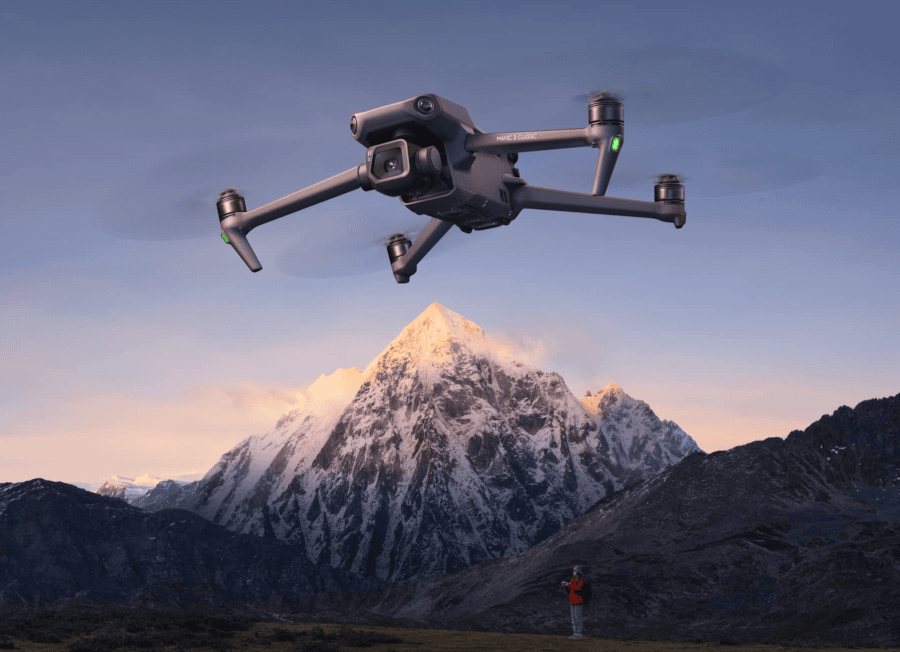
Credit: DJI
Should I Buy a DJI Drone Right Now?
For most people, the answer is no.
Now that the DJI ban is in effect, buying a DJI drone in the U.S. carries significantly more risk than it did before December 23, 2025.
While it is still legal to own and fly existing DJI drones, the pathways for purchasing, supporting, and maintaining new ones are rapidly narrowing.
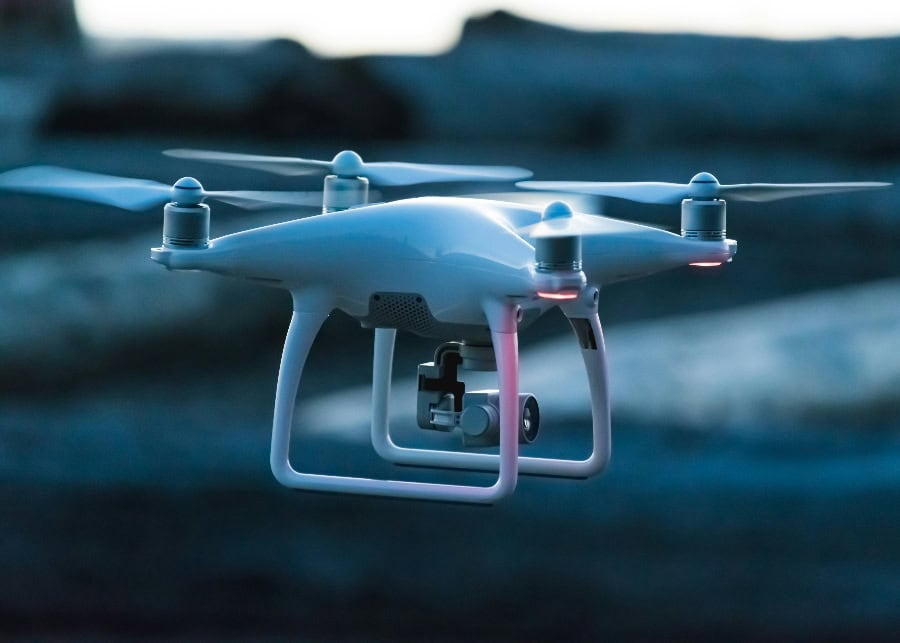
Credit: DJI
Used, Remaining Stock, and Gray-Market Imports
At this point, buyers will encounter DJI drones through three channels:
- Remaining U.S. stock. Some retailers may sell limited inventory that was imported before the ban, but availability is shrinking quickly.
- Used or refurbished drones. This is now the most common option—but also the most complicated.
- Gray-market imports. Drones imported outside official U.S. channels may appear online, but these carry the highest risk.
Gray-market DJI drones may lack FCC authorization, warranty coverage, or reliable access to updates and service. In some cases, they may never activate properly in the U.S.
Binding and Account Transfer Risks
Buying used DJI drones now comes with a critical constraint.
DJI’s binding policy requires that ownership transfers be initiated by the current bound account holder. If the seller cannot—or will not—unbound the aircraft from their account, you may be left with a drone you cannot activate, update, or fly.
Before purchasing a used DJI drone, confirm in writing that:
- The drone is fully unbound from the seller’s DJI account
- The seller is available to assist with rebinding if needed
- The aircraft can be activated in your region
Warranty, Repairs, and Long-Term Support
DJI has stated it intends to support existing users, but support is no longer guaranteed.
Buyers should assume:
- Warranty coverage may be limited or unavailable
- Repair turnaround times may increase
- Replacement parts and batteries may become difficult to source
- Future firmware or app updates may be delayed or discontinued
In other words, any DJI drone purchased now should be treated as a depreciating, potentially unsupported asset.
Who Should Not Buy a DJI Drone Anymore
Buying DJI no longer makes sense if you:
- Need long-term manufacturer support or guaranteed updates
- Operate under strict compliance, insurance, or procurement rules
- Plan to build or expand a commercial or inspection fleet
- Rely on warranty coverage or fast repairs
For these users, investing in DJI post-ban introduces unnecessary operational risk.
When It Might Still Make Sense
There are a few narrow scenarios where buying DJI may still be reasonable:
- You already fly DJI drones and need a short-term replacement for a matching airframe
- You can verify full account transfer and accept limited support
- You are purchasing at a steep discount with a defined use horizon
Even in these cases, buyers should view DJI as a stopgap, not a long-term investment.
Alternatives to DJI
With the FCC now blocking new foreign-made drone models from receiving equipment authorization, NDAA-compliant and non-Chinese-made drones have become the primary path forward for agencies, businesses, and commercial operators that need to purchase and expand fleets in the U.S.
While existing DJI drones can still be flown, new DJI platforms can no longer be approved or imported without special clearance, making alternative manufacturers essential for future purchases.
But the reality is that there is still a significant gap when it comes to affordable, high-quality prosumer drones from non-Chinese brands.
For hobbyists and small businesses, alternatives are often more expensive and more limited than DJI’s lineup—but for commercial and inspection work, viable options do exist.
For Commercial Drones
If you need a DJI alternative for professional operations—public safety, inspections, mapping, or enterprise work—your best starting points are the Blue UAS Cleared List and the Green UAS Cleared List.
These programs vet drones for NDAA compliance, cybersecurity posture, and supply-chain integrity, and they now represent the safest long-term options post-ban.
Here are several established alternatives currently in use:
- Skydio X10 / X10D. AI-powered autonomy, advanced obstacle avoidance, and rugged construction; Blue UAS approved.
- Freefly Astro Prime. Modular, open-ecosystem platform for mapping, photogrammetry, and inspection workflows; Green UAS approved.
- Inspired Flight IF800 Tomcat / IF1200A. Heavy-lift platforms with customizable payloads; NDAA-, Blue UAS-, and Green UAS-compliant.
- Teal 2 & Golden Eagle. Compact tactical drones designed for ISR and law enforcement operations; Blue UAS approved.
- BRINC Lemur 2. Purpose-built for indoor operations, tactical response, and search and rescue; NDAA compliant.
- Parrot Anafi USA. Lightweight drone with zoom and thermal capabilities; Blue UAS approved.
- Teledyne FLIR SIRAS. Dual visible/thermal payload designed for industrial inspection and fire service use; NDAA compliant.
- Anzu Raptor. NDAA-compliant multi-mission drone positioned as a DJI-style form-factor alternative.
- Vantage Robotics Vesper. Portable, low-acoustic drone used for discreet imaging and surveillance; Blue UAS approved.
- Freefly Alta X. Heavy-lift industrial platform used for specialized payloads and complex inspection missions; NDAA and Blue UAS compliant.
Blue UAS vs. Green UAS: What’s the Difference?
Blue UAS is a Department of Defense program that certifies drones for government and defense use. These platforms undergo the most rigorous security, supply-chain, and operational testing. See the latest Blue UAS Cleared List.
Green UAS, run by AUVSI, is designed primarily for commercial operators. It certifies drones as NDAA-compliant and secure, with a faster and less costly process than Blue UAS. See the latest Green UAS Cleared List.
For Consumer Drones
Consumer alternatives to DJI remain limited, and most come with tradeoffs in availability, ecosystem maturity, or long-term certainty.
Here are some commonly cited options:
- ACSL SOTEN. NDAA-compliant prosumer drone used in some enterprise and government contexts.
- Autel Evo Lite+. Consumer photography drone.
- HoverAir X1 ProMax. Lightweight selfie drone designed for casual use.
- Potensic Atom 2. Entry-level consumer drone.
Note: Some consumer alternatives are manufactured by Chinese companies and could face future restrictions depending on how U.S. drone policy evolves.
How the DJI Ban Unfolded
The DJI ban did not happen overnight.
It was the result of a series of regulatory steps, policy decisions, and missed deadlines that unfolded over several years, accelerating rapidly in 2024 and 2025.
1. FCC Authority Expansion
The groundwork for the ban was laid when the FCC expanded its authority over equipment tied to national security concerns.
By strengthening its ability to regulate devices placed on the FCC Covered List, the FCC positioned itself to block not only future approvals, but also to address subsidiaries, affiliates, and re-branded products used to bypass restrictions.
This expansion mattered because DJI drones rely on FCC equipment authorization to be legally imported and sold in the U.S.
2. The NDAA Review Window
Rather than banning DJI outright, Congress took a different approach in the 2025 National Defense Authorization Act (NDAA).
The law created a one-year window for a U.S. national security agency to conduct a formal security audit of DJI. If an agency completed the review and cleared DJI, the company could continue operating in the U.S. market. If no review was completed by December 23, 2025, the law required DJI to be added to the FCC Covered List automatically.
This “audit-triggered” structure was intended as a compromise—allowing time for review instead of imposing an immediate ban.
3. Customs Holds and FCC Authorization Pauses
As the review window progressed, regulatory pressure increased even before the deadline arrived.
Throughout 2025, DJI shipments were increasingly delayed or held by U.S. Customs, and new FCC equipment authorizations slowed or stopped altogether. These actions did not constitute a formal ban, but they effectively choked supply, leading to widespread shortages of DJI drones and accessories in the U.S. market months before December.
By mid-2025, many retailers were already unable to restock popular DJI models.
4. DJI’s Public Calls for an Audit
As the deadline approached, DJI repeatedly and publicly called on the U.S. government to initiate the required security review. The company stated that it had “nothing to hide” and warned that failure to begin the audit would trigger an automatic ban regardless of any actual security findings.
Despite these requests, no federal agency announced that it had begun—or planned to begin—the review process before the deadline.
5. The December 23, 2025 Trigger Moment
The December 23, 2025 arrived without a completed audit. At this time, the U.S. government issued a national‑security determination and the FCC moved to add DJI and other foreign‑made UAS and critical components to its Covered List.
This action blocks new FCC equipment authorizations for covered foreign‑made drone models and related RF devices, which in turn prevents new DJI drones and many other foreign‑made systems from being approved, imported, or sold in the U.S. From that point, the situation shifted from uncertainty about whether a ban would happen to a post‑ban reality in which operators, businesses, and agencies must adapt to a future with no new foreign‑made drone models entering the U.S. market absent special exemptions
This moment marked the transition from regulatory uncertainty to a post-ban reality—shifting the focus from whether a ban would happen to a post‑ban reality in which operators, businesses, and agencies must adapt to a future with no new foreign‑made drone models entering the U.S. market absent special exemptions

The Mavic 4 Pro
A Brief History of the DJI Ban
Calls for a DJI ban started way back in 2017, when U.S. agencies first raised concerns about data security and the company’s ties to the Chinese government.
Here’s a timeline covering major events in the efforts to ban the company:
- Now (December 2025). No federal agency publicly completed or released a formal audit of DJI before the deadline, and an executive-branch national security determination led the FCC to add DJI and other foreign-made drones to the Covered List and block new authorizations for foreign-made models.
- November 2025. DJI drones come back in stock on Amazon through 3rd party resellers.
- July 2025. DJI drones are nearly impossible to find in U.S. stores due to ongoing customs delays and lack of new FCC authorizations.
- June 2025. DJI releases a new white paper addressing privacy and security, emphasizing supply chain transparency and ethical labor practices.
- Spring 2025. The FCC suspends new equipment authorizations for DJI models pending the outcome of the NDAA review, further impacting supply.
- Early 2025. U.S. Customs begins holding or delaying DJI shipments under the Uyghur Forced Labor Prevention Act, leading to widespread shortages of DJI drones and accessories in the U.S.
- December 2024. The final NDAA is signed into law, dropping the Countering CCP Drones Act but adding a review trigger: if a federal agency doesn’t complete a formal security audit of DJI by December 23, 2025, DJI will be automatically added to the FCC Covered List.
- October 2024. The Senate continues deliberations on the standalone bill, considering changes to address concerns from public safety officials and the drone industry.
- September 2024. Senators Mark Warner and Rick Scott introduce the Countering CCP Drones and Supporting Drones for Law Enforcement Act, proposing a grant program to help first responders replace DJI drones.
- September 9, 2024. The House passes the Countering CCP Drones Act as a standalone bill with bipartisan support, moving it to the Senate for debate.
- Late July 2024. Senator Rick Scott (R-FL) submits an amendment to add the Countering CCP Drones Act back into the NDAA.
- Mid-July 2024. The Senate releases its version of the NDAA, which does not include the Countering CCP Drones Act.
- June 2024. The House of Representatives includes the Countering CCP Drones Act in its version of the 2025 NDAA (National Defense Authorization Act).
- 2021–2023. Several states, including Florida, pass laws restricting or banning Chinese-made drones for government use. The federal American Security Drone Act (ASDA) is also introduced, laying groundwork for future national action.
- 2017. The Department of Homeland Security and Department of Defense begin raising public concerns about surveillance and data collection by DJI drones.
Who Is Most Impacted by the DJI Ban?
The DJI ban does not impact all drone users equally.
Because it targets new equipment approvals and imports—rather than grounding existing drones—the real effects depend on how heavily a group relies on DJI for ongoing operations, fleet growth, and long-term support.
Here’s how the ban breaks down by user type.
Recreational Pilots
Recreational pilots are the least affected in the short term.
If you already own a DJI drone, you can continue flying it for personal use under existing FAA rules. There is no requirement to ground recreational DJI drones, and no new airspace restrictions tied specifically to the ban.
That said, hobbyists will feel the impact over time as:
- New DJI models are no longer available through normal U.S. retail channels
- Batteries, props, and replacement parts become harder to find
- Long-term firmware and app support becomes less certain
Commercial Drone Operators
Commercial operators face more meaningful disruption.
Companies that rely on DJI for commercial operations may struggle to:
- Expand fleets or replace aging aircraft
- Standardize training and maintenance across new pilots
- Plan multi-year equipment investments with confidence
While existing DJI drones remain usable under Part 107, the inability to source new aircraft creates a slow-burn problem, especially for businesses that scale by adding identical platforms over time.
Industrial Inspection Teams
Industrial inspection teams are among the most impacted.
DJI platforms are deeply embedded in inspection workflows across oil and gas, power generation, maritime, and heavy industry.
These teams depend on DJI not just for flight, but for:
- Repeatable data capture across standardized platforms
- Sensor integration for thermal, zoom, LiDAR, and other inspection payloads
- Fleet consistency across large, distributed operations
The ban complicates long-term inspection programs by forcing teams to plan for mixed fleets, accelerated depreciation of existing assets, and potential retraining on non-DJI platforms.
Public Safety Agencies
Public safety agencies face the most immediate and structural impact.
Many agencies had already reduced or eliminated DJI use due to earlier federal and state restrictions. For those that continued operating DJI drones under grandfathered policies, the ban further limits:
- Replacement of damaged or end-of-life aircraft
- Access to standardized, cost-effective platforms
- Long-term planning for drone-as-first-responder programs
Agencies are now largely confined to NDAA-compliant platforms, which often come with higher costs and different operational tradeoffs.
Is DJI Actually Spying on the U.S.?
Is DJI spying? Despite years of allegations and ongoing scrutiny, no concrete public evidence has been presented showing that DJI drones are used for spying or unauthorized data collection.
While there have been claims of classified documents showing proof that DJI is spying on the U.S., nothing has been released publicly to verify those accusations.
Over the years, DJI has commissioned multiple independent third-party audits and security reviews, all of which have cleared its drones of intentional data exfiltration. In 2021, a leaked Pentagon report found that the DJI Government Edition Matrice 600 and Mavic Pro were cleared for government use.
And in June 2025, DJI released its most comprehensive Drone Security White Paper to date.
The white paper details the technical protections and privacy controls built into DJI drones, including:
- Local Data Mode (LDM), which allows both enterprise and consumer users to fly completely offline, severing all internet connections from the drone’s app.
- No automatic syncing of flight logs for U.S. users—since June 2024, DJI drones in the U.S. do not upload flight logs to DJI servers at all.
- Data encryption (AES-256) for personal information and flight data, with password protection and secure boot for firmware integrity.
- ISO 27701 certification for DJI FlightHub 2, demonstrating compliance with global privacy standards.
- On-premises server options for enterprise customers, allowing organizations to keep all drone data within their own secure IT environments.
- Independent security audits and certifications verifying DJI’s privacy and data protection claims.
While DJI does receive some funding from the Chinese government, and U.S. agencies continue to warn about potential risks, the debate reflects a precautionary national security posture and supply chain trust concerns—not proven wrongdoing.
Bottom line: As of December 2025, no definitive evidence has been made public showing DJI drones are used for spying on Americans. The scrutiny remains high, but the ban reflects risk management and policy decisions, not a disclosed technical exploit or confirmed data breach.
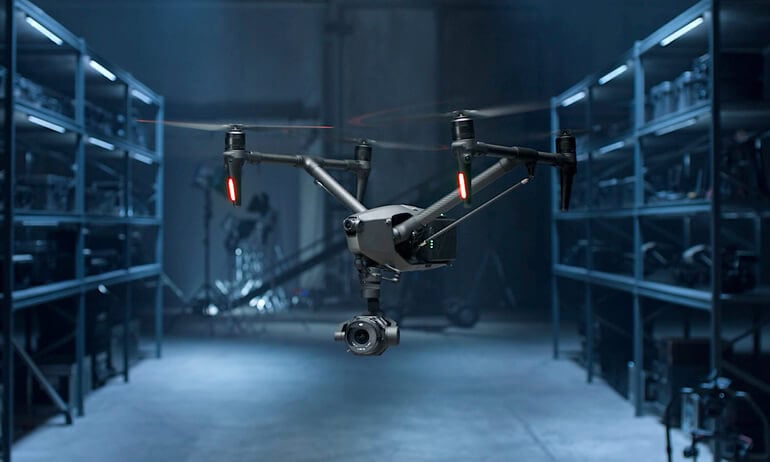
The DJI Inspire 3
A History of DJI Privacy Concerns in the U.S.
Here’s a rundown of accusations and DJI’s responses over the years.
- June 2025. DJI publishes its 2025 Drone Security White Paper, consolidating years of security upgrades, privacy controls, and independent audit results.
- June 2024. DJI removes flight log syncing for all U.S. users.
- January 2024. The FBI and CISA issue a joint memo warning about Chinese-made drone risks.
- December 2023. The ASDA becomes law, banning federal agencies from using Chinese drones.
- February 2022. Reports surface that DJI receives Chinese government funding.
- June 2021. A leaked Pentagon report clears DJI Government Edition drones for government use.
- January 2021. The American Security Drone Act (ASDA) is included in the U.S. Innovation and Competition Act.
- January 2020. The U.S. Interior Department grounds its drone fleet over spying concerns; DJI calls the move “politically motivated.”
- June 2019. DJI launches Government Edition drones for privacy, and announces U.S. manufacturing and an open letter to Congress.
- May 2019. DHS issues an advisory warning about the risks of using Chinese-made drones.
- April 2018. Kivu Consulting’s independent review finds no evidence of malicious data sharing.
- November 2017. A leaked DHS memo alleges DJI is sharing data with the Chinese government.
- October 2017. DJI introduces Local Data Mode to let users fly without sharing data.
- August 2017. The U.S. Army issues a ban on all DJI drones, citing allegations that DJI drones could collect and send user data back to DJI.
DJI Ban FAQ
Here are answers to some of the most commonly asked questions about the DJI ban, updated for the post-ban reality.
Is DJI banned in the U.S. right now?
Yes. New DJI drone models are now effectively barred from entering the U.S. market. As of December 23, 2025, DJI has been added to the FCC Covered List alongside other foreign-made drone makers.
What happens if a company is added to the FCC Covered List?
Once a company or class of equipment is added to the FCC Covered List, new device authorizations are blocked for those covered devices. For DJI and other foreign-made drone makers, this means new drone models and related RF equipment cannot receive the approvals required for legal import and sale in the U.S. The FCC has indicated that previously authorized models are not automatically revoked by this step, and any future retroactive restrictions would require separate proceedings and a public‑interest analysis.
What is the NDAA review and why did it matter?
The 2025 National Defense Authorization Act (NDAA) required a U.S. national security agency to complete a formal security audit of DJI by December 23, 2025. The law was structured so that if no agency completed the review by that deadline, DJI would be automatically added to the FCC Covered List.
However, the FCC made a different move as the December 23 deadline approached. Instead of adding only DIJ to the Covered List, it added all new foreign‑made drones and certain drone components to the list, effectively banning them.
Can the FCC retroactively restrict DJI products or shell companies?
Potentially, yes. In late 2025, the FCC expanded its authority related to Covered List enforcement, including retroactive tools that could be applied in future proceedings.
- Restrict devices that were previously authorized on a case-by-case basis, depending on how future enforcement actions evolve
- Target subsidiaries, affiliates, and re-branded products used to bypass restrictions
- Increase scrutiny of imports, resellers, and certification pathways linked to Covered List entities
Can I still fly my current DJI drone?
Yes, for most users. Existing DJI drones were not remotely disabled, and the FAA has not announced restrictions on recreational or Part 107 operations for drones already in service. That said, users should expect increasing limitations around firmware updates, repairs, batteries, and long-term manufacturer support.
Can retailers still sell remaining DJI inventory?
In many cases, yes—but expect availability to shrink over time. Some retailers may sell remaining U.S. stock or used units, but many sellers are choosing to pull listings due to regulatory risk, uncertainty around enforcement, and the inability to restock once inventory is gone.
Will DJI continue providing updates, repairs, and parts?
DJI has stated that it intends to support existing users, but there are no guarantees. Over time, firmware updates, warranty service, batteries, and spare parts may become slower to obtain or unavailable—especially as authorized distribution channels disappear.
How will commercial drone operations be impacted?
The biggest impact is on fleet continuity and growth. With no new DJI drones entering the U.S. market, commercial teams must now operate with constrained fleets, plan for mixed platforms, and rethink long-term replacement cycles. This is especially challenging for inspection programs that depend on standardized aircraft, consistent sensor payloads, and predictable lifecycle planning.
Is there any way to reverse the ban?
At this point, reversing the ban would require new federal action like legislation, regulatory changes, or a completed security review paired with policy relief.