FCC Enters New Enforcement Phase for Foreign Drones
BY Zacc Dukowitz
22 July 2026The FCC has several restrictions on the books related to foreign-made drones.
One of the biggest is the move it made in late 2025 to add all new foreign-made drones to its Covered List, effectively banning new foreign drones.
But it hasn’t been clear how the FCC plans to enforce these restrictions—until now.
Recently, the agency took two big steps related to enforcement:
- Issuing fines. On July 10, the FCC proposed $25,000 fines for eight drone companies that failed to answer formal questions about their equipment. Several of these companies have reportedly been linked to DJI, and may even be DJI shell companies, and the FCC has opened proceedings that could block them from selling their drones in the U.S.
- Transparency rules. To give buyers better information, the FCC is considering a new rule that would require Amazon and other online marketplaces to display FCC certification information.
Taken together, these two actions point toward a more active FCC—one that’s not just proposing rules, but enforcing the intent behind them.
The result could be an agency that’s proactively looking for companies trying to get around its rules with shell companies, and stopping them.
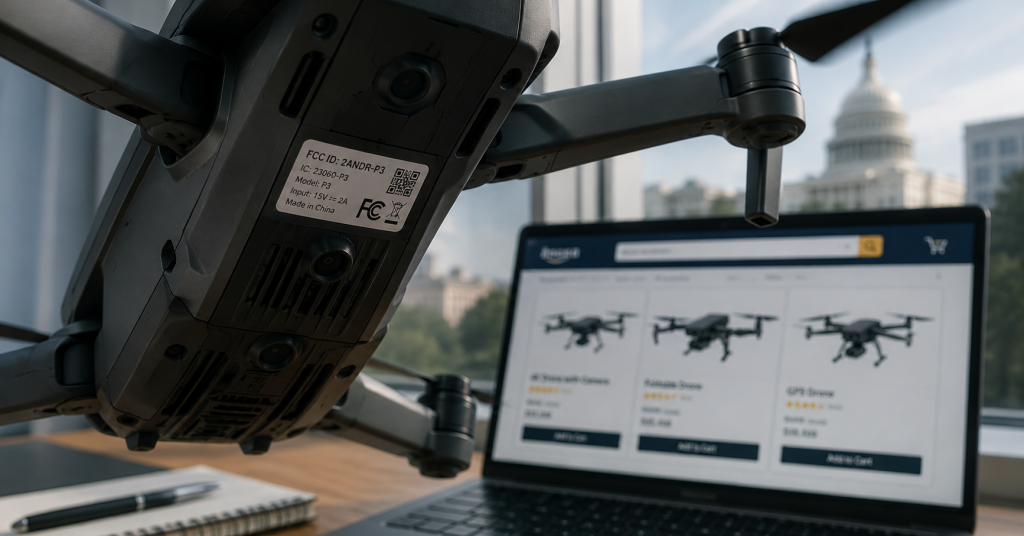
The FCC Is Going After Companies Trying to Bypass Its Restrictions
Here are the eight companies the FCC is fining $25,000:
- Cogito Tech Company Limited
- Fikaxo Technology Inc.
- Lyno Dynamics LLC
- Skyhigh Tech LLC
- Spatial Hover LLC
- SZ Knowact Robot Technology Co.
- WaveGo Tech LLC
- Xtra Technology LLC
The fines are for failing to respond to formal Letters of Inquiry from the FCC’s Enforcement Bureau.
Those letters sought information about whether the companies were selling drones or drone components that should have been blocked from entering the U.S. due to the FCC’s restrictions on foreign-made equipment.
And it seems like at least some of these companies may be doing this.
According to reporting from The Verge, products sold by Xtra closely resemble DJI cameras. Also, SZ Knowact and WaveGo Tech have ties to SkyRover, a company whose drones closely resemble some DJI drones.

The SkyRover S1
(It’s worth noting that DJI hasn’t confirmed any of these relationships.)
These fines could just be the beginning.
The FCC has started proceedings that could end in all eight companies being blocked from selling drones in the U.S., even if they previously received FCC authorization.
Online Drone Listings May Have to Display an FCC ID
In addition to the fines, the FCC is considering a transparency rule that would make it easier to verify a drone has FCC authorization when shopping online.
Under the proposal, online marketplaces would have to prominently display the drone’s FCC ID at the point of sale.
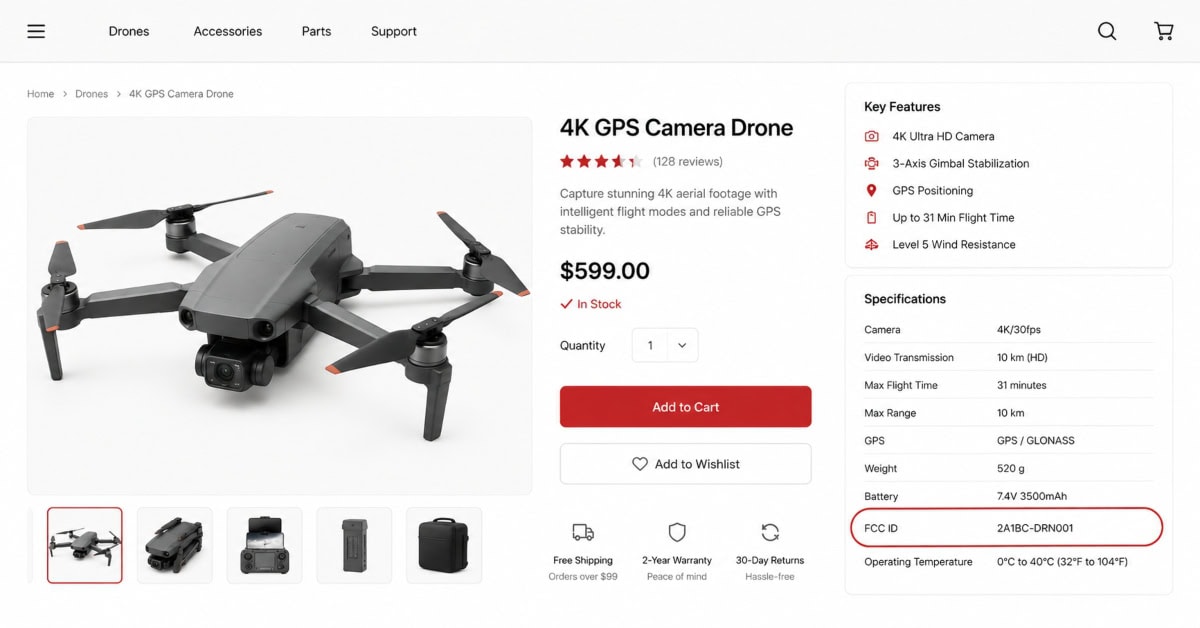
Illustration showing how FCC IDs could be displayed under the proposed rule
An FCC ID is the identifier tied to a product’s equipment authorization. Buyers can use it to search the FCC’s database and confirm that a drone, controller, or other wireless device has been certified for sale in the U.S.
Right now, that information can be hard to find without inspecting the product or its packaging after it arrives.
Requiring marketplaces to display it in the listing would give buyers—and regulators—a way to check the authorization before a purchase is made.
An FCC ID wouldn’t reveal everything about a drone’s origins or the supply chain that made it. But it would provide a concrete record showing who received the authorization and which filings are connected to the product.
What to Watch Next
The FCC’s proposed fines and transparency rule are still works in progress.
But together they offer one of the clearest pictures yet of how the agency intends to enforce its foreign drone restrictions.
And if these proceedings move forward, they could change how drones are bought and sold in the U.S.
For years, most buyers have focused on the brand printed on the aircraft.
Going forward, it may become just as important to know who actually designed the product, where it came from, and whether its FCC authorization can withstand closer scrutiny.
As always, we’ll keep you updated as things unfold.