Zipline Is Poised to Revolutionize Drone Delivery—Again
BY Zacc Dukowitz
2 April 2025One of the biggest problems for drone delivery is figuring out how to get a package from the drone to a precise final location.
Different solutions have been tested for this, including a drone mailbox, drone tethers that lower a package straight from the drone as it hovers in the air, and parachute-based systems that gently drop packages to designated areas.
Zipline’s new Platform 2 drone solves the problem by lowering a small droid on a wire. The droid carries that actual package, and can move on the ground to a precise location, if needed.
Here’s a peak of the Platform 2 in action:

What’s Different about the Platform 2?
Zipline has been leading the drone delivery pack for years.
The company got its start by building massive drone delivery networks for medical delivery in places like Rwanda and Tanzania. Those networks have been a huge success—today, Zipline’s drones have flown over 100 million miles autonomously, and they fly more than the circumference of the Earth every six hours.
All of those accomplishments were made with Zipline’s Platform 1, a delivery drone that looks like a small airplane.

Zipline’s Platform 1
Unlike second generation drones from a lot of companies, the Platform 2 isn’t the next iteration of the Platform 1.
Instead, it’s a drone made for different kinds of work. While the Platform 1 is made for long-range medical deliveries, the Platform 2 is made for consumer deliveries to homes.
You can see this difference in the way each drone gets its delivery to the final destination, and in the precision with which it makes the delivery:
- Parachute. The Platform 1 drops its delivery with a parachute attached to it, making for a relatively imprecise delivery—which is just fine for the deliveries it makes.
- Small droid. The Platform 2, on the other hand, uses a retractable tether to lower a droid holding the delivery, making for a much more precise dropoff.
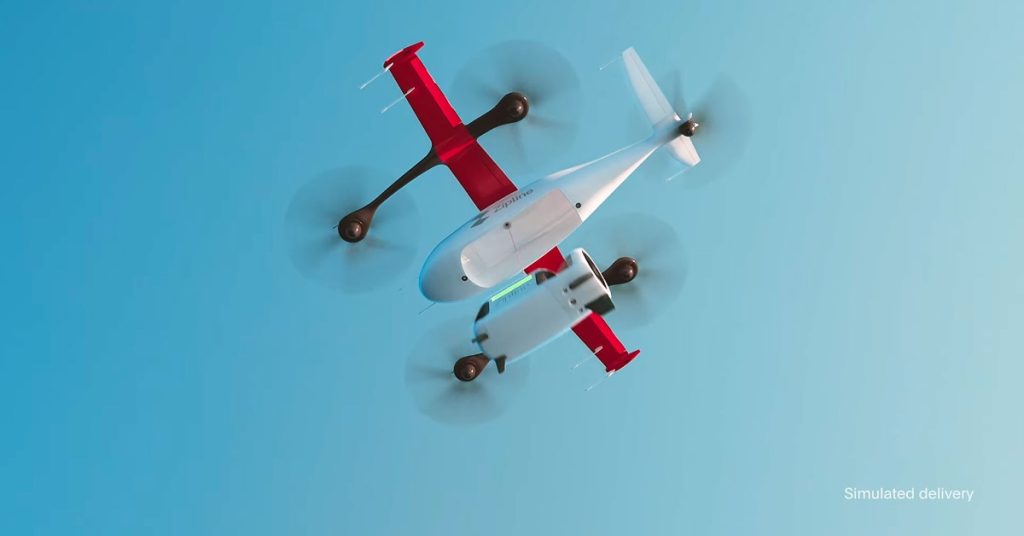
An image depicting the droid being lowered from the Platform 2
This chart covers the main differences between the Platform 1 and Platform 2:*
| Feature | Platform 1 | Platform 2 |
|---|---|---|
| Delivery Focus | Long-range deliveries for enterprise, business, and government | Home delivery |
| Payload | 4 pounds | 8 pounds |
| Service Range | 120+ miles roundtrip | 10 miles service radius, or 24 miles one way |
| Cruise Speed | 60 miles per hour | 70 miles per hour |
| Delivery Area | About two parking spaces | Areas as small as a patio table or the front steps of a home |
| Loading System | Orders packed by Zipline staff at distribution hubs | Easy-to-use loading portals to send orders |
| Delivery Mechanism | Parachute-controlled floating delivery from 60-80 feet above ground level | Droid-in-drone tethered delivery from more than 300 feet above ground level |
| Integration | Hub-and-spoke model via standalone hubs | Hub-and-spoke model or long distance with dock-to-dock network charging |
*This chart was made with information provided by Zipline.
How Do You Load the Platform 2?
The Platform 2’s unique droid delivery approach also makes loading it easier. Plus, the Platform 2 comes with several docks, making it flexible for operations in suburban and urban areas.
Both the easy loading and the docks make the Platform 2 more useful for consumer delivery—let’s take a closer look at each.
Easy to Load
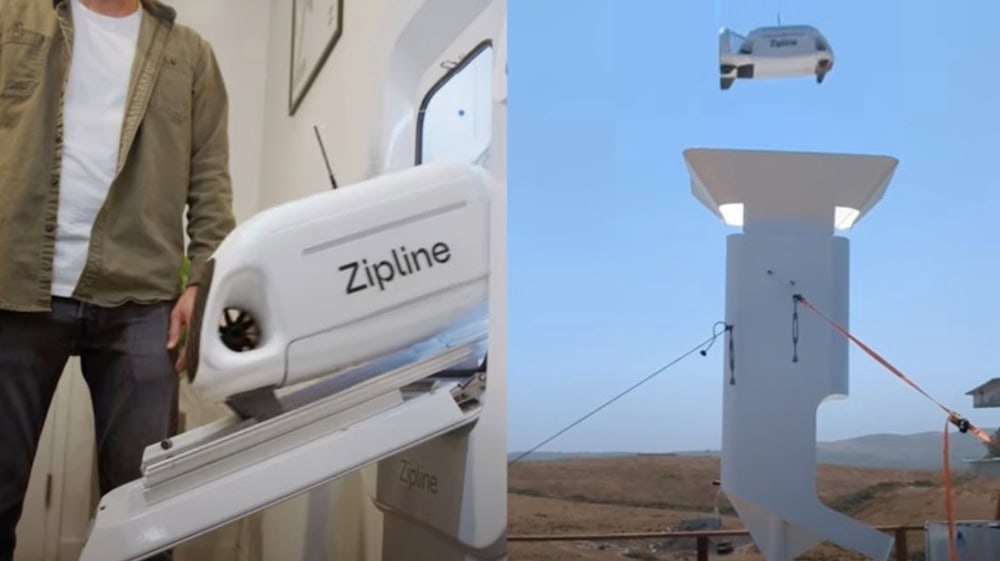
Platform 2 uses an innovative loading process that makes it easy to use:
- When a business prepares an order, the drone’s delivery droid descends from the drone to a loading portal.
- Employees place the package directly into the droid via the portal.
- Then, the drone pulls the droid back up and proceeds to the delivery destination.
Delivery portals can be installed indoors, outdoors, or even on rooftops. And loading takes just seconds, as employees place the package directly into the droid via the portal.
Devoted Docks
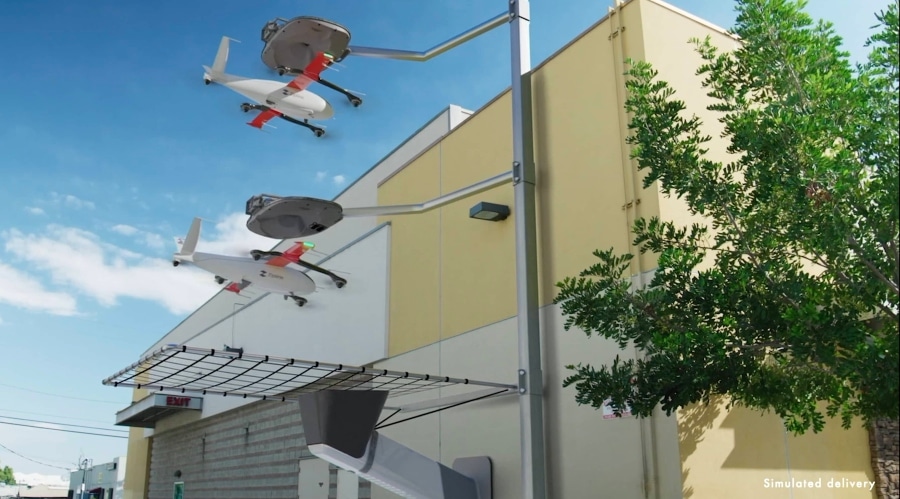
After completing its delivery via the tethered droid—which autonomously navigates to precise landing spots, like patios or front steps—the drone returns to its docking station.
Unlike the Platform 1, which lands at standalone hubs for battery swaps, Platform 2 drones dock by flying under their charging station and connecting upward.
This compact docking system saves space and is ideal for urban areas where large landing zones are impractical. The autonomous docking also allows for seamless recharging between deliveries, enabling continuous operations.
Why Loading and Docking Matter
The differences in loading and docking between Platform 1 and Platform 2 highlight Zipline’s shift in focus from enterprise and government logistics to consumer-oriented home delivery.
By decentralizing loading and introducing compact docking stations, Platform 2 adapts to the constraints of dense urban environments while maintaining speed and reliability.
These innovations position Zipline as a leader in drone delivery systems capable of scaling for everyday use in cities worldwide.
When Will Zipline Start Using the Platform 2?
Zipline plans to launch the Platform 2 in Dallas later this year. The drone will be used in the company’s first major U.S. metro operations center.
To learn more, check out this 12 minute video for a closer look at how the Platform 2 works and how it is made: