Waterproof Drones: What They Are + Best Options by Use Case
BY Zacc Dukowitz
20 March 2026Flying a normal drone over water is always a little nerve-racking.
If something goes wrong over a field, you may be able to land quickly and recover your drone.
→ Jump to our list of the best waterproof drones on the market
But if something goes wrong over a lake, river, or the ocean, there’s a good chance you’ll lose the drone.
That’s why waterproof drones exist.
They’re built for the kinds of situations where water exposure or proximity isn’t an accident—it’s part of the flying you want to do.
That might mean filming from a boat, capturing yourself while surfing, dropping bait offshore, or flying regularly in wet, windy marine conditions.
But the category can be confusing, since some “waterproof drones” are truly waterproof, while others are just just water resistant. And sometimes people use the term just to talk about normal drones with floats attached to them.
In this guide, we’ll break down what a waterproof drone actually is, how these drones are built to handle water, which models are worth considering, and how to choose the right option for your use case.
Here’s a menu in case you’d like to jump around:
- What Is a Waterproof Drone?
- The Best Waterproof Drones on the Market
- How People Use Waterproof Drones
- What Happens if a Drone Gets Wet?
- Waterproof Drones FAQ
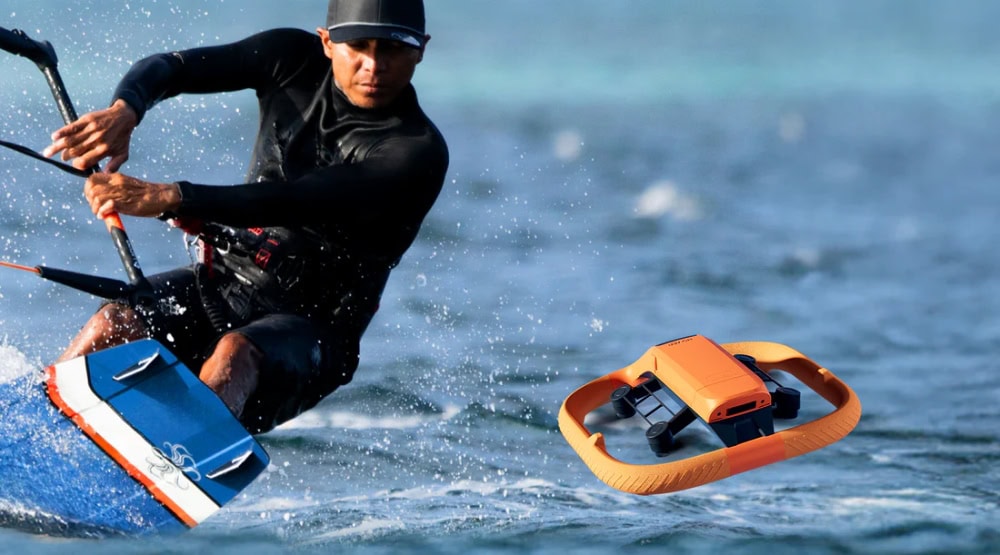
The HoverAir Aqua | Credit: ZeroZero Robotics
What Is a Waterproof Drone?
A waterproof drone is a drone designed to operate in or around water without being damaged by the kinds of water exposure that would ruin a standard drone.
That’s the short version. But in practice, the term can cover several levels of water protection.
Most drones on the market are not waterproof. They’re made for dry conditions, and even light rain, spray, or a brief water landing can damage the motors, battery, camera, or internal electronics.
So when people search for a waterproof drone, they’re usually looking for some combination of protection, recoverability, and peace of mind.
Usually, they mean one of three things:
- True Waterproof Drones. Purpose-built aircraft with sealed bodies and components designed for direct exposure to water.
- Water-Ready Drones. Drones that can operate around water with the help of waterproof housings, pontoons, or similar accessories.
- Standard Drones with Floats. Regular drones with aftermarket add-ons that may help them stay afloat, but do not make them waterproof.
How Waterproof Drones Are Actually Waterproof
When manufacturers say a drone is waterproof, the protection usually comes from a combination of design choices rather than one magic feature.
Here are the main ways waterproof drones deal with water:
- Sealed electronics: Internal systems are enclosed to reduce the chance of water intrusion.
- Protected motors and wiring: Critical components are designed to tolerate moisture better than those on standard drones.
- Buoyant or floating bodies: The drone is designed to stay on the surface after a water landing.
- Waterproof housings or shells: Some drones rely on external protection to keep water away from the airframe.
But “waterproof” can still mean different things depending on the product.
- Water-resistant usually means the drone can tolerate some spray or light moisture, but should not be treated like a true waterproof platform.
- Surface-water capable usually means the drone can handle water takeoff, water landing, or direct exposure at the surface.
- Submersible means the drone can be fully submerged without damage—which is extremely rare in this category.
That last point is important. Most waterproof drones are not underwater drones. They’re designed for wet, above-water environments—not for diving beneath the surface.
Why the Term Can Be Misleading
The phrase “waterproof drone” sounds simple, but it can create unrealistic expectations.
A lot of buyers hear “waterproof” and assume it means the drone can survive anything involving water. In reality, many of these drones are designed for a narrower set of situations: splashes, spray, rain, water landings, and repeated use in wet conditions.
That’s still extremely useful. But it’s better to think about the category in terms of intended exposure rather than labels alone.
If you regularly fly around boats, surf, shorelines, or offshore fishing spots, a waterproof drone can make a huge difference. The key is choosing one that matches the type of water exposure you actually expect.
The Best Waterproof Drones on the Market
There are not many credible waterproof drones on the market, which is actually helpful. It means the list of serious options is pretty short.
Before choosing one, we suggest you identify what you need:
- True waterproofing vs. accessory-based protection: Is the drone itself built for water, or does the protection depend on a housing or kit?
- Saltwater use: Ocean and surf environments are much harsher than freshwater.
- Float recovery: A drone that floats gives you a much better chance of recovery after an emergency water landing.
- Primary use case: Fishing, water sports, boating, and general filming all push you toward different kinds of drones.
- Portability vs. ruggedness: The smallest drone is not always the best one for repeated marine use.
Now let’s look at the drones. Here’s a quick overview:
| Drone | Category | Water Protection | Best For | Notes |
|---|---|---|---|---|
| SwellPro SplashDrone 4+ | True Waterproof Drone | Purpose-built waterproof design | Boating, marine filming, general over-water use | Rugged, marine-focused platform built for repeated flights over water |
| SwellPro Fisherman Max | True Waterproof Drone | Purpose-built waterproof design | Drone fishing | Specialized fishing drone built for payload, surf, and saltwater use |
| HOVERAir AQUA | True Waterproof Drone | Waterproof, buoyant self-flying camera | Water sports, self-filming, follow-style capture | Compact, lifestyle-focused option for surfers, kayakers, and paddlers |
| PowerVision PowerEgg X | Water-Ready Drone | Waterproof kit and pontoons required | Occasional use near water, mixed land-and-water filming | Not fully waterproof; better thought of as a protected setup |
Quick note: You’ll notice we’re not listing standard drones with aftermarket floats here. Those accessories may help a drone stay on the surface after a water landing, but they do not seal the electronics or turn a normal drone into a waterproof one. For that reason, this list focuses on true waterproof drones plus one water-ready option that’s explicitly designed for use around water.
1. The Best Waterproof Drones
Here’s our list of the top waterproof drones on the market right now:
1. HOVERAir AQUA
Type: True Waterproof Drone

HOVERAir’s AQUA is the most interesting newer entrant in this space because it points the category in a different direction. Instead of focusing on fishing or rugged marine utility, it’s positioned more as a waterproof self-flying camera for water sports and lifestyle capture.
That gives it a very different appeal. Someone who wants hands-free footage while surfing, kayaking, or spending time on the water may care much more about follow-style capture and portability than they do about payload or industrial-style ruggedness.
- Best fit for water sports and self-filming
- More lifestyle-focused than marine utility drones
- Strongest match for “waterproof follow me drone” style intent
- Good option for buyers who want simplicity and portability
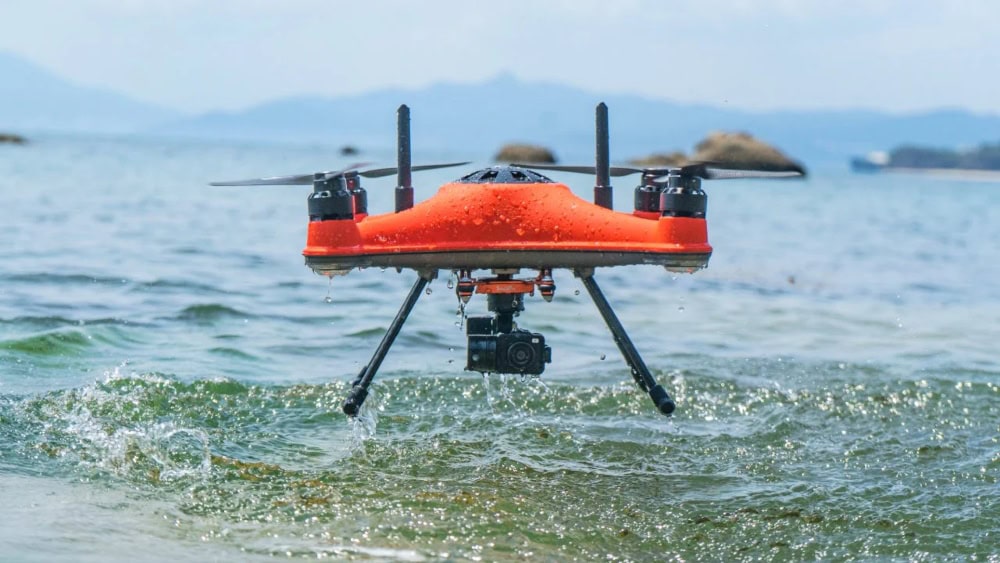
2. SwellPro SplashDrone 4+
Type: True Waterproof Drone

The SplashDrone 4+ is one of the clearest examples of a true waterproof drone. It’s built specifically for marine environments and is designed for the kind of flying that would make most camera drones a bad idea—over open water, in wet weather, and in situations where a water landing is a realistic possibility.
That makes it a strong fit for boaters, shoreline pilots, marine filmmakers, and anyone who wants a versatile over-water platform rather than a specialized fishing drone.
- Purpose-built for repeated over-water use
- More rugged and marine-focused than a standard camera drone
- Better fit for boating and general marine filming than ultra-compact lifestyle drones
- Appeals most to buyers who prioritize durability over convenience
3. SwellPro Fisherman Max
Type: True Waterproof Drone

The Fisherman Max is another true waterproof option, but it belongs in a more specialized niche. This is a drone fishing platform first, which means it’s built around carrying bait, handling tough marine conditions, and giving anglers more capability offshore.
If fishing is your main goal, that specialization is exactly what you want. But if you’re mainly looking for a lightweight drone to follow you on a paddleboard or capture travel footage from a boat, this is probably more drone than you need.
- Best fit for dedicated drone fishing
- Built around payload and marine durability rather than portability
- Stronger choice than a general drone with floats for surf and saltwater use
- Most useful when fishing performance matters more than cinematic flexibility
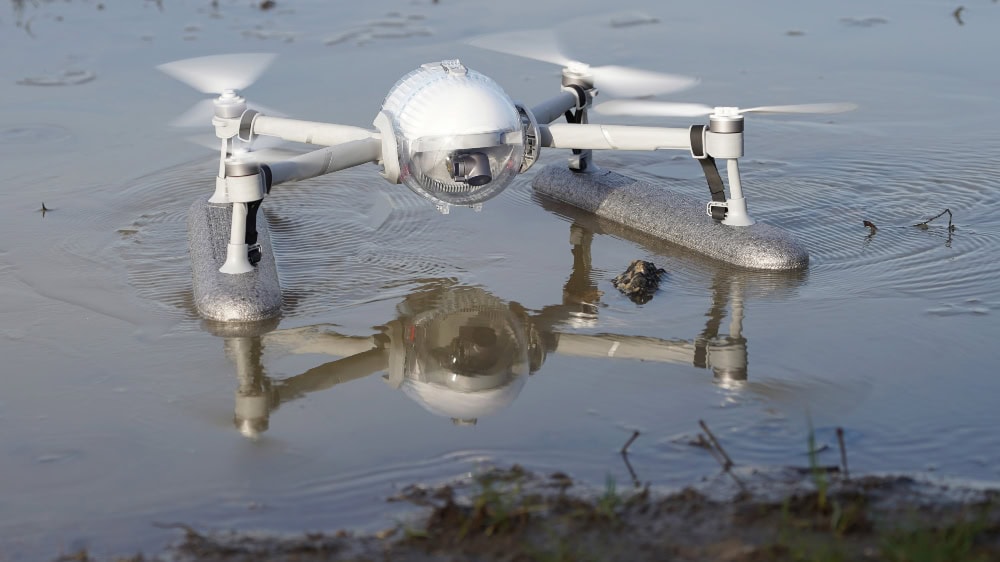
4. PowerVision PowerEgg X (with Waterproof Kit)
Type: Water-Ready Drone

The PowerEgg X is the clearest example of a water-ready drone rather than a truly waterproof one. With the appropriate kit installed, it can be used around water in ways that a standard consumer drone usually cannot.
That makes it appealing for occasional shoreline filming, boating trips, or buyers who want flexibility and do not need a dedicated marine platform. The tradeoff is that the protection comes from the setup, not from a natively waterproof aircraft body.
- Good fit for occasional use near water
- Better thought of as a protected setup than a fully waterproof drone
- Appealing middle-ground option for mixed land-and-water use
- Less ideal than a purpose-built waterproof drone for regular marine exposure
How People Use Waterproof Drones
A surfer, an angler, and a boater may all want to find a waterproof drone, but they’re usually looking for very different things.
The best waterproof drone for one of those people may be a poor fit for another.
Here, we’ll cover the most common ways people use waterproof drones and the best models for that use case.
Here’s a quick overview:
| Use Case | What Matters Most | Best Fit |
|---|---|---|
| Water sports | Follow-style filming, portability, simplicity | HOVERAir AQUA |
| Drone fishing | Payload, durability, marine recovery | SwellPro Fisherman Max |
| Boating / marine filming | Versatility, reliability, repeated over-water flights | SwellPro SplashDrone 4+ |
| Occasional use near water | Flexibility, lower commitment, mixed use | PowerVision PowerEgg X |
| Professional or demanding marine use | Reliability, recovery, repeat operations in wet environments | SwellPro SplashDrone 4+ |
Water Sports (Surfing, Kayaking, Paddleboarding)
In this category, ease of use matters a lot.
You want a drone that can keep up with motion, make self-capture easier, and handle wet environments without turning the whole experience into a technical project.
That’s why the best waterproof drone for water sports is usually a compact, follow-style platform rather than a bigger marine drone.
Things to consider:
- Follow-style capture matters more than payload
- Portability matters more than industrial ruggedness
- Water confidence is important because landings and splashes are part of the environment
- Simplicity is a feature in this category, not a compromise
Recommended drone: HOVERAir AQUA
It’s the clearest fit for the buyer who wants hands-free capture on the water, especially for surfing, paddling, and similar activities.

The HoverAir Aqua | Credit: ZeroZero Robotics
Drone Fishing
Drone fishing is one of the most demanding use cases in this entire category.
You’re often dealing with saltwater, wind, surf, and the need to carry and release payloads. That means the drone has to do much more than just survive a splash. It needs to be built around marine exposure and functional performance.
This is also where general-purpose camera drones usually fall apart as an idea. Even if one could be made to float, that still would not make it a serious fishing platform.
Things to consider:
- Payload capacity is essential for carrying bait effectively
- Saltwater durability matters more than it does in lake or river environments
- Float recovery is critical if something goes wrong offshore
- Purpose-built design is far more important than portability
Recommended drone: SwellPro Fisherman Max
If fishing is the priority, this is the strongest match because it’s designed for that job rather than adapted to it.
Boating, Shoreline Flying, and General Marine Filming
This is probably the broadest use case in the category. And for a lot of readers, it’s the most relevant one.
If you’re filming from a boat, launching near a dock, flying along a shoreline, or regularly capturing footage over lakes or the ocean, you want a drone that gives you more margin for error than a normal consumer model.
You may not need the payload of a fishing drone, but you do need reliability and repeatability in a wet environment.
That’s where a multifunction waterproof drone makes the most sense.
Things to consider:
- Versatility matters because the drone may be used for many kinds of shots
- Repeated over-water flights demand a platform built for the environment
- Floating capability provides valuable recovery insurance
- Durability usually matters more than ultra-compact size
Recommended drone: SwellPro SplashDrone 4+
It’s the best fit for readers who want a true waterproof drone for general boating and marine filming rather than a niche fishing platform or a compact self-filming camera.
Occasional Use Around Water
Not everyone needs a dedicated waterproof drone.
Some people mostly fly on land but occasionally want to capture footage near a lake, beach, dock, or boat. Others may want a more flexible setup that can handle some wet scenarios without committing to a larger, more specialized marine platform.
Things to consider:
- Good fit for occasional shoreline or boating use
- Appealing when flexibility matters more than maximum marine durability
- Best for buyers who understand the tradeoffs and do not need a true waterproof platform
- Accessory setup matters more here than it does with purpose-built waterproof drones
Recommended drone: PowerVision PowerEgg X
This is the middle-ground choice for buyers who want some water capability without moving fully into the dedicated waterproof category.
Professional or Demanding Marine Use
There’s also a more serious end of this category, which includes use cases like marine inspections, search support, repeated operations from boats, or any environment where reliability matters more than convenience.
In those situations, the main question is not whether the drone can survive a splash. The question is whether it can perform consistently in an environment where water exposure is normal and where failed flights are especially costly.
Things to consider:
- Reliability becomes more important than compact design
- Recovery after unexpected water landings matters more
- A purpose-built waterproof platform makes far more sense than an improvised setup
- Marine durability is part of the mission, not just a nice bonus
Recommended drone: SwellPro SplashDrone 4+
For readers on the more demanding end of the spectrum, it’s the clearest fit among the options in this guide.
The SwellPro SplashDrone 4+ | Credit: SwellPro
What Happens If a Drone Gets Wet?
What happens when a drone gets wet depends on two things: how much water it’s exposed to, and what kind of drone you’re flying.
For most consumer drones, water is one of the fastest ways to cause expensive damage. But not all water exposure is equal, and not all damage shows up immediately.
Light Rain, Spray, or Moisture
A little moisture may not ruin a standard drone on the spot. That’s part of what makes this category tricky. A drone might keep flying through mist or light spray and seem totally fine.
But water can still enter through seams, vents, or exposed components. And once moisture gets inside, the bigger risk may show up later in the form of corrosion, electrical issues, or gradual failure in motors and electronics.
Here’s what can happen:
- The drone may appear fine at first
- Damage can show up later instead of immediately
- Saltwater spray is much more aggressive than freshwater moisture
Splashes and Water Landings
A splash or direct contact with water is more serious. At that point, multiple vulnerable systems may be exposed at once, including the motors, battery, gimbal, and internal electronics.
If the drone is not designed to float, recovery becomes urgent. The longer it stays in the water—or even partially submerged—the higher the chance of permanent damage.
Here’s what can happen:
- Motors can degrade quickly after water exposure
- Batteries and electronics become much higher-risk once soaked
- Camera systems and gimbals are especially vulnerable
Full Submersion
For a standard drone, full submersion is often the end of the story.
Water entering the internal systems can cause immediate short circuits, and even a fast recovery may not prevent longer-term corrosion. That is one reason over-water flying with a normal drone is so risky: once it goes in, you may not get a second chance.
This is also why it’s important not to confuse “waterproof” with “submersible.” Most waterproof drones are built for above-water environments and surface exposure, not for operating underwater.
Why Drone Type Matters So Much
This is where the category differences become real.
- Standard drones are not designed for water exposure, and even minor contact can lead to damage
- Water-ready drones can handle some wet conditions with the right accessories, but their protection depends on the setup
- True waterproof drones are designed from the start to handle water as part of normal operation
A true waterproof drone may be able to land on water, float, and continue operating. A standard drone in the same situation may be permanently damaged within seconds.
The Overlooked Risk: Delayed Damage
One of the biggest mistakes people make is assuming that if the drone still works after a wet flight, everything is fine.
Sometimes the real damage shows up later. Moisture left inside the airframe can corrode components over time, especially after saltwater exposure. That means a drone can survive the moment and still fail later because of what happened during that flight.
Bottom Line
Most drones are not built to get wet. And even if they appear to survive moisture or spray, water exposure can create problems that show up later.
If you regularly fly around water, the safest approach is not just to be careful. It’s to use a drone designed for that environment in the first place.
PowerVision PowerEgg X | Credit: PowerVision
Waterproof Drones FAQ
Here are answers to the most commonly asked questions about waterproof drones.
Are drones waterproof?
Most drones are not waterproof. Only a small number are built specifically for water use, and even among those, the level of protection varies.
Can drones fly in rain?
Most consumer drones should not be flown in rain. Some waterproof or water-ready models are designed for wet conditions, but standard drones usually are not.
Can a drone land on water?
Some can. Certain waterproof drones are designed to float and land on water, while some water-ready setups can do it with the right accessories installed.
What’s the best waterproof drone for fishing?
If fishing is your main use case, the best fit is usually a purpose-built platform like the SwellPro Fisherman Max rather than a general camera drone.
What’s the best waterproof follow-me drone?
For that use case, HOVERAir AQUA is the clearest fit in this guide because it is positioned around hands-free capture for water sports and similar activities.
Is a water-ready drone the same as a waterproof drone?
No. A water-ready drone usually depends on housings, floats, or pontoons, while a true waterproof drone is designed from the start for direct water exposure.
Do floats make a drone waterproof?
No. Floats may help keep a drone on the surface after a water landing, but they do not protect the internal components from water damage.