Can the Skyrover S1 Compete with DJI’s Mini Line?
BY Zacc Dukowitz
11 March 2026Skyrover has a new pitch for U.S. buyers: what if you could get something that feels a lot like a DJI Mini without paying DJI Mini prices?
The company’s new S1 drone sells for about $300. For comparison, DJI’s higher-end Mini drones can run close to $1,000 or more, depending on the model and bundle.

The Skyrover S1 isn’t as robust as the Mini 4 Pro or Mini 5 Pro—if you’re looking for a prosumer drone to use for work, those Minis will be a clear standout.
But it has a lot of features that stack up well, including a sub-250g weight, 4K/60 fps video, a 3-axis gimbal, and forward obstacle avoidance.
If you’re looking for an entry-level, travel-friendly drone you don’t have to register—but that still offers solid camera and flight features—the S1 is a new option worth checking out.
A Budget Drone Aiming Above Its Price
DJI’s has a winning formula for the Mini series.
Keep the drone small and light, and pack in enough camera and flight tech to make it feel like a real drone while keeping it simple to fly.
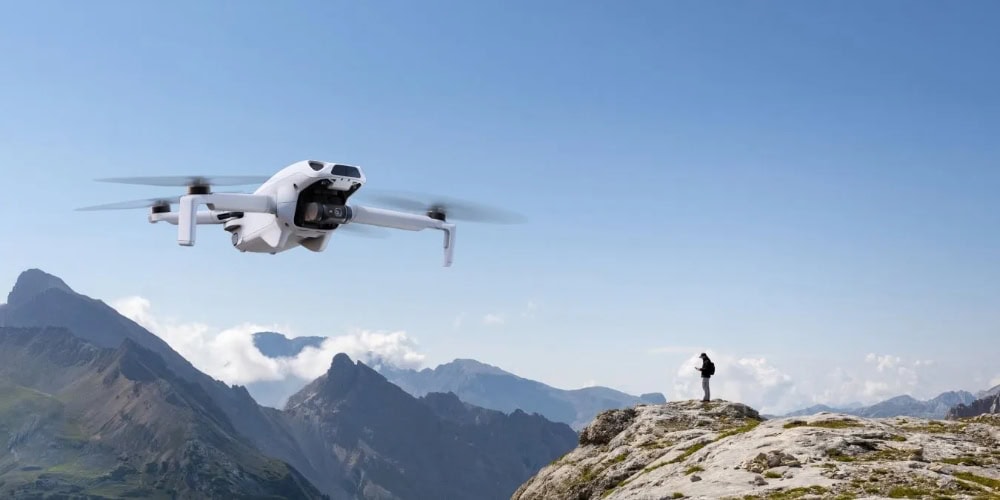
Credit: Skyrover
The Skyrover S1 follows that playbook.
What makes it stand out isn’t just the $300 price. It’s that Skyrover appears to be pairing that price with features that help separate basic beginner drones from more capable camera drones.
If those features perform as advertised in real-world use, the S1 could become one of the more credible low-cost alternatives to DJI currently available in the U.S.
But whether it can truly compete with DJI’s Mini line will depend on real-world performance.
For now, that’s the main caveat. Most of the current buzz around the S1 is still based on specs, positioning, and early coverage—not broad hands-on testing.
But the spec sheet is strong enough to make the S1 feel like more than just another cheap foldable drone.
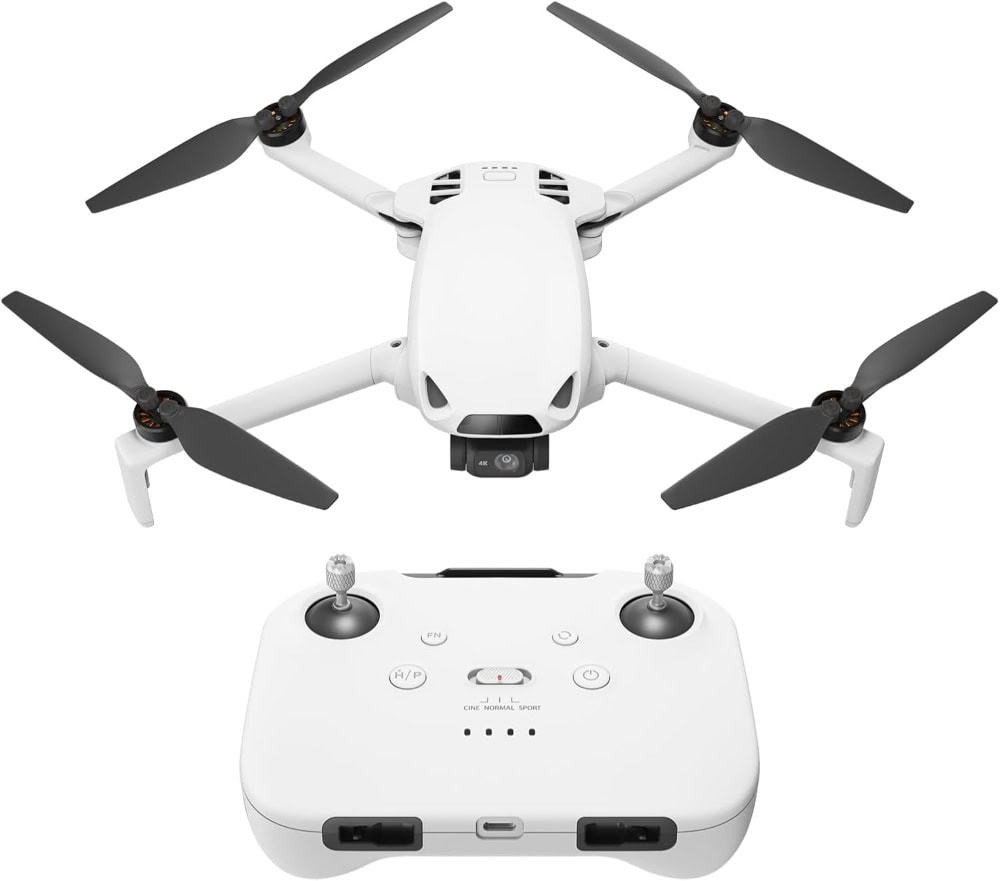
Credit: Skyrover
Specs and Features for the Skyrover S1
At about $300, the S1’s spec sheet is unusually strong: 40 minutes of flight time, transmission up to 7.4 miles (12 km), forward obstacle avoidance, and smart flight features like subject tracking and Return-to-Home.
Here are the S1’s main specs and features:
- Weight. Under 249 grams, putting it in the same no-registration-required mini class that helped make the DJI Mini line so popular for travel and casual flying.
- Camera. A 1/2″ 48MP Sony sensor, a notable spec at this price that gives it a clear edge over toy-grade drones.
- Video. 4K video at up to 60fps, paired with a 3-axis mechanical gimbal for stabilized footage.
- Flight time. Up to 40 minutes—impressive for a mini.
- Transmission range. HD video transmission up to 7.4 miles (12 km).
- Obstacle avoidance. Forward obstacle avoidance.
- Smart features. Subject tracking, waypoint navigation, and automatic Return-to-Home.
The Real Test Will Be Execution
With ongoing uncertainty around the future of DJI drones in the U.S., buyers may be more open to alternatives. That could create a real opportunity for upstarts like Skyrover.
It’s worth noting that Skyrover is based in Hong Kong, so it may face the same challenges as DJI in getting FCC approvals for future drones. But for now, it looks like the S1 is approved and available for sale in the U.S.
Skyrover seems to be targeting a practical buyer with the S1. That means someone who wants a lightweight drone for travel, family trips, hiking, casual real-estate-style capture, or social content, but doesn’t want to spend Mini 4 Pro money.
Of course, that’s only true if the drone actually works as promised.
Performance is where budget drones usually prove themselves, or don’t.
A strong spec sheet doesn’t automatically mean a strong drone. And if a drone can’t perform, the $300 price point starts to look a lot less impressive.
The real differentiators will be things like flight stability, app reliability, transmission consistency, subject-tracking performance, and how it flies in challenging conditions. All of these areas are where DJI has historically separated itself from cheaper competitors.
But if real-world performance lands reasonably close to what the early coverage suggests, DJI’s Mini line may finally have a more serious budget challenger in the U.S. market than it has had in a while.