American-Based SiFly Comes Tearing Out of Stealth Mode with Quiet, Powerful Helicopter Drones
BY Zacc Dukowitz
7 May 2025Heard of SiFly?
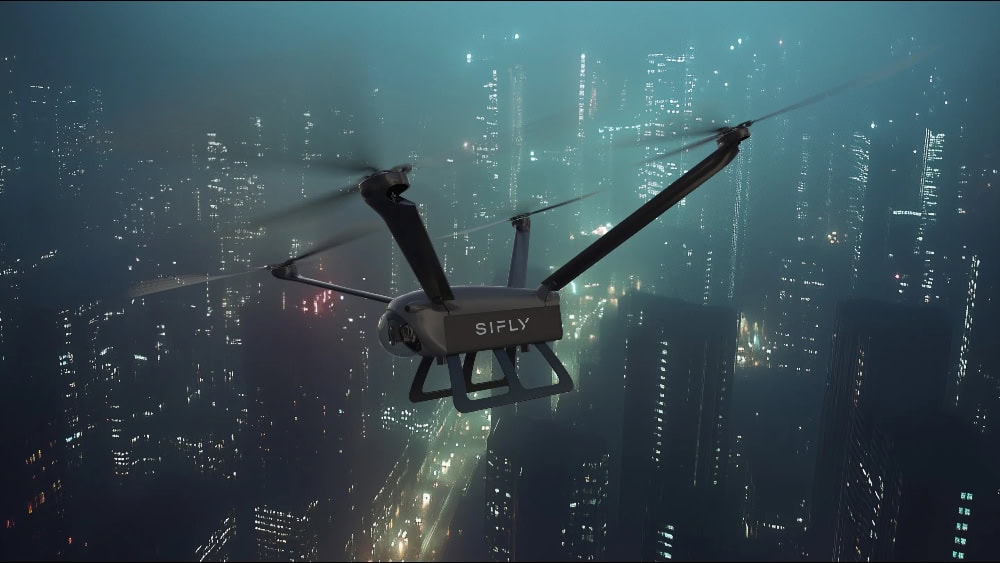
It’s a Silicon Valley-based drone startup that just exited stealth mode, launching two powerful long range drones at the same time.
Both drones are workhorses, coming with extended flight times, heavy payload capacities, and clean, quiet operation.
- SiFly’s Q12 drone can hover for two hours or fly forward for up to three, covering 90 miles while carrying a 10-pound payload.
- SiFly’s Q250 goes even further, lifting 200 pounds for over 90 minutes—enough to replace helicopters for jobs like fire suppression, cargo delivery, and agricultural spraying.

Both the Q12 and the Q250 are electric. This is a fact worth calling out, since many drones with such long flight ranges and payload capacities often rely on hybrid power systems or combustion engines to achieve similar endurance and lifting power.
They’re also both NDAA-compliant, which will make them attractive for government and private clients who are wary of using technology made in China.
These two drones have already logged thousands of successful flights, including real-world deployments in agriculture and emergency response, where onboard AI and cloud-connected systems deliver real-time insights at industrial scale.
For commercial drone operators who have been forced to choose between capability and compliance, SiFly’s arrival signals a new standard: long-endurance, heavy-lift, and advanced autonomy—without trade-offs or compromises.
About the Q12
The Q12 is SiFly’s flagship drone for commercial operators who need maximum time in the air without sacrificing payload or range.
Purpose-built for demanding industrial and public safety missions, the Q12 is engineered for enterprise-scale operations where reliability, endurance, and connectivity are mission-critical.

SiFly’s Q12 drone
Specs for the Q12
Here are the main specs for the Q12:
- Type. All-electric, autonomous VTOL (Vertical Takeoff and Landing)
- Endurance. 2 hours hover, 3 hours forward flight
- Range. Up to 90 miles (145 km)
- Payload capacity. 10 pounds (4.5 kg)
- Top speed. 55 mph (88 kph)
- Connectivity. 5G-enabled for cloud missions; optional long-range Wi-Fi where 5G is unavailable
- Compliance. NDAA-compliant for U.S. government and public safety use
- Operational efficiency. Reduces need for drone docks; cuts Drone-as-First-Responder (DFR) program costs by 90% per square mile
Primary Focus and Use Cases
The Q12 is designed for a wide range of commercial applications, including:
- Infrastructure inspection. Including utilities, rail, energy, built environment
- Mapping and surveying. Including agriculture, mining, construction, environmental monitoring
- Public safety and emergency response. Including search and rescue, fire protection, Drone-as-First-Responder programs
- Perimeter and border security. Including monitoring of critical infrastructure perimeters, surveillance of remote borders, detection of unauthorized crossings, and rapid response to security breaches
- Logistics and linear surveying. Including delivery of medical supplies or equipment to remote sites, inspection of pipelines and power lines over long distances, and mapping of transportation corridors such as highways and railways
Its long flight times and robust payload make it especially suited for Beyond Visual Line-of-Sight (BVLOS) operations, where covering large areas or persistent aerial monitoring is required.
Also, the Q12’s cloud connectivity and real-time data capabilities enable advanced applications, like live situational awareness for first responders and large-scale agricultural analytics.
About the Q250
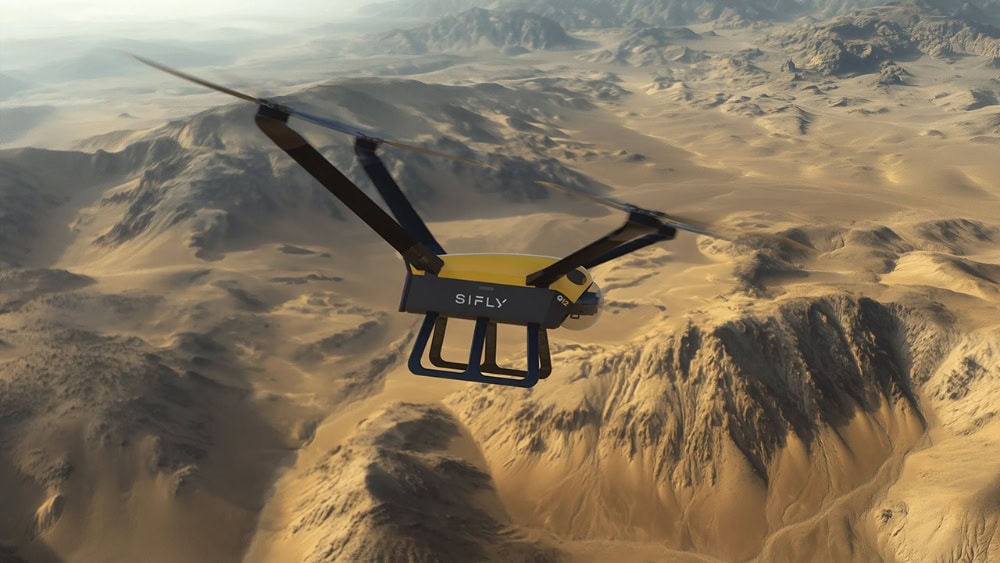
SiFly’s Q250 drone
Specs for the Q250
Here are the main specs for the Q250:
- Type. All-electric, autonomous VTOL (Vertical Takeoff and Landing)
- Endurance. 100 minutes (1 hour 40 minutes) with full payload
- Range. Up to 85 miles (137 km)
- Payload capacity. 200 pounds (90.7 kg) standard, up to 237 pounds (107.5 kg) in some configurations
- Top speed. 100 mph (161 kph)
- Compliance. NDAA-compliant for U.S. government and public safety use
- Operational efficiency. Designed to replace costly helicopter operations for fire suppression, cargo delivery, and agricultural spraying at a fraction of the cost
Primary Focus and Use Cases
The Q250 is engineered for the most demanding commercial applications, including:
- Logistics and cargo delivery. Including transport of heavy equipment, supplies, or humanitarian aid to remote or inaccessible locations
- Fire suppression and disaster response. Including aerial deployment of water or retardant, delivery of emergency relief supplies, and rapid support for search and rescue operations
- Agricultural spraying. Including large-scale application of fertilizers or pesticides, crop dusting, and precision agriculture on expansive farms
- Infrastructure and construction support. Including lifting and positioning of heavy components for energy, telecom, or building projects, and support for remote site operations
- Military and government operations. Including tactical resupply, equipment transport, and surveillance in challenging or contested environments
With its combination of heavy-lift capacity, long endurance, and all-electric operation, the Q250 is designed to enable organizations to take on missions that previously required manned aircraft-delivering helicopter-class performance at a fraction of the cost and complexity.
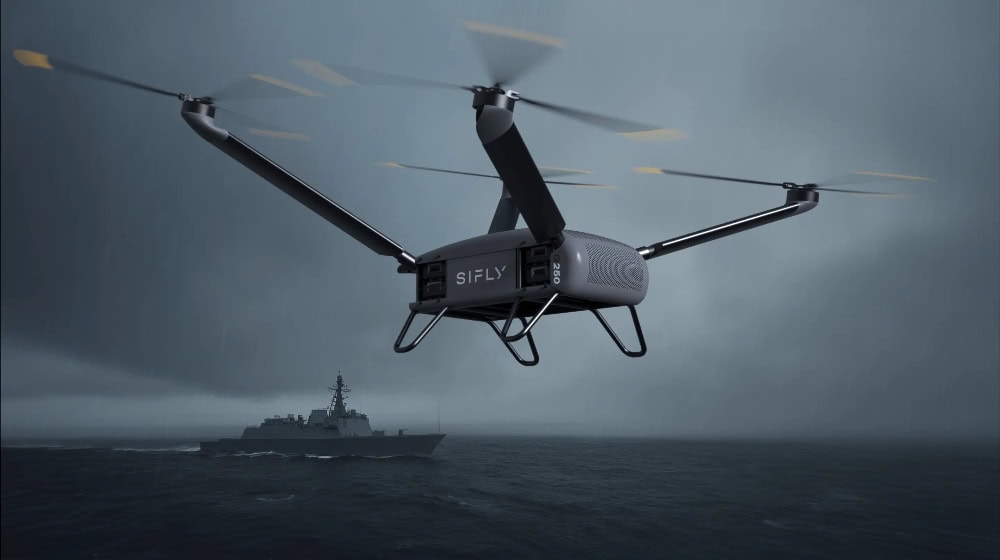
Credit: SiFly
What’s Next for SiFly?
SiFly is moving fast.
Q12 deliveries are set to begin in the fourth quarter of this year. And the company is already demonstrating both platforms for public and private sector organizations across the U.S.
Early feedback from operators in agriculture, public safety, and logistics has been strong, with many seeing SiFly’s drones as a practical alternative to helicopters and imported UAVs.
Credit: SiFly
SiFly hasn’t shared pricing yet for either of its enterprise drones. But given their specs and supply chain, we would guess they’ll be at least $10,000, if not much more.
Once SiFly starts shipping we’ll be curious to hear more. Right now, the company seems poised to carve out a strong corner of the commercial drone market for itself, edging into the space that platforms like DJI’s Matrice or FlyCart drones have traditionally held.