Night Vision Drones Explained: Types, Uses, and the Best Options
BY Zacc Dukowitz
17 April 2026A night vision drone is a drone that captures images, video, or other data in low-light or nighttime conditions.
But there’s no single type of drone that universally qualifies as a “night vision drone.”
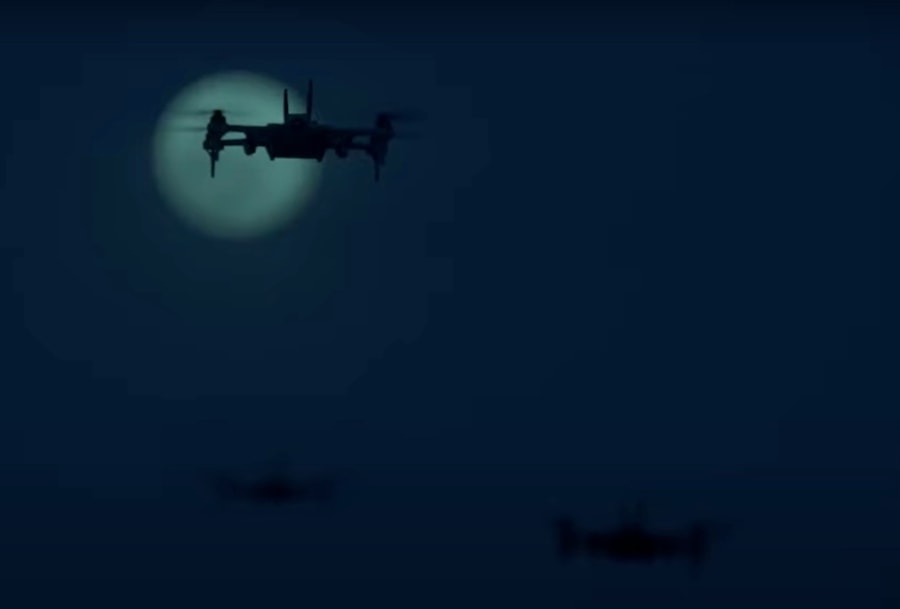
Credit: Teal
In practice, the term gets used as a catch-all for any drone that can capture usable footage or data in low-light or nighttime conditions. That can mean very different things depending on the setup, which is why this category gets confusing so quickly.
This guide does two things: it explains what people usually mean when they say “night vision drone,” and it helps you figure out which type actually fits your use case.
That matters, because a drone that works well for low-light video isn’t the same thing as a drone made to detect people or heat signatures in the dark.
Here’s a menu in case you’d like to jump around within this guide:
- What Is a Night Vision Drone?
- The Best Night Vision Drones on the Market
- How Night Vision Drones Are Used
- How to Choose the Right Night Vision Drone
- How to Fly a Drone at Night Legally and Safely
- Night Vision Drones FAQ
What Is a Night Vision Drone?
A night vision drone is a drone equipped with a camera or sensor system that lets it capture usable images, video, or heat data in low-light or nighttime conditions.
Each type of night vision drone solves a different problem:
- Consumer night-capable drones help you see a scene in dim light.
- Professional night vision drones help you detect heat, movement, or anomalies in complete darkness.
- Specialized night vision systems combine multiple sensors, including thermal or infrared, allowing pilots to detect and then confirm what they’re looking at in the dark.
When people ask whether a drone has “night vision,” they usually mean something specific: can it capture usable visible footage after dark, can it detect heat signatures, or can it do both?
That’s why night vision drones are best treated as an umbrella term, not a precise spec. What really matters is the kind of visibility the drone gives you, and whether that visibility matches the work you need to do.
Once you break the topic down that way, the rest of the buying decision gets much easier.
Night Vision Drones at a Glance
As we just covered, most night-capable drones fall into three buckets.
Here’s a quick overview:
| Type | How it works | Best for | Main limitation |
|---|---|---|---|
| Low-light / starlight cameras | Use visible-light sensors, larger pixels, and image processing to gather more available light | Photography, video, some visual inspection work | Performance drops when ambient light gets very low |
| Active infrared systems | Use infrared illumination and a camera that can read reflected IR light | Specialized surveillance and some defense-adjacent applications | Less common in mainstream drone workflows and more limited in range |
| Thermal cameras | Detect heat differences rather than visible light | Search and rescue, security, inspections, wildlife spotting | Do not produce a normal visible image of the scene |
Which Type of Night Vision Drone Do You Need?
Here are a few practical questions to help you find the right drone for your needs:
- Do you need visible detail?
- Do you need heat detection?
- Or do you need both?
A strong low-light camera may be great for filming a skyline, but it can fall short in a search-and-rescue scenario. A thermal drone may be excellent for detection, but not ideal if you need recognizable visual imagery for documentation or media.
The best choice depends on the job, the environment, and the kind of information you need from the aircraft after dark.
The Parallel-Path Development of Nighttime Drone Tech
Early consumer drones were mostly daylight tools.
As sensors improved, low-light performance got better first, which made dusk and nighttime footage more usable for creators and commercial operators.
Thermal and infrared capabilities developed along a different path. Those systems were more expensive, more specialized, and more common in public safety, industrial inspection, and government workflows long before they became part of mainstream drone conversations.
And that history still shapes the market today.
Consumer-facing drones tend to treat nighttime capability as a camera-performance question, while enterprise and government systems treat it as a detection, response, or mission-readiness question.
The Best Night Vision Drones on the Market
We’ve organized these drones into different use cases.
As we covered above, some night vision drones are meant for aerial cinematography in low-light conditions, while others are meant for true nighttime ops.
Here are all the drones we cover at a glance:
| Drone | Best for | Night capability type | Why it stands out |
|---|---|---|---|
| DJI Air 3S | Prosumers, creators, real estate, low-light video | Low-light visible imaging | Strong larger-sensor visible-light option for dusk and night city footage |
| Skydio X10 | Inspection, public safety, critical infrastructure, NDAA-sensitive buyers | Thermal + low-light visible imaging | Compact U.S.-based enterprise platform with thermal capability and strong autonomy |
| DJI Mavic 3T | Compact enterprise work, inspections, SAR, small public safety teams | Thermal + visible cameras | Portable thermal platform with wide and tele cameras in a compact airframe |
| Autel EVO Max 4T | Public safety, security, enterprise buyers wanting a non-DJI option | Thermal + low-light + zoom | Combines thermal, zoom, wide-angle, and laser rangefinding in a compact enterprise aircraft |
| Parrot ANAFI USA | Public safety, government, NDAA-sensitive buyers | Thermal + zoom visible imaging | Made in the USA, NDAA & TAA compliant, and Blue sUAS-approved |
| Teal 2 | Night operations, public safety, defense-adjacent and government buyers | EO/IR day-night imaging | American-made system built around the Hadron 640R and positioned specifically for night operations |
Keep reading to learn more about each one of these nighttime drones.
1. DJI Air 3S
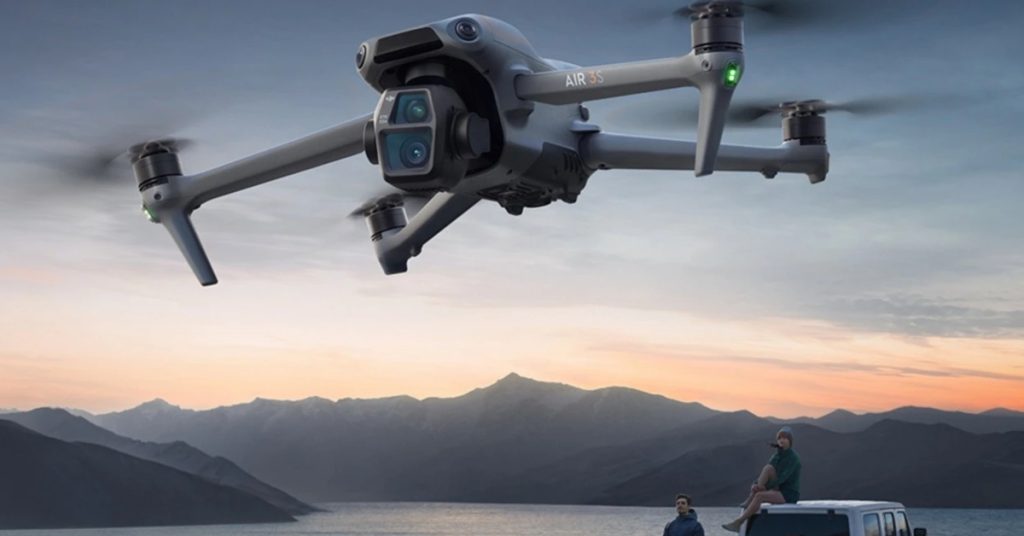
Credit: DJI
The DJI Air 3S is one of the strongest prosumer options for low-light operations. DJI positions it around day-and-night landscape capture, and the hardware reflects that focus.
To be clear, the Air 3S is a visible-light camera drone built for creators, real estate pilots, and anyone trying to capture usable footage after sunset without stepping into the enterprise thermal category.
Here are its main specs:
- 1″ CMOS primary camera
- Up to 14 stops of dynamic range
- Nightscape omnidirectional obstacle sensing
- Up to 45 minutes of flight time
- 12.4 miles (20 km) video transmission range
2. Skydio X10
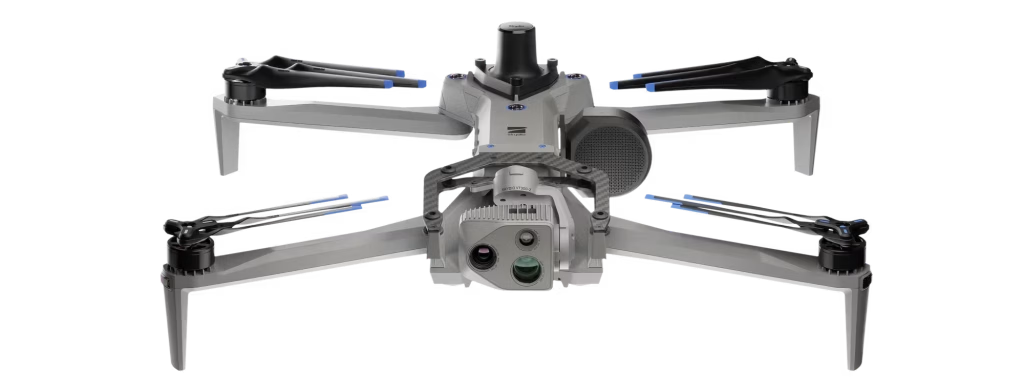
Credit: Skydio
The Skydio X10 sits firmly in the enterprise category and makes the most sense for organizations that want a compact U.S.-based platform with thermal capability and a broader autonomy-focused ecosystem.
The X10 has strong nighttime operational capability and is primarily suited for work in public safety, inspections, and critical infrastructure workflows.
Here are its main specs:
- Fully NDAA-compliant
- Designed, assembled, and supported in the United States
- Thermal imaging with Teledyne FLIR Boson+ sensor options
- Built for enterprise inspection and public safety workflows
- Compact foldable platform
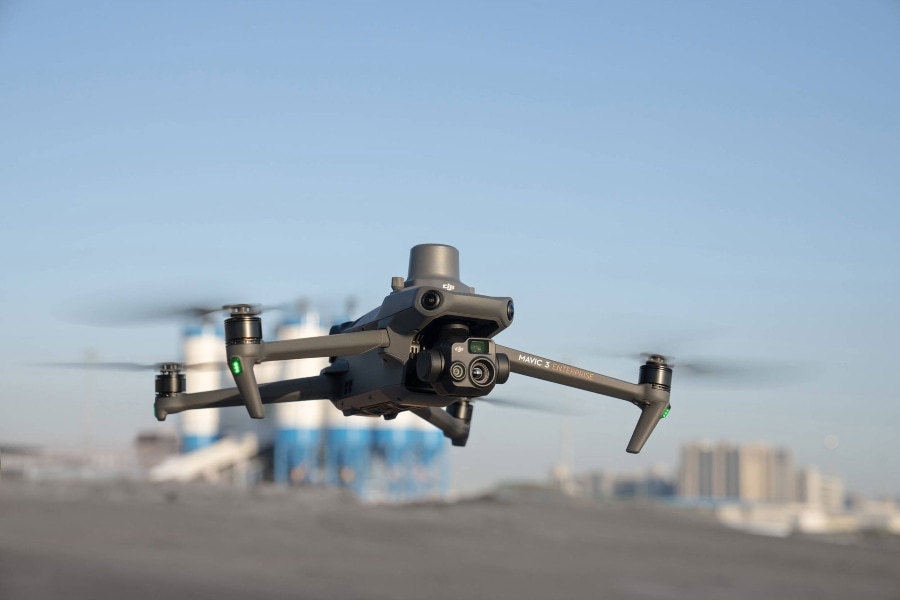
3. DJI Mavic 3T
Credit: DJI
The DJI Mavic 3T is the most practical step up from low-light flying into real nighttime enterprise capability.
The thermal version of the Mavic Enterprise is primarily made for firefighting, search and rescue, inspection, and night operations.
One of its main strengths is portability. You get a compact airframe with visible and thermal imaging in one system, which makes it a strong fit for smaller public safety teams, inspectors, and operators who need thermal capability without moving to a larger platform.
Here are its main specs:
- 640 × 512 thermal camera
- 48 MP wide camera
- Tele camera with up to 56x hybrid zoom
- Thermal digital zoom up to 28x
- Up to 45 minutes of flight time
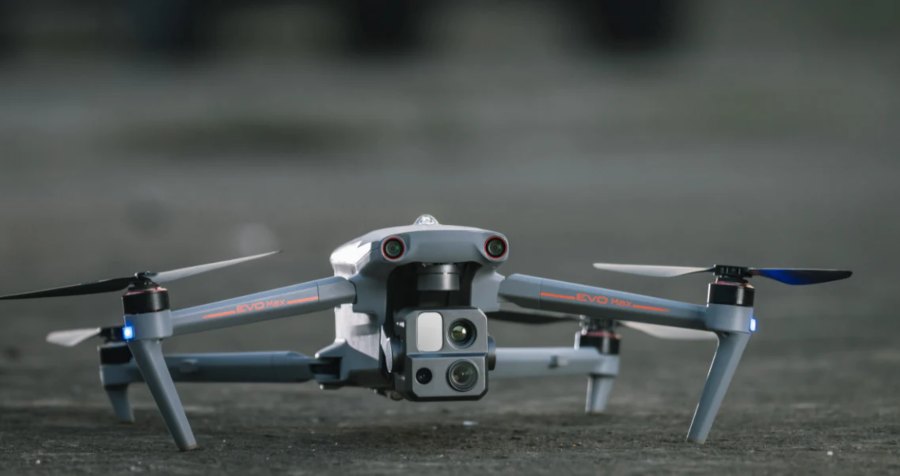
4. Autel EVO Max 4T
Credit: Autel
The Autel EVO Max 4T is one of the clearest alternatives for buyers who want a night-capable enterprise drone outside DJI’s ecosystem.
What makes it a strong option is the combination of thermal, low-light visible imaging, zoom, and rangefinding in a relatively compact aircraft. That gives it real value for teams that need detection and visual confirmation in the same mission.
Here are its main specs:
- 640 × 512 thermal camera
- 50 MP wide camera with f/1.9 aperture
- 48 MP zoom camera with 10x optical zoom and 160x max hybrid zoom
- Laser rangefinder
- Up to 42 minutes of flight time
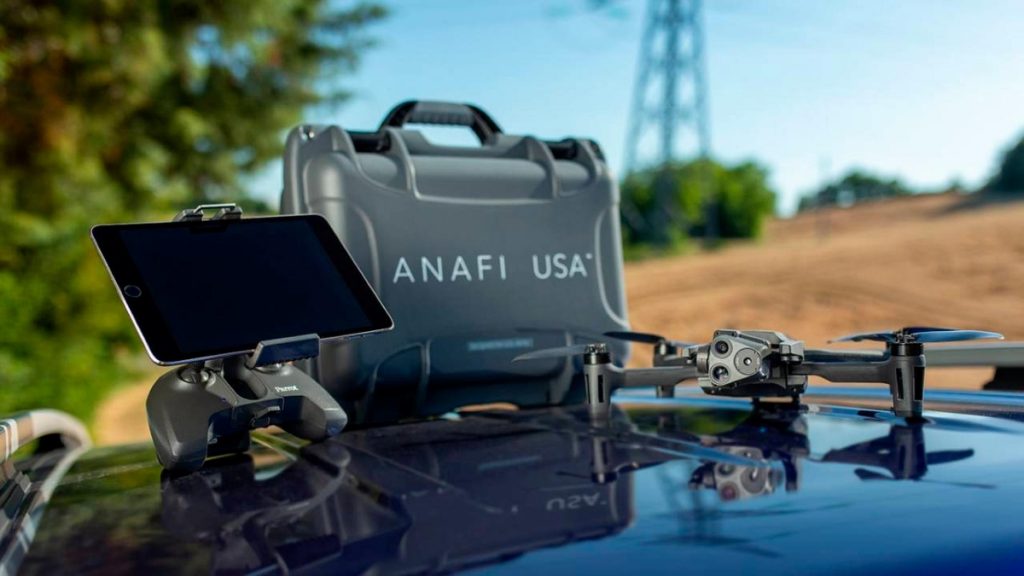
5. Parrot ANAFI USA
Credit: Parrot
The Parrot ANAFI USA is a strong night vision drone for buyers who care about sourcing, compliance, or government procurement requirements as much as raw camera capability.
For agencies and enterprise teams that specifically want a made-in-the-USA aircraft with thermal capability and zoom, this is a solid option to consider.
Here are its main specs:
- Made in the USA
- NDAA & TAA compliant
- Blue sUAS program approved
- 32x zoom
- Integrated FLIR thermal camera
6. Teal 2

Credit: Teal
The Teal 2 is one of the strongest purpose-built night-operations drones in this category, especially for government and public safety readers.
Unlike the Air 3S or even some compact enterprise platforms, this drone is explicitly built around nighttime reconnaissance and detection. That makes it more specialized than most of the list.
It is not a broad prosumer recommendation, but it is a serious option for buyers who need an American-made platform designed around EO/IR performance and government-oriented use.
Here are its main specs:
- American-made sUAS
- Blue UAS certified
- Hadron 640R EO/IR payload
- Optimized for nighttime operations
- Built around short-range reconnaissance missions
How Night Vision Drones Are Used
Night vision drones get talked about like they’re one product category, but in practice they’re used for very different kinds of work.
That’s why it helps to think in terms of missions instead of features.
Some jobs need thermal detection. Others need visible detail in low light.
And some require both, along with compliance, portability, or procurement considerations.
Here are the seven most common ways nighttime drones are used.

Credit: Skydio
1. Search and Rescue
If the goal is to find a person at night, thermal is usually the most useful starting point. A person moving through woods, fields, or uneven terrain is often much easier to detect by heat than by visible light alone.
Visible imaging still matters, but mostly after the initial detection. In real search work, the strongest setup is often a compact thermal drone that also gives the pilot enough visible detail to confirm what they’re seeing.
Main search and rescue nighttime use cases include:
- Locating missing persons in wooded or rural areas
- Nighttime rescue operations after accidents or disasters
- Searching large open areas like fields, deserts, or coastlines
- Post-disaster response (collapsed structures, flood zones)
2. Public Safety
Public safety work at night usually requires more than simple detection. Teams often need to identify a subject, maintain visual awareness, and make decisions quickly from a safe distance.
That’s why thermal-plus-visible setups are common here. Thermal helps locate movement or presence, while zoom and visible cameras help confirm what the subject actually is.
Main public safety use cases include:
- Perimeter security and facility monitoring
- Suspect tracking and law enforcement overwatch
- Crowd monitoring and event security
- Emergency response situational awareness
3. Inspection Work
Inspection work splits into two very different lanes at night. Some teams are looking for heat-related issues like hot spots, failing electrical components, or insulation problems. Others need to capture visible detail in low-light conditions.
That means the right drone depends on the inspection requirements. If the issue you’re looking for will be revealed via heat signature, thermal is the better tool. If the issue is primarily visual, a strong low-light camera may be enough.
Main inspection nighttime use cases include:
- Electrical inspections for overheating components
- Roof and building envelope inspections after dark
- Industrial asset inspections (tanks, stacks, pipelines)
- Solar panel and utility infrastructure checks
4. Wildlife and Observation
Wildlife work often starts with thermal because animals can disappear into the landscape visually while still standing out clearly by heat. That makes thermal especially useful for spotting subjects at night or in low-contrast environments.
But detection is only part of the job. If the goal is to document behavior or capture usable footage, a visible-light camera still matters after the subject has been found.
Main wildlife and observation nighttime use cases include:
- Tracking animals in low-visibility environments
- Nighttime wildlife surveys and population monitoring
- Anti-poaching and conservation patrols
- Behavioral observation and research documentation
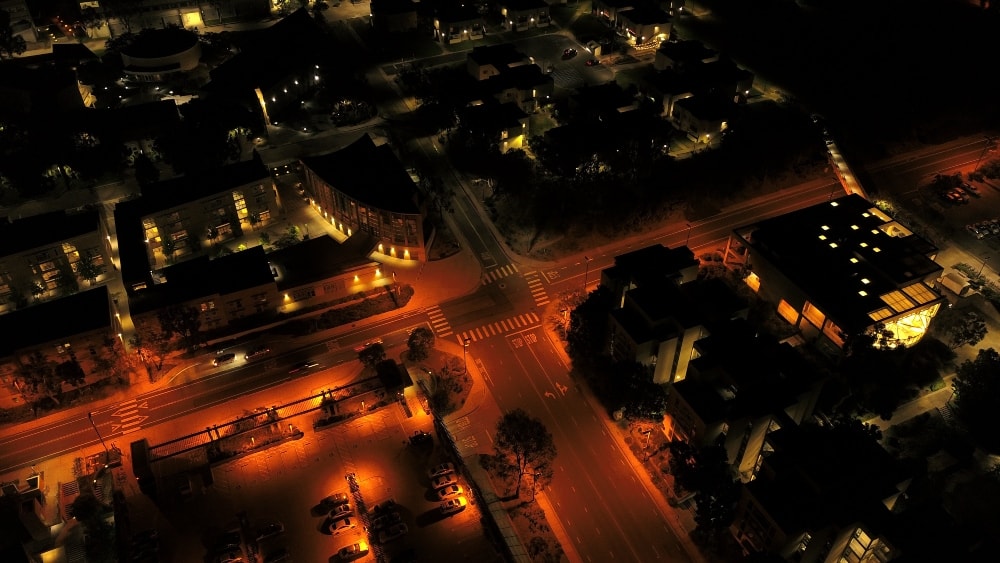
5. Photography and Video
For photography and video, “night vision drone” usually means something much simpler: a drone that performs well in low light.
This is the use case where larger sensors, good image processing, and stable night flight matter most. It’s also the area where you run the risk of overbuying by assuming you need a specialized night system—because you probably just need a good drone for low light conditions.
Main photography and video nighttime use cases include:
- Cityscape and skyline photography at night
- Real estate exteriors and twilight shoots
- Travel and landscape content after sunset
- Creative low-light video and cinematic footage
6. Government and Defense-Adjacent Operations
Some buyers aren’t just choosing a night-capable drone. They’re choosing a procurement path.
In the world of government purchasing, U.S.-made, NDAA-compliant, or Blue UAS-approved systems can matter as much as sensor performance. This means a platform that looks competitive on paper may still be the wrong fit if it doesn’t match sourcing, compliance, or agency requirements.
Main government and defense use cases include:
- Tactical ISR (intelligence, surveillance, reconnaissance)
- Border and infrastructure monitoring
- Military and defense training operations
- Government inspection and reconnaissance missions
7. Critical Infrastructure and Utility Response
Night work around utilities and critical infrastructure often sits somewhere between inspection and emergency response. Teams may need to detect heat issues, confirm visible damage, and keep a safe distance from energized or hard-to-reach assets.
That makes multi-sensor enterprise systems especially useful here.
Thermal helps with anomaly detection, while zoom and visible cameras help teams evaluate what they’re actually seeing before sending people closer.
Main infrastructure and utility use cases include:
- Power outage response and damage assessment
- Transmission line and substation inspections
- Oil & gas facility monitoring and emergency checks
- Post-storm infrastructure inspections
How to Choose the Right Night Vision Drone
The biggest mistake in this category is shopping for the phrase “night vision” instead of shopping for the job.
For most buyers, the right decision comes down to three things:
- What kind of nighttime visibility you actually need (low light, thermal, etc.)
- How much capability your work justifies
- Whether that capability is worth extra cost
This chart gives you a quick way to match the job to the right type of night-capable drone:
| Use case | Best night capability type | What to prioritize | Good product examples |
|---|---|---|---|
| Search and rescue | Thermal or dual-sensor thermal + visible | Fast detection, portability, strong thermal contrast | DJI Mavic 3T; Teal 2 |
| Security and public safety | Multi-sensor thermal + visible + zoom | Detection plus confirmation at stand-off distance | Autel EVO Max 4T; Skydio X10 |
| Inspection work | Thermal for heat issues; low-light visible for visual defects | Matching the sensor to the defect | DJI Mavic 3T; DJI Air 3S |
| Wildlife and observation | Thermal for spotting; visible imaging for follow-up | Finding subjects without losing context | DJI Mavic 3T; DJI Air 3S |
| Photography and video | Low-light visible imaging | Sensor size, dynamic range, noise control | DJI Air 3S |
| Government / NDAA-sensitive buying | Compliance-sensitive thermal or multi-sensor platforms | Procurement fit, support, trust, sourcing | Parrot ANAFI USA; Skydio X10 |
| Critical infrastructure and utility response | Enterprise thermal + zoom + visible | Safe remote assessment and detailed follow-up | DJI Mavic 3T; DJI Matrice 4T |
Next, we’ll walk through five steps to help you find the right nighttime drone for your needs.
1. Start with Sensor Type
If you need to detect heat, buy thermal. If you need visible images in low light, buy for camera performance.
And if you need both, look at multi-sensor enterprise setups.
In practical terms:
- Low-light cameras are best for photography, video, and some visual inspections
- Thermal cameras are best for detection, search and rescue, and heat-related inspection work
- Multi-sensor systems make sense when you need both detection and visible confirmation
2. Pay Attention to Zoom and Resolution
Night work often means you’re operating at a distance, and that makes zoom more important than many buyers expect.
It’s one thing to detect a heat signature. It’s another to confirm what you’re looking at safely from stand-off distance.
That’s one reason multi-sensor systems lean so heavily on combinations of thermal, zoom, and wide cameras. In practice, those sensor stacks are what turn nighttime detection into something operationally useful.
If your work involves:
- public safety
- security
- utility inspections
- critical infrastructure response
—then zoom and image clarity matter more than a generic “night vision” label.
3. Think Beyond the Drone
If you’re flying for professional work, the drone is only part of the purchase.
Inspection teams may need thermal analysis, reporting workflows, and asset documentation.
Public safety teams may need fast deployment and shareable situational awareness.
In practice, a cheaper drone may become the more expensive option if it creates friction everywhere else in the workflow.
That’s why it helps to think about the full system, including:
- Software and reporting tools
- Payload flexibility
- Deployment speed
- Support and training needs
4. Be Realistic About Cost
Since “night vision” can mean very different things, pricing in this category can vary a lot.
At the lower end, you’re looking at drones that perform well in low light but don’t have specialized night sensors. These are typically standard camera drones with larger sensors and good image processing.
They can work well at dusk or in well-lit environments, but they aren’t built for true nighttime detection or thermal work.
Once you move into thermal, the price jumps quickly. Even compact thermal drones represent a significant step up in cost because you’re paying for the sensor, not just the aircraft.
And at the high end, enterprise platforms combine thermal, zoom, wide-angle cameras, and additional tools like rangefinding or auxiliary lighting. These setups are built for teams that operate regularly at night, and they cost a premium as a result.
5. Decide Whether It’s Actually Worth It
For most pilots, the answer depends on what problem they’re actually trying to solve.
If your goal is to capture usable footage after sunset, a strong low-light camera is often enough.
If your goal is to detect people, animals, or heat-related issues in the dark, then a thermal system starts to make sense. That’s where the real jump in capability happens, and it’s also where the price rises sharply.
Where things tend to go wrong is when those two use cases get mixed together. Buying a thermal drone for video work—or relying on a low-light camera for search and rescue—usually leads to frustration.
For most drone pilots, the advice is:
- buy a low-light drone if you need better visible footage after sunset
- buy a thermal drone if you need nighttime detection
- buy a larger enterprise system only if night operations are a real, ongoing part of your work
How to Fly a Drone at Night Legally and Safely

Yes—you can fly a drone at night without a night vision camera, and that is one of the biggest points of confusion around this topic.
Flying at night is a separate issue from how your drone sees in the dark.
A night-capable camera can help you understand the environment, but it doesn’t determine whether the flight is legal or whether the operation is safe.
A good way to think about it is this:
- Your camera setup determines what you can see
- Your lighting, training, and airspace status determine whether the operation is legal
How to Fly at Night Legally
To legally fly a drone at night in the U.S., the rules depend on whether you’re flying under Part 107 (i.e., as a professional drone pilot) or as a recreational pilot.
Part 107 (Commercial Pilots)
- Training. You must have completed the updated knowledge test or recurrent training that includes night operations.
- Anti-collision lights. Your drone must have lights visible for at least 3 statute miles, with a flash rate sufficient to avoid a collision.
- Light intensity. The drone must be equipped with lights visible for the required distance
Recreational Flyers
- Follow CBO guidelines. You must follow a community-based organization’s safety guidelines, which include night-flying procedures.
- Anti-collision lights. Your drone must still be equipped with appropriate lighting for night visibility.
- General rules still apply. You must continue to follow recreational rules like maintaining visual line of sight and flying safely.
Airspace Still Matters at Night
Night flying doesn’t change airspace rules. If you’re flying in controlled airspace, you still need authorization before you fly.
- Use LAANC where available for near real-time night airspace authorization
- Check altitude limits and restrictions before launching
- Do not assume nighttime conditions change clearance requirements
How to Fly at Night Safely
In practice, anti-collision lights do more than help you satisfy the FAA’s requirements. They’re also crucial for safety.
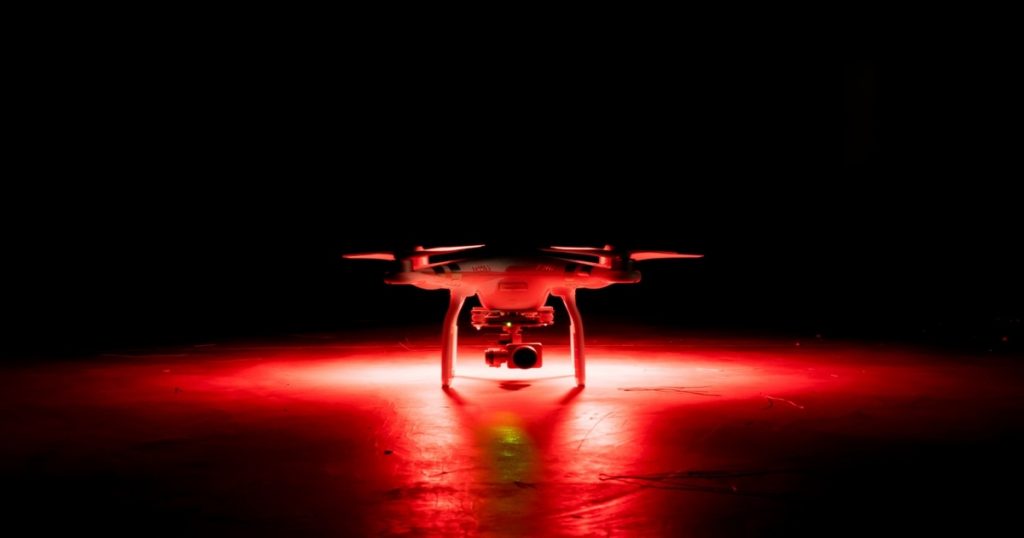
Good lights will help you keep track of the aircraft’s position and orientation once the background gets dark and visual references start disappearing.
That matters because night flying can create a false sense of confidence.
A bright live feed on your screen may make the mission feel easier than it actually is, while the aircraft itself becomes harder to track in the sky.
Here are a few things to keep in mind about night flying:
- Bright city lighting can make the drone harder to track against the background
- Poorly placed auxiliary lights can create glare or affect the image
- The more cluttered the scene is, the more useful strong anti-collision lighting becomes
Night Flying Changes the Environment, Not Just the Visibility
The camera is only part of the equation. At night, the whole flight environment changes. Trees, wires, poles, rooftops, terrain changes, and even weather can be harder to judge once you lose daylight depth cues.
This is one reason night operations deserve more planning than a simple daytime mission.
A location that feels straightforward at noon can become much less forgiving after sunset, especially if you are flying in rural areas, over water, around structures, or in places with uneven terrain.
The main practical issues to watch for are:
- Reduced depth perception and orientation
- Glare from streetlights, buildings, or vehicles
- Harder-to-see obstacles, especially wires and branches
- Fewer visual references for judging distance and motion
- Changing weather or haze that is less obvious at night
A Simple Night-Flying Checklist
Before flying at night, make sure you can answer yes to these questions:
- Do I understand the night-flying rules that apply to this operation? And am I following them?
- Does the drone have anti-collision lighting visible for at least 3 statute miles?
- If I am in controlled airspace, do I already have the required authorization?
- Have I evaluated the site for obstacles, glare, and reduced visual references?
- Am I using the right sensor setup for the actual job, instead of assuming “night vision” solves everything?
Night Vision Drones FAQ
Here are answers to some of the most commonly asked questions about night vision drones.
Do drones really have night vision?
Most drones do not have traditional night vision in the sense people usually mean it. They either use low-light cameras to capture visible images or thermal sensors to detect heat. Both get described as “night vision,” but they work very differently.
Is thermal the same as night vision?
No. Thermal detects heat differences, while traditional night vision amplifies available light. Thermal is often more useful in complete darkness, but it does not produce a normal visual image of the scene.
Can a DJI drone see in the dark?
Some DJI drones can capture usable footage in low light, and others include thermal cameras for detection. But standard camera drones still depend on available light, and performance drops as conditions get darker.
What is the cheapest night vision drone?
The most affordable option is usually a drone with good low-light performance, not a true night vision system. Thermal drones and multi-sensor setups are much more expensive.
Do you need anti-collision lights if your drone has night vision?
Yes. In the U.S., anti-collision lighting is still required for night flight regardless of your camera setup. Your ability to see through the camera does not replace the aircraft visibility requirement.
Can you use a night vision drone for photography?
You can use low-light drones for photography, but thermal and infrared systems are not designed for standard visual imagery. They are built for detection and analysis, not traditional photos or video.