Long Range Drone: An In-Depth Guide [New for 2026]
BY Zacc Dukowitz
26 November 2025A long range drone is any drone made to fly over long distances.
Range—also called transmission range—refers to how far you can fly the drone while maintaining a stable connection. If you lose your connection, you could lose the drone.
While you’re flying, your drone’s range is impacted by environmental factors like obstacles and weather. This means most drones can’t usually fly as far as the specs say they can, because the transmission range refers to optimal conditions—which rarely occur in the field.
A DJI Mavic 3, for example, is rated for just over 9 miles, but in suburban or urban areas you may only see half that due to interference.
In this guide to long range drones we’ll cover the top long range drones on the market, the factors that impact drone range, the industries that use long range drones, and regulatory considerations around how far you can fly.
Here’s a menu in case you’d like to jump around:
- What Is a Long Range Drone?
- The Best Long Range Drones on the Market [New for 2026]
- Factors that Impact Drone Range
- Which Industries Use Long Range Drones?
- Long Range Regulations & Safety Considerations
- Long Range Drone FAQ
What Is a Long Range Drone?
A long range drone is any drone designed to maintain flight and signal control beyond the limits of standard consumer models.
But what you consider “long range” will vary depending on the type of drone”
- For consumer drones, long range means about 7–12 miles (11–19 km).
- For professional drones, long range means about 10–20+ miles (16–32+ km).
- For FPV drones, long range means about 6 miles (10 km).
When talking about how far a drone can fly, it’s important to separate range from endurance.
Endurance is how long a drone can stay in the air—that is, how long its battery can last.
Range is how far a drone can fly based on its ability to maintain signal and control and its endurance (i.e., its battery life). That is, just because the transmission range is 9 miles, if the battery won’t allow the drone to fly long enough to go 18 miles—9 miles there and back—then its actual range will be much less.
To put this plainly, a drone might have the longest range of a drone in its class, but if the battery only supports 30 minutes of flight you’ll never actually get to use all of that distance.
The Best Long Range Drones on the Market [New for 2026]
Below are the top long range drones, grouped by consumer, professional, and FPV models.
Top 3 Long Range Consumer Drones
1. DJI Air 3
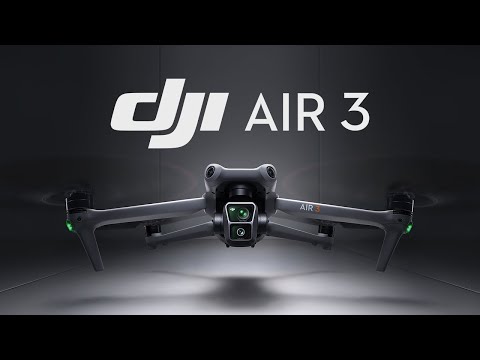
Range: 12.4 miles (20 km)
The DJI Air 3 is a consumer drone equipped with dual primary 48MP cameras offering wide-angle and 3x medium telephoto perspectives.
It features the advanced O4 transmission system which provides stable HD video transmission and a max 20 km transmission range. It has a max flight time of 46 minutes and includes omnidirectional obstacle sensing for safer flights.
- Flight time. Up to 46 minutes
- Takeoff weight. 720 g
- Camera. Dual 1/1.3-inch CMOS sensors (wide and medium telephoto)
- Max horizontal speed. 21 m/s (47 mph)
- Max wind resistance. 12 m/s
Learn more about the DJI Air 3.
2. DJI Mavic 3

Range: 9.3 miles (15 km)
The DJI Mavic 3 is a prosumer drone featuring a Hasselblad multi-lens camera system capable of shooting 5.1K video.
It offers a max flight time of 43 minutes and uses DJI’s O3+ transmission technology to maintain reliable control up to 15 km. The drone supports omnidirectional obstacle avoidance and targets professionals requiring high-quality imaging with long flight endurance.
- Flight time. Up to 43 minutes
- Takeoff weight. 895 g
- Camera. Hasselblad 4/3 CMOS, multi-lens system
- Max horizontal speed. 19 m/s (42.5 mph)
- Max wind resistance. 12 m/s
Learn more about the DJI Mavic 3.
3. Autel EVO Lite+

Range: 7.5 miles (12 km)
The Autel EVO Lite+ is a consumer drone offering a 50MP 1-inch CMOS sensor camera capable of 6K video capture.
It delivers up to 40 minutes of flight time and transmission range of about 12 km, suitable for creators looking for an alternative to DJI with high resolution and good flight endurance. It also features adjustable aperture and HDR video modes.
- Flight time. Up to 40 minutes
- Takeoff weight. 835 g
- Camera. 50 MP, 1-inch CMOS sensor, 6K video
- Max horizontal speed. 15 m/s (33.5 mph)
- Transmission system. Autel SkyLink
Learn more about the Autel EVO Lite+.
Top 3 Long Range Professional Drones
1. eBee X
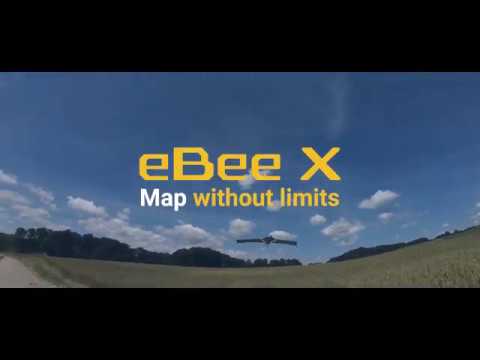
Range: 23 miles (37 km) standard, up to 34 miles (55 km) with endurance upgrade
The SenseFly eBee X is a professional fixed-wing drone tailored for mapping, surveying, and photogrammetry.
It features a flight time of up to 90 minutes, enabling coverage of large areas with high-precision RTK/PPK positioning. Its durable and lightweight design allows deployment in diverse environments with hand-launch operation.
- Flight time. Up to 90 minutes with endurance upgrade
- Weight. About 3.1 lb (1.4 kg)
- Maximum coverage per flight. Up to 500 hectares (~1,235 acres)
- Radio link range. 1.9 miles (3 km), up to 5 mi (8 km) in optimal conditions
Learn more about the SenseFly eBee X
2. Autel Dragonfish
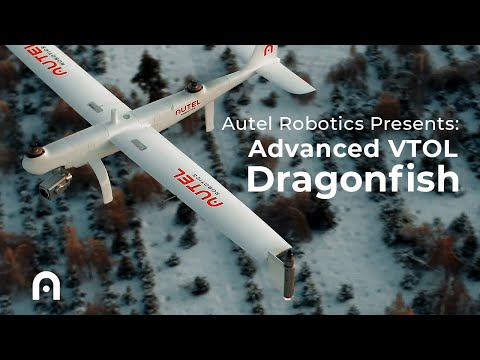
Range: 18.6 miles (30 km)
The Autel Dragonfish is a professional VTOL fixed-wing drone designed for long-endurance missions with rapid deployment time.
It offers multiple variants (Lite, Standard, Pro) with flight times ranging from 75 to 180 minutes, capable of carrying multisensor payloads including high-resolution 4K cameras and infrared sensors. Its robust design supports operations in challenging environments with IP43 weather rating and wind resistance level 6.
- Flight time. 75 to 180 minutes depending on the variant
- Payload capacity. Up to 2.5 kg (5.5 lb)
- Service ceiling. Up to 19,685 ft (6,000 m)
Learn more about the Autel Dragonfish
3. JOUAV CW-25E

Range: Up to 124 miles (200 km)
The JOUAV CW-25E is a high-capacity VTOL fixed-wing drone designed for long endurance and high-altitude missions.
It features advanced aerodynamic design with vertical takeoff and landing capabilities, supporting flight times up to 210 minutes and a maximum ceiling of 6,000 meters. The drone can carry payloads up to 6 kg, including LiDAR, EO/IR gimbals, and SAR sensors, making it highly versatile for surveying, inspection, and security operations.
- Flight time. Up to 210 minutes
- Max takeoff weight. 31.58 kg
- Wingspan. 4.35 meters (14.3 ft)
- Max payload. Up to 6 kg (13.2 lbs)
- Max service ceiling. 6,000 meters (19,685 ft)
Learn more about the JOUAV CW-25E.
4. ORKID 260VTOL

Range: Up to 99 miles (160 km)
The ORKID 260VTOL is a highly modular, all-electric VTOL fixed-wing drone designed for long range BVLOS operations.
Tailored for both logistics and surveying, it delivers up to 120 minutes of flight time depending on payload, features autonomous cloud-based operation, state-of-the-art redundancy, and advanced connectivity options with a Starlink integration.
- Flight time. Up to 120 minutes (with mapping payload)
- Max payload. Up to 4 kg (8.8 lbs)
- Max service ceiling. 9,842 ft (3,000 meters )
- Modular payload. Cameras, LiDAR, mapping sensors, and delivery containers
- Autonomous operation. Cloud-based mission planning and real-time C2
Learn more about the ORKID 260VTOL.
Top 3 Long Range FPV Drones
1. iFlight Chimera7 Pro V2 O4 6S HD

Range: Approx. 18.6 miles (30 km) flight distance with long flight time
The iFlight Chimera7 Pro V2 is a high-performance FPV drone featuring the DJI O4 Air Unit Pro for 4K 100fps video capture and ultra-wide 155° FOV.
It is built for professional and extreme long-range FPV flying with powerful motors enabling speeds up to 86 mph and flight times around 30 minutes, balancing long endurance and high-quality immersive video.
- Flight time. Up to 30 minutes
- Max speed. 86 mph (39 m/s)
- Camera. DJI O4 Air Unit Pro, 4K 100fps video
- Frame size. 7.5-inch for optimal prop clearance
- Transmission system. DJI O4 digital FPV
Learn more about the iFlight Chimera7 Pro V2.
2. DJI Avata 2
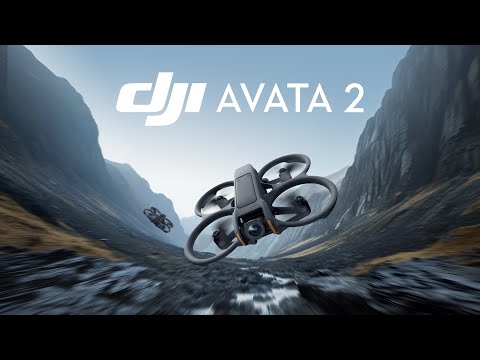
Range: 8 miles (13 km)
The DJI Avata 2 is an accessible long-range FPV drone equipped with a 1/1.3-inch CMOS 12MP sensor and 4K HDR video capabilities.
It offers up to 23 minutes of flight time and the O4 transmission system providing stable HD video up to 13 km of distance. With intuitive motion controls and built-in propeller guards, it’s suitable for both enthusiasts and professionals.
- Flight time. Up to 23 minutes
- Takeoff weight. Approx. 377 g
- Camera. 1/1.3-inch CMOS, 12 MP, 4K/60fps HDR video
- Max speed. 60 mph (27 m/s) in manual mode
- Transmission. DJI O4 Air Unit, 13 km range
Learn more about the DJI Avata 2.
3. DJI Neo

Range: Around 6 miles (10 km)
The DJI Neo is a beginner-friendly FPV drone designed for durability and ease of use. It features a half-inch sensor capable of stabilized 4K video and 12MP photos.
It offers up to 18 minutes of flight time and a transmission range of around 10 km, making it a solid choice for new pilots looking to get into FPV flying with reliable video quality.
- Flight time. Up to 18 minutes
- Camera. 1/2-inch sensor, 12 MP, 4K stabilized video
- Weight. Light and compact
- Transmission. Approx. 10 km range
- Flight modes. Beginner-friendly stabilization and controls
Factors that Influence Drone Range
Range isn’t a single number you can trust on a spec sheet.
A long range drone goes the farthest when its power system, airframe efficiency, transmission link, payload, and environment all line up. Change any one of those, and the longest range of a drone shrinks fast.
1. Battery & Power System
Battery capacity sets the ceiling, but weight sets the floor. Higher-energy packs extend flight time, yet every extra gram makes the motors work harder.
- Choose chemistry for mission: Li-ion for endurance, LiPo for power delivery
- Right-size capacity; oversizing hurts efficiency and handling
- Protect against cold—low temps reduce voltage and usable capacity
- Plan reserves (e.g., 20–30%) for contingencies and headwinds
2. Airframe Efficiency
Fixed-wings convert energy into lift efficiently and win on pure distance; multirotors trade efficiency for hovering and precise positioning.
- Sleek fixed-wing designs cover more miles per watt
- Multirotors excel for inspections and camera work but burn more energy
- Minimize drag: tidy cable runs, low-profile payload mounts
- Match airframe to mission corridor length and landing constraints
3. Motors & Propellers
Motors and props translate watts into motion. For cruise, low-KV motors with larger, slower-turning props are typically more efficient.
- Use prop diameter/pitch that hits efficient cruise RPM
- Balance props to reduce vibration and wasted power
- Tune for smooth throttle response to avoid current spikes
- Verify ESC headroom to prevent mid-mission thermal cutbacks
4. Transmission Link (Control + Video)
You can only fly as far as you can reliably see and command. Consumer links like OcuSync or SkyLink are robust, but range drops in RF-dense areas.
- Pair high-gain/directional antennas with clear line of sight
- Mind polarization and antenna orientation to prevent fades
- Log RSSI/SNR to spot weak points in routes and staging
- Remember legal limits on output power and frequencies
5. Environment & Interference
Wind, terrain, weather, and RF congestion all cut effective range.
- Headwinds increase current draw; plan outbound vs. return legs
- Terrain masking (hills, buildings) blocks both GPS and RF links
- Cold and high density altitude reduce thrust and battery performance
- Urban Wi-Fi, towers, and metal structures raise interference levels
6. Payload & Accessories
Cameras, gimbals, sensors, and mounts add weight and drag. A long range drone with a camera won’t fly as far as the same airframe stripped down.
- Use the lightest payload that still meets requirements
- Streamline mounts to reduce drag and turbulence
- Balance the aircraft to avoid constant trim corrections
- Account for payload power draw (active gimbals, transmitters)
7. Flight Profile & Planning
How you fly matters as much as what you fly. Smooth cruise at the airframe’s efficient speed beats stop-and-go climbs and hard accelerations.
- Fly at best-range speed; avoid aggressive throttle changes
- Stage launch sites to maintain line of sight along the route
- Set conservative RTH and battery thresholds with wind margin
- Test in increments; extend distance only after clean telemetry logs
Which Industries Use Long Range Drones?
When drones can fly farther and stay connected longer, they open the door to new applications across industries.
Here are the top industries where long range drones are creating real value for daily operations.

Credit: Zipline
Drone Delivery
Companies like Zipline, Wing, and Amazon are proving that range is essential for drone delivery. Longer flights make it possible to reach rural areas, move goods efficiently between central hubs, and cut out costly handoffs.
Long range drones help drone delivery:
- Reach rural or remote communities without intermediate depots
- Support healthcare by delivering medicine or blood samples quickly
- Operate from centralized hubs instead of multiple staging sites
- Maintain safe margins for return flights even in poor weather
Agriculture
Large farms benefit from drones that can fly farther without interruption. Longer range supports field mapping, crop monitoring, and spraying operations by reducing the need for constant repositioning.
Long range drones help ag operations:
- Cover thousands of acres in a single flight for mapping or imaging
- Monitor irrigation systems and soil conditions across wide areas
- Apply pesticides or fertilizer efficiently over large fields
- Reduce downtime by cutting the number of landings and takeoffs
Inspections
From pipelines to power lines, infrastructure inspections demand endurance and coverage. Long range drones minimize launch cycles and help operators survey assets more safely from a distance.
Long range drones help professional inspectors:
- Inspect power lines or pipelines over miles of terrain
- Reduce data gaps by flying continuous routes without relaunching
- Monitor remote bridges, substations, or towers from central staging areas
- Stay connected even when terrain or structures block weaker systems
Surveillance & Security
Security teams value range for keeping drones in the air longer and covering wider patrol routes. With stabilized cameras and extended links, drones can watch perimeters and track activity without losing signal.
Long range drones help security teams:
- Conduct perimeter sweeps around large facilities or events
- Monitor borders or restricted areas from stand-off positions
- Provide real-time video during crowd control or emergency response
- Track moving vehicles or people and relay positions to ground teams
Mapping & Surveying
Surveyors and GIS professionals rely on drones that can cover large areas in fewer flights. Long range systems help gather accurate data for drone mapping across wide tracts of land while reducing field time.
Long range drones help mapping professionals:
- Create high-resolution maps of construction sites, mines, or quarries
- Survey large public works projects with fewer takeoffs
- Reduce field crew time by automating longer flight paths
- Support environmental monitoring across forests, wetlands, or coastlines
Search & Rescue
In emergencies, covering more ground quickly can save lives. Long range drones give responders the ability to scan wide areas and reach hard-to-access terrain.
Long range drones help first responders:
- Locate missing persons in forests, deserts, or mountains
- Deliver supplies or radios to stranded individuals before ground teams arrive
- Provide aerial overwatch during rescue operations
- Extend missions beyond line of sight for large-scale disaster response
Scientific Research
Researchers use long range drones to collect data in places where ground access is limited. Extended range allows them to gather consistent datasets across large or remote study sites.
Long range drones help researchers:
- Track wildlife migration over wide territories
- Collect atmospheric or oceanographic measurements far from base stations
- Monitor glaciers, volcanoes, or other hazardous environments
- Conduct environmental studies in remote or protected ecosystems
Long Range Regulations & Safety Considerations
Just because a drone can fly a certain distance doesn’t mean the law allows it.
Here’s what you need to know when it comes to flying a drone for a long distance:
- You have to see the drone. Under the FAA’s Part 107 rules, drone pilots must keep the drone within Visual Line of Sight (VLOS). That means you—or a visual observer—must be able to see the drone unaided by tools like binoculars. In practice, this limits how far you can fly even if the spec sheet promises more.
- You can get permission to fly BVLOS.* Beyond Visual Line of Sight operations are possible with waivers or specific approvals. Utilities, delivery operators, and inspection teams use BVLOS to cover long corridors and remote sites. Approvals are hard to get, and generally require detect‑and‑avoid strategies, robust command‑and‑control links, and documented risk mitigations.
*New BVLOS Rule in Progress: On August 7, 2025, the FAA released a draft rule for BVLOS operations that will change how you can get permission to fly beyond visual line of sight. The rule is meant to make it easier to fly BVLOS, and is open for public comment until October 6, 2025. Learn more here.
Safety Considerations for Flying Long Range
Long range flights concentrate risk because recovery options shrink as distance grows.
Signal quality, battery margin, and environment all become more critical the farther you go. Treat these as first‑order constraints, not afterthoughts.
Here are things to keep in mind when flying a long distance:
- Link loss. Interference, terrain masking, or antenna misalignment can sever control/video
- Energy shortfalls. Headwinds, cold temps, or extra payload weight can erase reserve time
- Navigation errors. GPS multipath or poor compass calibration can cause flyaways
- Air/ground hazards. Low‑flying aircraft, people, and property raise consequence severity
Planning Tips for Long Range Missions
A clear safety workflow can help you be ready in case something unexpected happens.
Plan conservative routes with return‑to‑home contingencies, set hard geofences and battery alerts, and brief visual observers on comms and handoff points. Log link quality and energy use on shakedown flights before extending range.
Here’s a simple checklist to follow:
- Preflight. Weather/NOTAM check, compass/GPS health, firmware and failsafe verification
- During flight. Maintain reserve thresholds for energy and link, stage observers where line of sight (LOS) is best
- Postflight. Review logs for RSSI/SNR dips, battery sag, and GNSS anomalies before iterating
Given the risks of flying long range, it’s a good idea to consider getting drone insurance, both to protect your drone but also to protect you in case of an accident. Learn all about drone insurance.
Long Range Drone FAQ
These are concise answers to the most common questions about long range drones.
What factors reduce the range of a drone?
Signal interference, tall buildings, dense trees, and even weather conditions can cut into a drone’s advertised range. Payload weight and aggressive flying also shorten endurance, making real-world range lower than spec sheet claims.
What is the longest range of a drone?
Consumer drones typically list ranges of 7 to 12 miles under ideal conditions, but real-world factors and legal limits often reduce usable range to 1-2 miles. However, professional drones can fly much farther—some fixed-wing and tactical models reach 50 miles or more, with flight times lasting several hours. High-end long-range drones used in surveying, defense, and industrial applications can cover over 100 miles using advanced communication like satellite links, enabling beyond visual line of sight (BVLOS) missions.
How much does a long range drone cost?
Expect roughly $600 to $2,500 for consumer and prosumer options, depending on camera quality and sensors. Custom long range FPV builds typically land between $500 and $1,200 in parts, not counting tools and spares. Professional long range drones, such as the Orkid 260VTOL or JOUAV CW-30E, are significantly more expensive, typically ranging from $30,000 up to $300,000 or more depending on capabilities, payloads, and mission customization.
Do I need a license to fly a long range drone?
If you’re flying for work in the U.S., you need an FAA Part 107 Remote Pilot Certificate. Recreational flyers don’t need Part 107, but all pilots must follow airspace rules, register required aircraft, and keep the drone within visual line of sight.
Can I fly a long range drone beyond visual line of sight?
Not without specific authorization.* BVLOS flights require special FAA permission. Otherwise, Part 107 requires the drone to remain within unaided visual line of sight of the pilot or a visual observer.
*Note: On August 7, 2025 the FAA issued a new draft BVLOS rule, which will change how BVLOS operations work. Learn more here.
What’s the cheapest long range drone?
Entry-level models with efficient transmission systems offer the best price-to-range ratio, but they trade off camera performance and wind resistance. A carefully built long range FPV drone can be cost-effective if you’re comfortable assembling and tuning it yourself.
What is the difference between a long range FPV drone and a consumer drone?
A long range FPV drone prioritizes link reliability, efficiency, and modular components, often sacrificing ease of use and automated features. Consumer drones emphasize integrated cameras, stabilization, and safety systems, making them simpler to fly but less customizable for maximum range.
How long can a long range drone stay in the air?
Most consumer long range drones fly for 30 to 45 minutes on a single battery. Specialized fixed-wing or endurance-focused FPV builds can extend flight time past an hour, depending on battery configuration and payload. Professional long range drones like the JOUAV CW-30E can stay aloft for up to 8 hours, offering extremely long endurance for surveying, mapping, and industrial missions.
Can long range drones be used at night?
The Part 107 rules allow night operations with proper training and anti-collision lighting. However, flying long range at night without strong situational awareness increases risk, and BVLOS restrictions still apply.