Ground Sample Distance (GSD) Calculator for Drone Pilots
Use this Ground Sample Distance (GSD) Calculator to understand your drone’s mapping accuracy at different altitudes. Learn more about GSD and how it applies to drone mapping & modeling work.
Understanding Ground Sample Distance
Everything you need to know about GSD and how it affects quality in aerial photogrammetry projects.
What is GSD?
Ground Sample Distance (GSD) is the distance between the centers of two consecutive pixels measured on the ground. A GSD of 2 cm/px means each pixel in your image represents 2 cm of the real world. It is the key metric that determines the spatial resolution of aerial imagery.
Why Does It Matter?
GSD directly impacts the accuracy of your drone photos. For construction surveys, a GSD under 2 cm/px is typically required. Agriculture monitoring may only need 5-10 cm/px. Matching the right GSD to your project ensures you capture enough detail without wasting flight time or storage.
The Altitude Trade-Off
Flying lower gives you a smaller GSD (higher resolution) but covers less ground per image, requiring more flight passes and longer mission times. Flying higher covers more area quickly but at the cost of detail. The trick is finding the right balance between altitude and resolution.
Ground Sample Distance (GSD) Formula
GSD (cm/px) = (Flight Altitude (m) x 100 x Sensor Width (mm)) / (Focal Length (mm) x Image Width (px))
Flight Altitude — The height above ground level (AGL) at which the drone flies.
Sensor Width — The physical width of the camera sensor in millimeters.
Focal Length — The lens focal length in millimeters. Shorter focal lengths give wider coverage.
Image Width — The horizontal resolution of the camera in pixels.
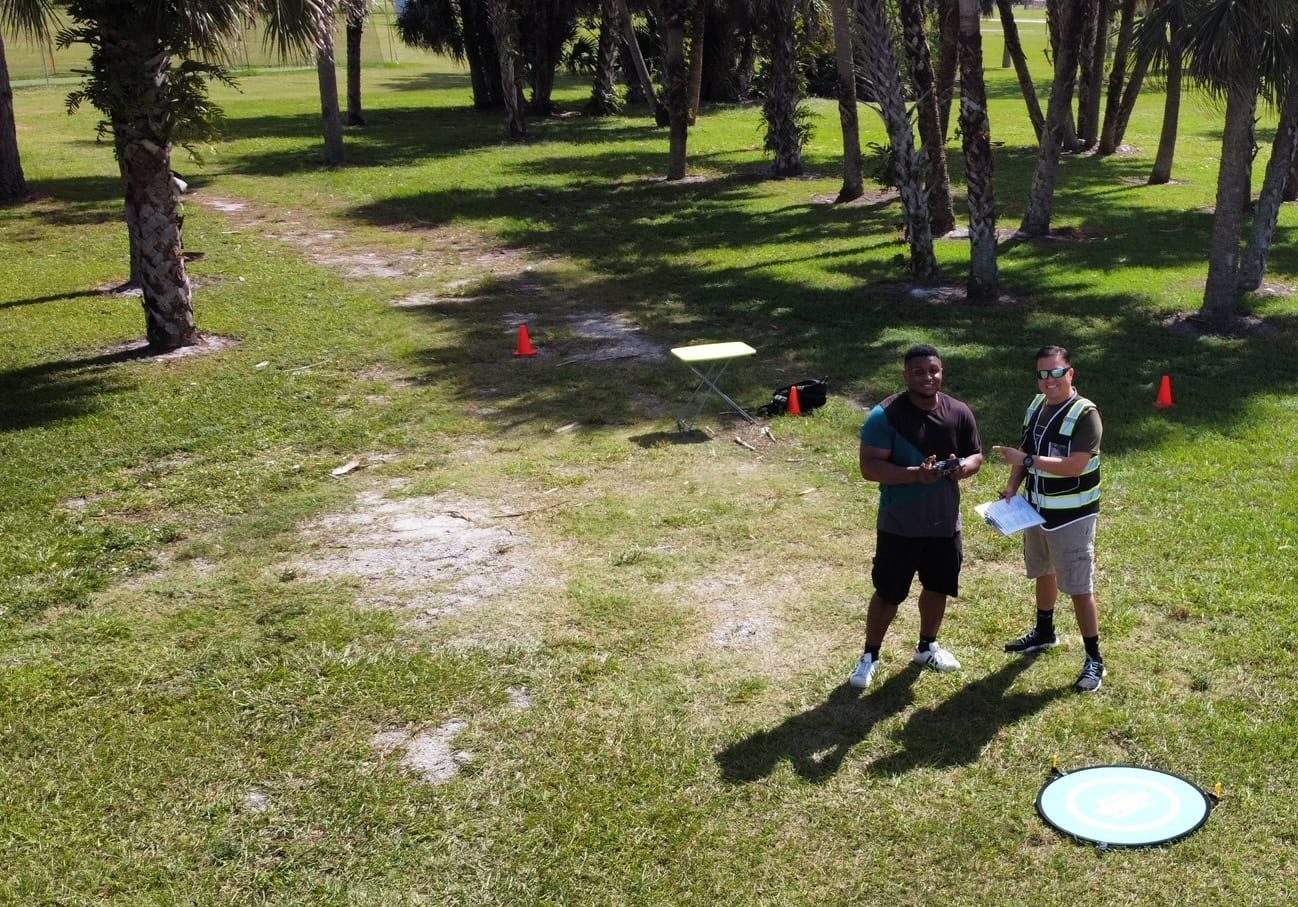
Team up with a knowledgeable, friendly instructor at a convenient outdoor spot — like a park or athletic field
Fly a top-rated drone provided for you, or bring your own to get personalized guidance
Spend most of your time in the air with hands-on practice — learning about composition, camera angles and cinematic motion
Explore the DJI Fly app and learn how to use camera settings like ISO, shutter speed and aperture
Unlock the power of Intelligent Flight Modes to fly smoother, smarter, and with less stress
Get access to our Aerial Photo & Video online course with additional exercises and pro-level editing workflows – using Snapseed, Photopea, Adobe Lightroom, DJI LightCut, and Premiere Pro