FRIAs and Remote ID: A Guide to FAA Recognized Identification Areas
BY Zacc Dukowitz
3 June 2025The FAA just put out an updated, interactive map showing the location of all the FRIAs (FAA Recognized Identification Areas) in the country.
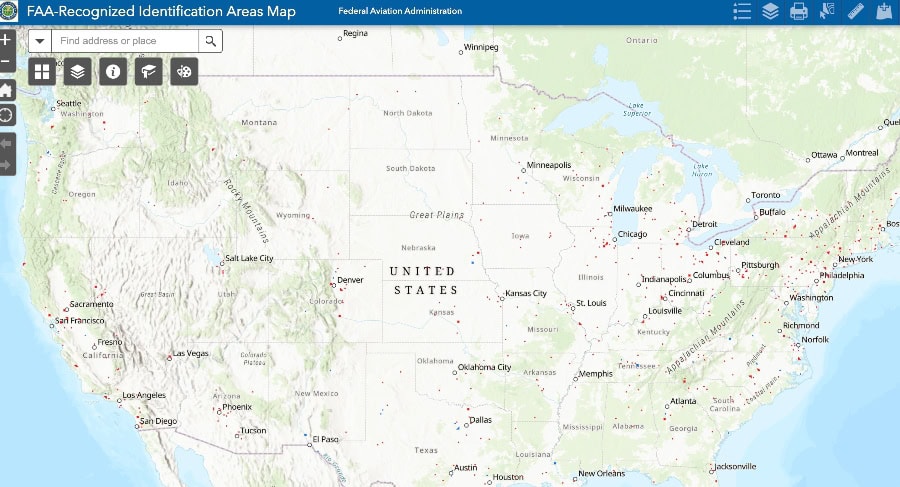
This is a screenshot—check out the interactive map here
A FRIA is a specifically defined area where you can fly without Remote ID.
FRIAs provide a valuable alternative for drone pilots who either can’t comply with Remote ID or simply prefer not to do so. They’re also just places where you can practice flying for work or for fun in a safe, controlled environment, regardless of Remote ID considerations.
This guide is devoted to FRIAs—what they are, how they fit into Remote ID compliance, and the rules for flying in one. We also cover how to establish your own FRIA.
Here’s a list of all the topics we cover in case you’d like to jump around:
- What Is a FRIA?
- FRIA and Remote ID: What You Need to Know
- The FAA’s FRIA Map
- How Do You Establish a FRIA?
- FRIA Upkeep: Renewals and Terminations
- FRIA FAQ
What Is a FRIA?
An FAA Recognized Identification Area (FRIA) is a designated location where drone pilots can fly without the need to worry about Remote ID requirements.
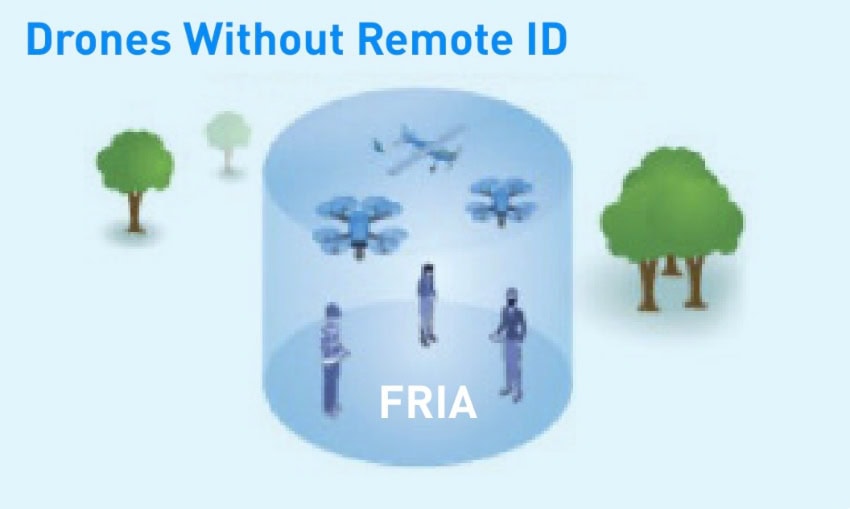
Credit: The FAA
To put it plainly, when you’re flying a drone in a FRIA you do not need to broadcast your drone’s location.
Only FAA-recognized Community Based Organizations (CBOs) and educational institutions can establish FRIAs.
Here are key features of a FRIA:
- Exemption from Remote ID requirements. Within a FRIA, drones are exempt from the Remote ID broadcast requirements, making it easier for pilots to fly their drones for extended periods and in various flight patterns without additional equipment.
- Enhanced safety. FRIAs are designated areas vetted by the FAA, helping ensure that drone operations that take place there are safe and controlled, reducing the risk of accidents and unauthorized flying.
- Community and education. FRIAs often serve as hubs for drone enthusiasts, fostering community engagement and educational opportunities. Schools, universities, and drone clubs frequently use FRIAs for training, research, and recreational flying.
The Purpose of FRIAs
The FAA created FRIAs to promote the safe and responsible use of drones, giving pilots a place where they can fly for fun or practice without having to worry about Remote ID.
They provide a space where both recreational and professional drone pilots can fly without the added complexity of adhering to Remote ID requirements. FRIAs are particularly beneficial for educational institutions, community organizations, and hobbyist groups that focus on drone-related activities.
FRIAs can be found in a range of community spaces, created for a variety of reasons, including:
- University campuses. Provide safe zones for students to learn and experiment with drone technology.
- Drone clubs. Use FRIAs for organized events, competitions, and training sessions.
- Public parks. Designated as FRIAs to allow recreational drone pilots to fly without worrying about Remote ID compliance.

Why Choose to Fly in a FRIA?
For drone pilots, understanding and utilizing FRIAs can significantly enhance their flying experience, helping foster a love of flying drones and, for students, a passion for STEM subjects.
Here are a few reasons FRIAs are important:
- Simplified compliance. Operating within a FRIA removes the need for the complexity of Remote ID firmware updates or modules, simplifying the compliance process for pilots.
- Access to safe flying zones. Pilots can fly their drones knowing they are in an FAA-approved area designed to minimize risks.
- Support for innovation. FRIAs support innovation by providing a space for testing new technologies and conducting research without regulatory burdens.
- Community-building and education. FRIAs often serve as hubs for drone enthusiasts, educational institutions, and hobbyist groups. They provide a space for community engagement, learning, and the exchange of knowledge and best practices.
FRIA and Remote ID: What You Need to Know
Flying in a FRIA is one of three ways you can be compliant with the FAA’s Remote ID rule.
Here are all three:
- Standard Remote ID. Drones with built-in Remote ID capabilities broadcast identification and location information directly from the drone. This includes the drone’s serial number, location, and velocity, as well as the location of the control station or take-off point.
- Remote ID Broadcast Module. This is an add-on device that can be attached to a drone to broadcast identification and location information. This is useful for older drones that do not have built-in Remote ID capabilities. The module broadcasts similar information to Standard Remote ID, but it is transmitted separately from the drone’s built-in systems.
- None (Flying in a FRIA). Drones flown within a FAA Recognized Identification Area (FRIA) are exempt from Remote ID requirements. This allows pilots to operate without broadcasting their drone’s location and identification information, providing a simpler and less restrictive flying experience.

Credit: FAA
Who Can Fly in a FRIA?
FRIAs are accessible to all drone pilots, including:
- Recreational pilots. Hobbyist drone pilots can use FRIAs to fly their drones without worrying about Remote ID compliance, making it easier to enjoy the hobby.
- Commercial pilots. Want to beef up your flying chops? Practicing in a FRIA is one way to do that.
- Educational institutions. Schools, universities, and other educational entities can use FRIAs for training, research, and educational activities related to drone technology.
- Community organizations. Drone clubs and other community organizations can fly within FRIAs, fostering community engagement and promoting safe drone practices.
Rules for Flying in a FRIA
Here are the main rules for flying in a FRIA:
- No Remote ID required. Drones operated within a FRIA are exempt from Remote ID requirements.
- Stay within the boundaries. Both the drone and the pilot must remain within the FRIA’s boundaries during the flight.
- Visual line of sight. The pilot must maintain a visual line of sight with the drone at all times.
For more detailed information, visit the FAA’s official page on FRIAs.
Other Remote ID Alternatives and Exemptions
Flying in a FRIA is one way you can comply with Remote ID without making any changes to your drone or broadcasting your drone’s location.
But are there others?
The answer is yes. While flying in a FRIA is a common Remote ID exemption, there are some other scenarios where Remote ID compliance is not mandatory, which we’ve listed below.
1. Drones Under .55 Pounds
Drones built for personal use and weighing less than 0.55 pounds (250 grams) are exempt from Remote ID requirements. However, these drones must still adhere to all other applicable FAA regulations and safety guidelines.
2. FAA Special Authorization
The FAA can grant special authorization for certain operations that may not comply with Remote ID requirements. These include:
- Public Safety Operations. Emergency responders can receive waivers to operate without Remote ID during critical missions.
- Specific FAA Authorizations. Under Part 89, specific cases may be considered for exemption based on the nature of the operation and the operating environment.
3. UAS with Shielded Operations
Drones performing shielded operations—where the flight occurs within an obstacle-free area, such as indoors or under a protective structure—are also exempt from Remote ID.
These operations typically involve environments where external broadcasting is unnecessary for safety, such as flying inside a sewer system.
4. Military Operations
Drones operated by the United States military are not required to comply with Remote ID regulations. This exemption takes into account the unique operational demands and security needs of military drone usage. These operations are subject to specific regulations and oversight distinct from those governing civilian airspace activities.
The FAA’s FRIA Map
The FAA’s FRIA map is an updated tool for drone pilots, providing a visual representation of FAA Recognized Identification Areas (FRIAs) across the United States.
This map helps pilots easily locate areas where they can fly their drones without the need to comply with Remote ID requirements.

Check out the interactive map here
By clearly delineating FRIAs, the FAA aims to ensure that drone pilots have access to safe and compliant flying zones.
This is particularly beneficial for recreational pilots, educational institutions, and community organizations that frequently use drones.
How to Use the FRIA Map
Using the FRIA map is straightforward:
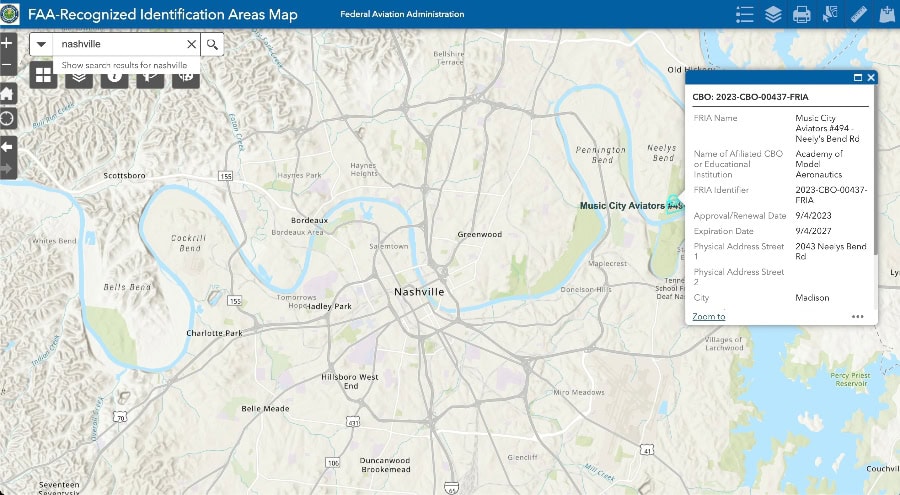
- Access the map. Visit the FAA’s UAS Data Delivery System website, where the FRIA map is hosted.
- Search for locations. Use the search functionality to find specific FRIAs near your location or areas where you plan to fly.
- View details. Click on individual FRIAs on the map to view detailed information, including the boundaries of the FRIA and any specific rules or restrictions that apply.
How Do You Establish a FRIA?
Establishing a FAA Recognized Identification Area (FRIA) involves a series of steps and meeting specific requirements.
To start, it’s important to note that only FAA-recognized Community Based Organizations (CBOs) and educational institutions, such as primary and secondary schools, trade schools, colleges, and universities, are eligible to apply for FRIA status.
This short step-by-step guide will help you navigate the process to ensure your application is successful.
Checklist of Requirements for Establishing a FRIA
Before you begin the application process, make sure you meet the following requirements:
- Eligibility. Ensure that you are an eligible entity. Only FAA-recognized Community Based Organizations (CBOs) and educational institutions, such as primary and secondary schools, trade schools, colleges, and universities, can apply for FRIA status.
- Site Selection. Choose a suitable location for your FRIA. The area should be safe for drone operations and within the boundaries where both the drone and pilot can remain.
- Documentation. Prepare necessary documents including a detailed site plan, safety protocols, and operational guidelines for drone activities within the FRIA.
- Compliance. Ensure that the proposed FRIA complies with all local, state, and federal regulations regarding drone operations and airspace usage.
Application Process
Follow these steps to submit your FRIA application:
- Register on the FAA DroneZone. Go to the FAA DroneZone website at and create an account if you don’t already have one.
- Complete the FRIA application form. Fill out the FRIA application form available on the FAA DroneZone. Ensure all details are accurate and complete.
- Submit required documents. Upload the prepared documents including the site plan, safety protocols, and operational guidelines.
- Review and submit. Carefully review your application and submit it through the FAA DroneZone portal.
- Await approval. The FAA will review your application and may contact you for additional information. Once approved, your FRIA will be listed on the FAA’s FRIA map.
Contact Information and Resources
If you need assistance or have questions during the application process, you can reach out to the following FAA departments:
- FAA UAS support center. For general inquiries, contact the FAA UAS Support Center: UAShelp@faa.gov (844) FLY-MY-UA
- FAA DroneZone. For issues related to the DroneZone portal, visit https://faadronezone.faa.gov or contact the support team.
- Advisory circulars and regulations. For detailed information on FRIA applications, refer to FAA Advisory Circular 89-3 and the CFR Part 89.
FRIA Upkeep: Renewals and Terminations
Renewal of FRIAs
FRIA approvals are valid for 48 calendar months and can be renewed.
Renewing a FRIA ensures continued compliance and safe operation. Here’s how to renew your FRIA:
- Eligibility check. Verify that your organization remains eligible as an FAA-recognized Community Based Organization (CBO) or educational institution.
- Review requirements. Ensure compliance with all current FAA regulations and any updates since the initial approval.
- Submit renewal application. Log into the FAA DroneZone and complete the renewal form, providing updated documentation and safety protocols.
- FAA review. The FAA will review your application and may request additional information. Approval will extend the FRIA status.
Termination of FRIAs
FRIAs can be terminated either voluntarily or by the FAA. Here’s what to do in each scenario:
Voluntary Termination:
- Submit notice. Notify the FAA via the FAA DroneZone of your intent to terminate the FRIA.
- Cease operations. Ensure all drone operations in the FRIA are halted by the termination date.
FAA-Initiated Termination:
- Compliance Issues. The FAA may terminate a FRIA if it fails to meet regulatory requirements or poses safety risks.
- Notification. You will receive a notice outlining the reasons for termination and any necessary steps for compliance or appeal.

FRIA FAQ
Here’s a list of commonly asked questions about FRIAs, including questions we’ve taken from the FAA and those we’ve collected from our own research and community input.
I just submitted a FRIA application. How long will it take?
The FAA reviews FRIA applications in the order they are received and will attempt to review them in a timely manner. Currently, the FAA cannot provide an estimated timeline on application review.
Can I fly in a FRIA if my drone is equipped with Remote ID?
Yes. However, a Remote ID equipped drone must broadcast the Remote ID message as if flying outside of a FRIA.
What’s the difference between a FRIA and a Fixed Site?
Fixed Sites are locations where an FAA airspace authorization is needed due to controlled airspace at that location. FRIAs are not related to airspace, rather, they are locations where Remote ID is not required. FRIAs and Fixed Sites may be co-located but require separate applications to be FAA approved.
What is the cost of establishing a FRIA?
The cost of establishing a FAA Recognized Identification Area (FRIA) can vary based on several factors, including administrative fees and any necessary modifications to the designated area. Generally, the primary expenses are related to the application process and any improvements needed to meet FAA safety standards.
How long does FRIA approval last?
Once approved, a FRIA designation typically lasts for a specified period, usually up to four years.
This duration allows for regular review and renewal to ensure ongoing compliance with FAA regulations and safety standards.
How is FRIA compliance enforced?
The FAA enforces compliance through periodic reviews and inspections. Non-compliance can result in penalties or revocation of the FRIA designation. It is crucial to adhere to all FAA regulations and guidelines to maintain FRIA status.
Can Anyone Establish a FRIA?
Only FAA-recognized Community Based Organizations (CBOs) and educational institutions such as primary and secondary schools, trade schools, colleges, and universities can apply for FRIA status. This ensures that the designated areas are managed by responsible and knowledgeable entities.