Follow Me Drones: The Best Drones That Follow [New for 2026]
BY Zacc Dukowitz
25 February 2026A follow me drone is a drone that can automatically track and record you as you move.
Follow me drones lock onto a subject and follow them using GPS, vision-based subject tracking, or a beacon/controller-assisted signal.
→ Jump to: The Best Follow Me Drones on the Market
But here’s the catch: “follow me mode” isn’t a single feature that works the same across all drones that can do it.
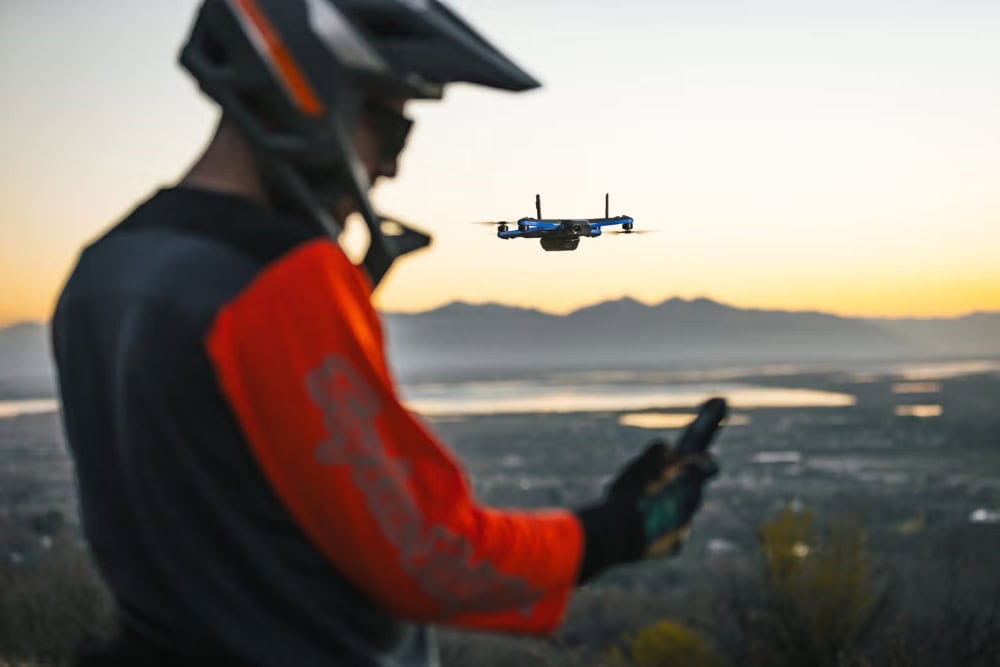
Credit: Skydio
Different follow me drones use different tracking systems. And they behave differently depending on where you’re using them.
In this guide, we’ll cover the best follow me drones on the market, how follow me tracking works, the features that actually matter for reliable tracking, and which follow me drones tend to perform best for real-world use cases like biking, hiking, skiing, and more.
Here’s a menu in case you’d like to jump around:
- What Is a Follow Me Drone?
- The Best Follow Me Drones on the Market
- How Follow Me Drones Work
- 7 Main Use Cases: The Best Follow Me Drones by Activity Type
- Limitations & Safety: Things to Look Out For
- Follow Me Drone FAQ
What Is a Follow Me Drone?
A follow me drone is an umbrella term for any drone that automatically keeps a moving subject framed while adjusting its position and camera angle as the subject moves.
Or, to put it simply, any drone that can follow you automatically.
What “Follow Me” Really Means
When people say “follow me,” they’re talking about one of three methods for subject tracking:
- GPS follow: the drone follows a GPS position, which is often tied to your controller or phone.
- Vision-based subject tracking: the drone uses its cameras—and sometimes depth sensing—to recognize and track a person, vehicle, or other subject.
- Beacon/controller-assisted tracking: the drone tracks a dedicated signal source or a controller-based beacon to stay “locked on” more reliably in certain conditions.
The method your drone uses matters because the best “follow me drone” for an open beach walk might struggle on a tight mountain bike trail. And a drone that tracks well in daylight can get sketchy at dusk, in backlight, or when you pass behind trees.
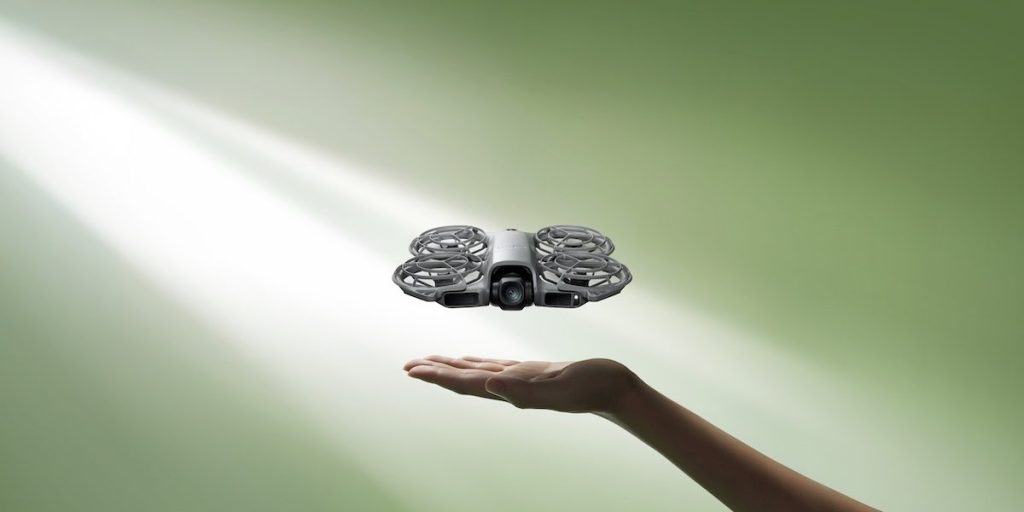
The DJI Neo 2 | Credit: DJI
The Best Follow Me Drones on the Market
If you’re shopping for a follow me drone, it helps to think in categories.
Some drones are full-featured camera drones with strong subject tracking. Others prioritize quick, low-friction self-filming.
And a few are purpose-built for action or professional missions.
How to Read These Picks
Start by choosing the category that matches how you’ll actually use the drone.
If you want the most versatile option, look at the core picks. If you want quick self-filming with minimal setup, the compact and controller-free options are usually the better fit.
This table provides a quick overview of all the drones on our list:
| Drone | Tracking Style | Obstacle Avoidance | Best For | Category |
|---|---|---|---|---|
| DJI Air 3S | Advanced subject tracking | Omnidirectional | All-around follow shots + general flying | Core pick |
| DJI Mini 5 Pro | Advanced subject tracking | Omnidirectional (compact class) | Travel, hiking, everyday carry | Core pick |
| DJI Mavic 4 Pro | Flagship subject tracking | Omnidirectional | Premium creators who want top imaging | Core pick |
| Antigravity A1 | 360 capture workflow | Varies by scenario | Immersive capture + reframing later | Core alternative |
| DJI Neo 2 | Automated follow modes | Limited (model-dependent) | Quick self-filming | Compact / casual |
| DJI Flip | Creator-focused tracking | Moderate (model-dependent) | Social content + convenience | Compact / creator |
| DJI Mini 4 Pro | Mature subject tracking | Omnidirectional | Proven compact option | Compact premium |
| HOVERAir X1 PRO / PRO MAX | Automated follow modes | Designed for self-flying capture | Action-friendly follow clips | Action / controller-free |
| HOVERAir AQUA | Automated follow modes | Water-focused design | Watersports + boating | Specialty |
| Skydio X10 | Advanced autonomy | Enterprise-grade | Public safety / SAR / Enterprise | Professional |
| DJI Matrice 30 / 30T | Enterprise subject tracking | Enterprise-grade | Public safety / SAR / Enterprise | Professional |
Now let’s look at each category more closely, starting with the core follow-me options.
If you’re unsure where to start, begin with the core picks below. They offer the strongest overall balance of tracking reliability, safety features, and versatility.
Core Picks: The Best Overall Follow Me Drones
These are the most versatile follow-me drones, offering the strongest overall balance of tracking reliability, obstacle avoidance, and image quality.
1. DJI Air 3S

If you want strong tracking, solid obstacle sensing, and clean image quality without jumping to a flagship price, the Air 3S is an easy “do-it-all” follow-me pick.
- Strong all-around “follow me” performance for travel + everyday use
- Good balance of image quality, wind handling, and safety features
- Best when you want one drone for tracking + general flying
2. DJI Mini 5 Pro

If you want a compact drone that’s easy to bring everywhere but still delivers reliable subject tracking, the Mini 5 Pro is the sweet spot.
- Portable “take it everywhere” option with strong tracking
- Great for hiking, family trips, and casual creator work
- Best when you want strong features in a small package
LEARN MORE ABOUT THE MINI 5 PRO.
3. DJI Mavic 4 Pro

If you want DJI’s top-end tracking + imaging platform, the Mavic 4 Pro is the premium follow-me choice.
- Premium imaging + flagship-level tracking performance
- Best for creators who want maximum quality and flexibility
- Overkill for casual use—but excellent if you’ll use the camera
LEARN MORE ABOUT THE MAVIC 4 PRO.
4. Antigravity A1

The A1 is the first ever drone with an integrated, native 360 camera. It’s built around immersive capture rather than traditional cinematic framing.
- Best if your priority is 360-style capture and reframing later
- Great for travel storytelling and “put the viewer there” footage
- Not the most traditional follow-me drone—but unique output
Mid-Tier / Compact Follow Me Drones
These options prioritize portability and ease of use, making them strong picks for quick, low-friction follow shots.
5. DJI Neo 2
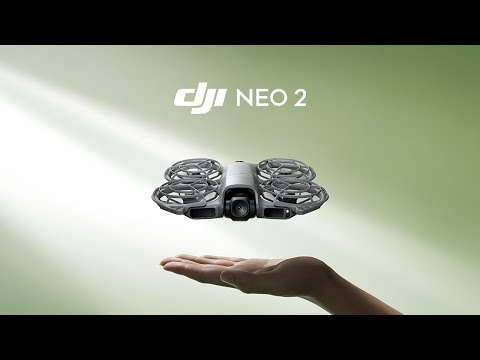
If your main goal is simple, low-friction follow-me clips (and you don’t want to think like a pilot), the Neo 2 is built for that job.
- Designed around easy self-filming and quick follow shots
- Best for casual creators who want results fast
- Great “starter follow-me” option if you keep expectations realistic
6. DJI Flip
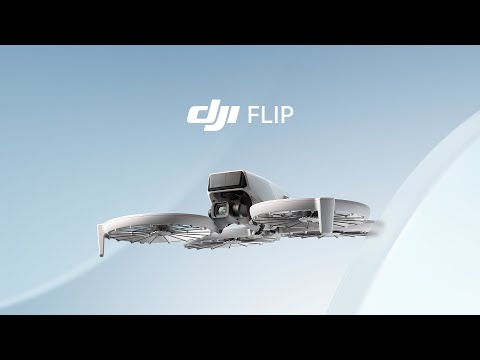
If you want a compact, creator-first drone that’s geared toward quick setups and social-friendly shots, the Flip is worth a look.
- Compact, quick-to-use design for everyday creator shooting
- Good for solo filming where “set it and go” matters
- Best if you’re prioritizing convenience and ease
7. DJI Mini 4 Pro

The Mini 4 Pro remains a strong, proven follow-me option—especially if you want a smaller drone with mature tracking and a big user base.
- Reliable tracking platform with lots of real-world usage
- Great “small drone, big capability” option
- Best if you want a safer bet over the newest-release premium
LEARN MORE ABOUT THE MINI 4 PRO.
Action / Controller-Free Follow Me Drones
These drones are designed around automated, self-flying capture—ideal when you want follow footage with minimal setup or piloting skills.
8. HOVERAir X1 PRO / PRO MAX

If you want action-friendly follow footage with minimal setup (and you don’t want to carry a full drone kit), the X1 PRO / PRO MAX line is built for that niche.
- Built around self-flying “camera that follows you” simplicity
- Great for hiking, biking, and travel movement shots
- Best if convenience matters more than traditional drone versatility
LEARN MORE ABOUT THE X1 PRO / PRO MAX.
9. HOVERAir AQUA

If you want follow-me footage around water where most drones are a liability, the AQUA is the specialized pick made just for water-related scenarios.
- Water-oriented design for boating, paddling, and watersports
- Best when “survivability around water” is the priority
- More specialized than a general-purpose follow-me drone
Public Safety Follow Me Drones
These platforms are built for mission-driven environments where autonomy, obstacle avoidance, and operational reliability matter most.
10. Skydio X10

For public safety, Skydio’s autonomy stack has historically been the benchmark—and the X10 is built for professional missions where obstacle avoidance and operational reliability matter.
- Public safety-oriented platform (not a casual consumer drone)
- Designed for professional use cases and agency deployments
- Best when your “follow” needs are mission-driven, not content-driven
11. DJI Matrice 30 / 30T
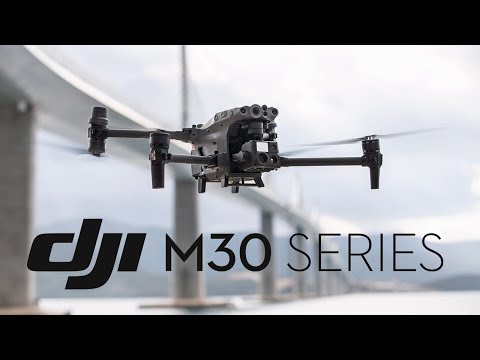
The Matrice 30 series is a portable enterprise platform widely used by public safety agencies for search and response missions. It supports subject tracking and is built for complex environments where reliability matters more than cinematic framing.
- Designed for public safety, inspection, and emergency response
- M30T version adds integrated thermal imaging for SAR scenarios
- Stronger environmental resistance than consumer drones
- Best when mission reliability matters more than casual tracking
LEARN MORE ABOUT THE MATRICE 30.
How Follow Me Drones Work
“Follow me” isn’t one feature. It’s a few different tracking systems that behave very differently depending on obstacles, lighting, and speed.
Here are the three most common approaches you’ll see, plus the features that matter most for reliable following.
GPS Follow Me
GPS follow me works by locking onto a GPS position—usually your controller or connected smartphone—and maintaining a set distance and altitude relative to that moving signal.
This approach works best in open areas with a strong satellite signal, like beaches, open fields, or wide trails.
The downside is precision. GPS follow me doesn’t “see” you. It follows coordinates.
If you pass behind trees, move under overhangs, or change elevation quickly, the drone may lag, drift, or cut corners in ways you don’t expect.
- Best for: open environments with minimal obstacles
- Watch out for: tight terrain, elevation changes, and weak GPS reception
Vision-Based Subject Tracking
Vision-based tracking (often branded as ActiveTrack or subject tracking) uses the drone’s onboard cameras—and sometimes depth sensing—to recognize and follow a person, bike, car, or other subject visually.
Instead of following a GPS dot, the drone tracks your shape and movement in real time.
When it works well, it’s more cinematic and more precise than GPS follow me. It can circle you, lead you, or follow from behind while maintaining framing.
But it has limits.
If you pass behind trees, blend into the background, move too fast, or ride into harsh backlight, the drone can lose you. Once tracking drops, behavior varies by model—some hover, some drift, some brake hard, and some switch modes.
- Best for: dynamic shots where the subject stays visible
- Watch out for: occlusion (objects blocking view), low light, and cluttered backgrounds
Beacon or Controller-Assisted Tracking
Some systems use a controller signal or a dedicated beacon to improve reliability. Instead of relying purely on vision or GPS, the drone maintains a stronger lock on a specific signal source.
This can help in scenarios where visual tracking might fail—such as partial obstruction or high-speed movement.
It’s not magic, but it can improve consistency compared to basic GPS-only systems.
- Best for: higher-speed activities or situations where visual tracking may be inconsistent
- Watch out for: range limits and signal interference
Which Tracking Type Is Best for You?
If you only remember one thing, remember this: the best follow-me drones are the ones whose tracking system matches the environment where you plan to fly.
- Mostly open terrain (beach, open trails, wide roads): GPS follow me can work well.
- You want smoother framing and more cinematic movement: vision-based subject tracking is usually the better bet.
- You want “self-flying” simplicity: look for automated follow modes designed around minimal setup.
What Features Matter Most for Reliable Following
No matter which tracking system a drone uses, a few features make a major difference.
Here’s a simple comparison:
| Tracking Type | How It Follows | Strengths | Weaknesses | Best Environment |
|---|---|---|---|---|
| GPS Follow Me | Follows GPS coordinates | Simple, works in open areas | Less precise, struggles with obstacles | Open terrain |
| Vision Tracking | Tracks subject visually | More cinematic, precise framing | Can lose subject if blocked or in low light | Clear line of sight |
| Beacon / Assisted | Tracks signal source + vision/GPS | Improved reliability at speed | Dependent on signal range | Higher-speed activities |
Here’s a little more information:
- Obstacle avoidance (especially forward, backward, and lateral sensing). Following is only as safe as the drone’s ability to detect what’s in its path.
- Tracking modes. Some drones can follow from behind, lead from the front, orbit, or maintain a fixed angle.
- Maximum tracking speed. Important for biking, skiing, or vehicles.
- Return-to-home behavior. If tracking drops or signal weakens, what does the drone do?
- Controller range and connection stability. A strong link reduces surprises.
7 Main Use Cases: The Best Follow Me Drones by Activity Type
As we just covered, different types of follow me drones perform better or worse in different environments.
Open terrain, tight trails, snow, water, and urban clutter all stress tracking systems in different ways.
Here’s some guidance on how to match your activities to the best follow me drone for the job.
1. Biking and Mountain Biking
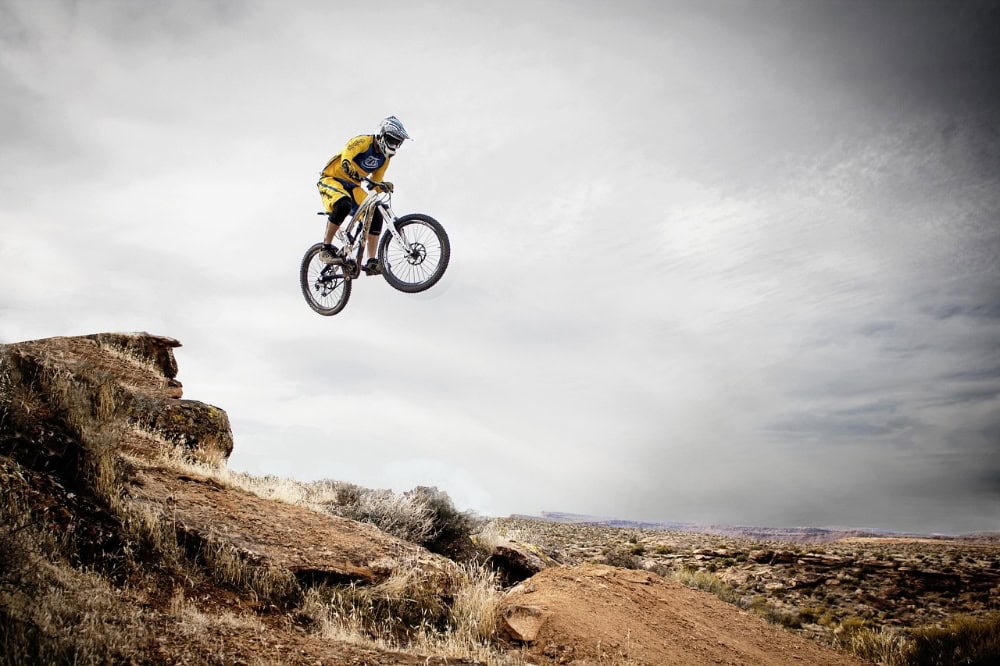
Biking is one of the hardest follow-me scenarios because you’re moving fast, changing direction, and often riding through clutter like trees, trail signs, berms, or other riders.
If you want follow-me footage while biking, prioritize strong subject tracking plus obstacle sensing. Even then, the safest approach is usually to use follow mode on open segments—not tight, technical trail.
- Best fit: DJI Air 3S, DJI Mini 5 Pro (open trails), DJI Mini 4 Pro
- What matters most: tracking at speed, obstacle sensing, stable connection
- Common failure point: losing the subject when you pass behind trees or ride into backlight
2. Hiking and Travel
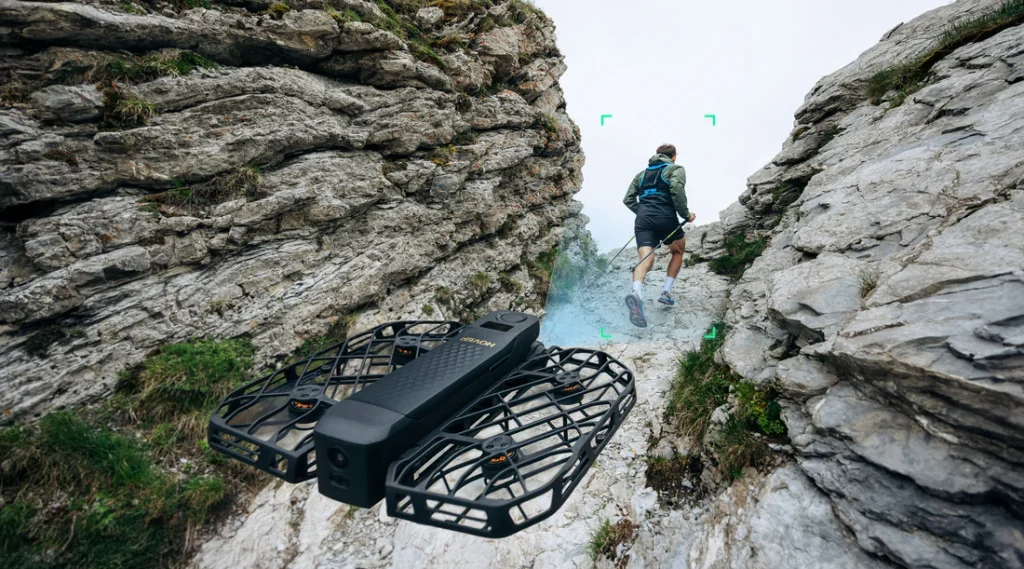
Credit: HoverAir
Hiking and travel are where follow-me drones shine—movement is slower, environments are often more open, and you can take the time to set up shots safely.
Portability matters here. If you’re actually going to bring a drone everywhere, a compact option that tracks well is usually the best choice.
- Best fit: DJI Mini 5 Pro, DJI Mini 4 Pro, HOVERAir X1 PRO / PRO MAX
- What matters most: portability, dependable tracking, wind performance (especially in exposed areas)
- Common failure point: gusty wind and complex backgrounds (busy forests, crowds)
3. Running
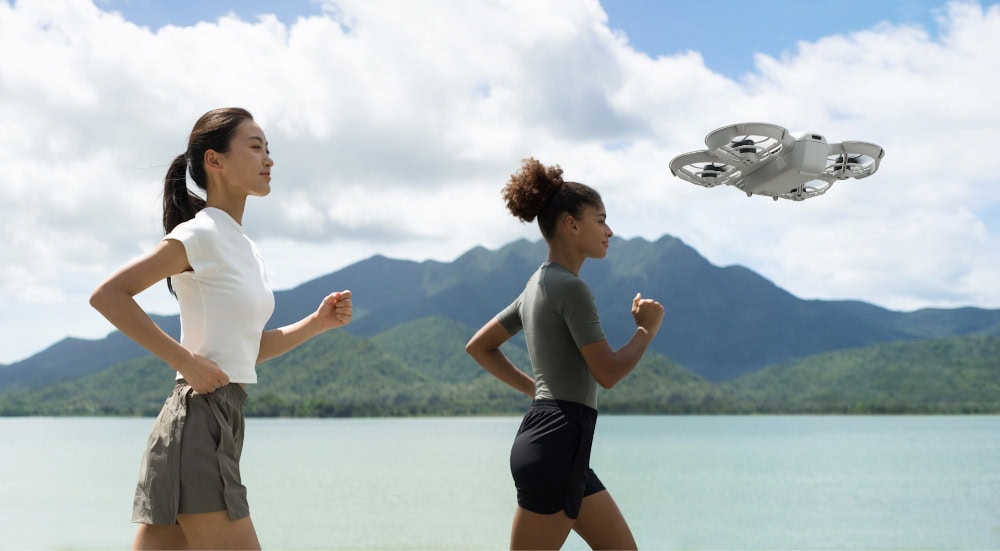
The DJI Neo | Credit: DJI
Running tends to be easier than biking because speeds are lower, but it still stresses tracking in cluttered environments (parks, tree cover, changing light).
For running shots, you’ll usually get the best results in open areas with predictable movement. If you run through heavy tree cover, expect tracking to drop occasionally.
- Best fit: DJI Mini 5 Pro, DJI Air 3S, HOVERAir X1 PRO / PRO MAX
- What matters most: smooth subject tracking, consistent framing, safe following distance
- Common failure point: occlusion (passing behind trees) and low light near dusk
4. Skiing and Snowboarding
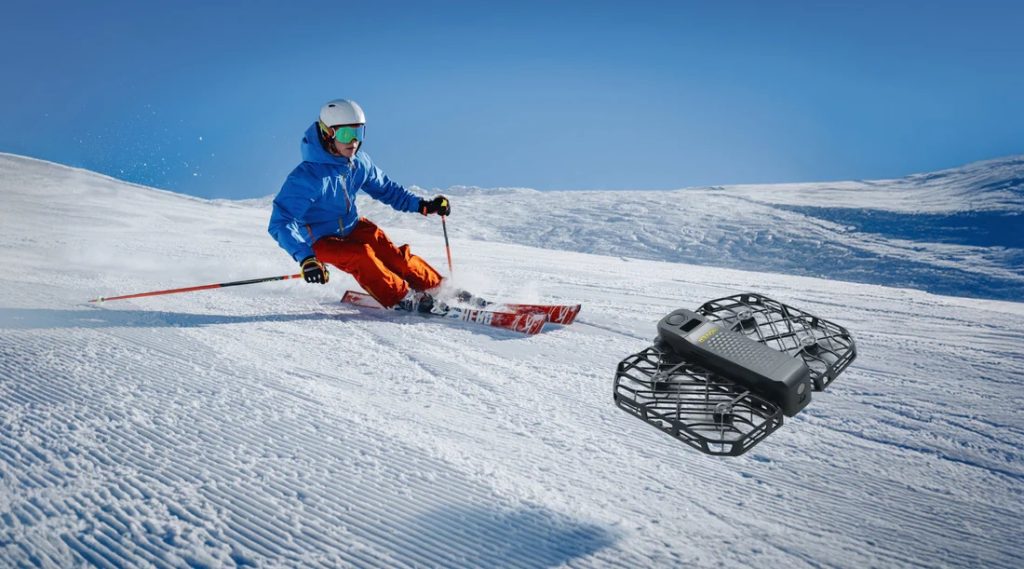
Credit: HoverAir
Snow sports are a tricky mix: you’re moving fast, the lighting can be harsh, and the white-on-white background can make the subject harder to track.
If you want follow-me footage while skiing or snowboarding, be conservative. Wide-open runs are safer than tree lines, and it’s smart to do a test pass before committing to a longer tracking sequence.
- Best fit: DJI Air 3S, DJI Mavic 4 Pro (premium), HOVERAir X1 PRO / PRO MAX (automation-first)
- What matters most: speed handling, stable tracking in high-contrast snow lighting, obstacle awareness
- Common failure point: subject blending into the snow + sudden direction changes
5. Boating and Water Sports
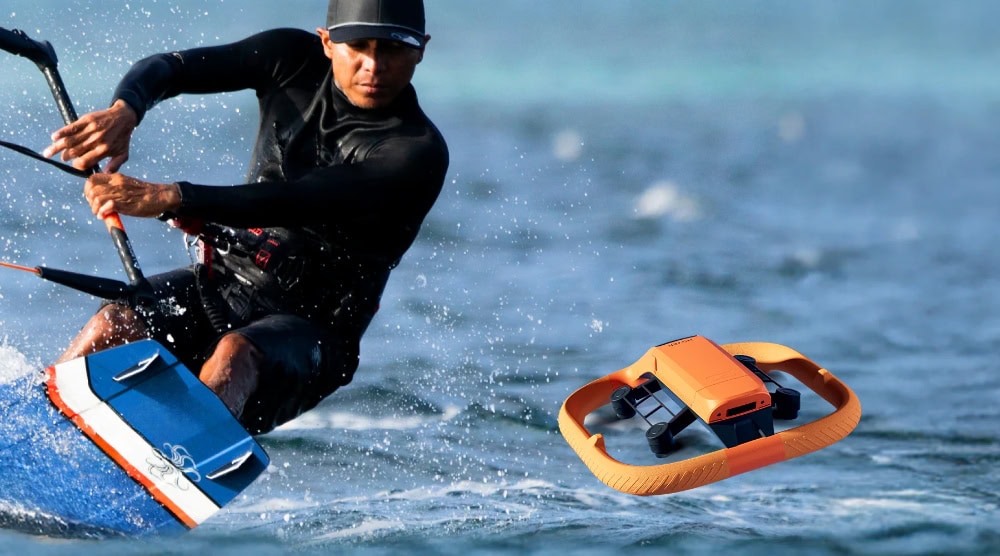
Credit: HoverAir
Water adds two problems: reflection and glare make for harder tracking conditions, and there’s also the risk of losing the drone. Drones and water don’t mix, and a single tracking mistake can mean a lost drone.
If follow-me around water is your primary goal, a water-focused platform makes sense—especially if you’re filming close to the surface or launching from a boat.
- Best fit: HOVERAir AQUA (water-first), DJI Air 3S (only with conservative, open-water setups—if it goes in the water, you’ll likely lose it for good)
- What matters most: water survivability, tracking stability in glare, safe return behavior
- Common failure point: losing contrast in glare + “one mistake and it’s gone” risk
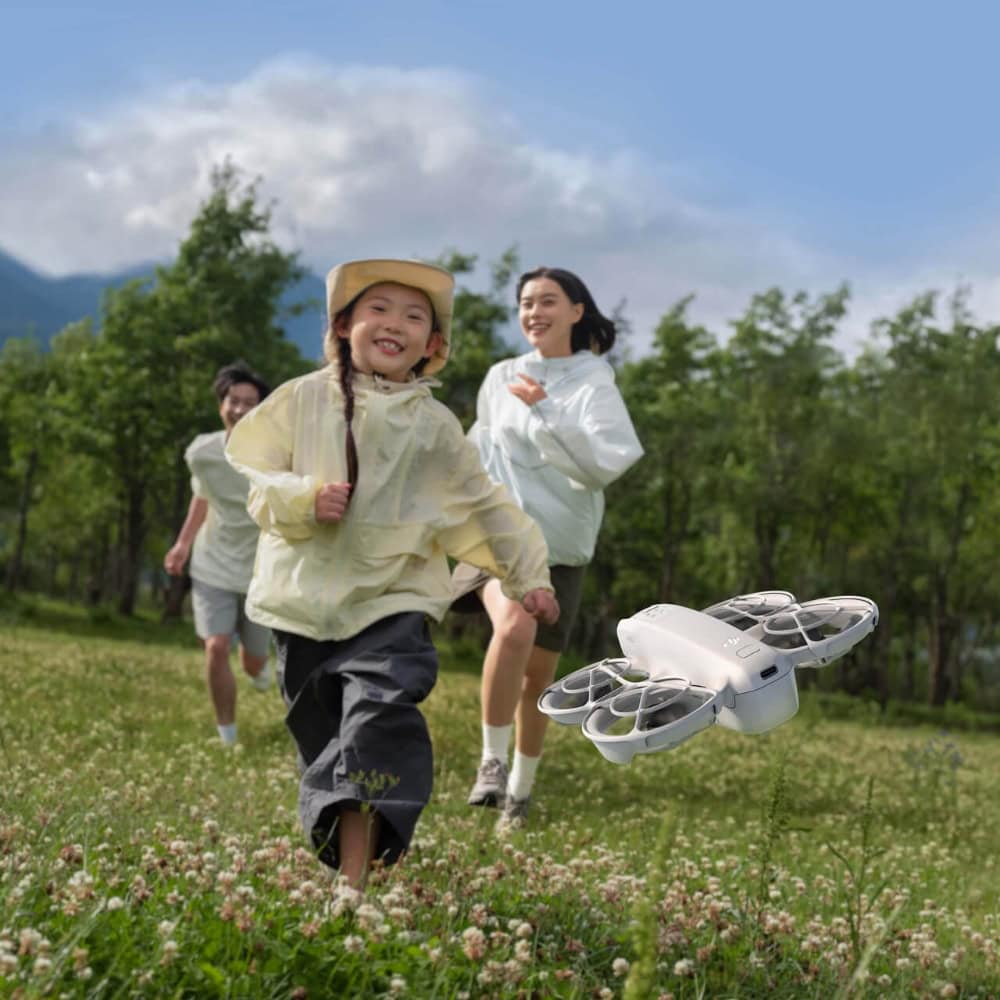
6. Family and Kids
Credit: DJI
If you’re filming family moments, you typically want the opposite of extreme: slow movement, safe distance, and something you’ll actually use without a long setup.
In practice, the best “family follow-me drone” is one that’s simple, predictable, and quick to deploy.
- Best fit: DJI Neo 2, DJI Flip, DJI Mini 5 Pro
- What matters most: ease of use, stable tracking at walking speeds, simple controls
- Common failure point: trying to use follow modes too close to obstacles or in crowded areas
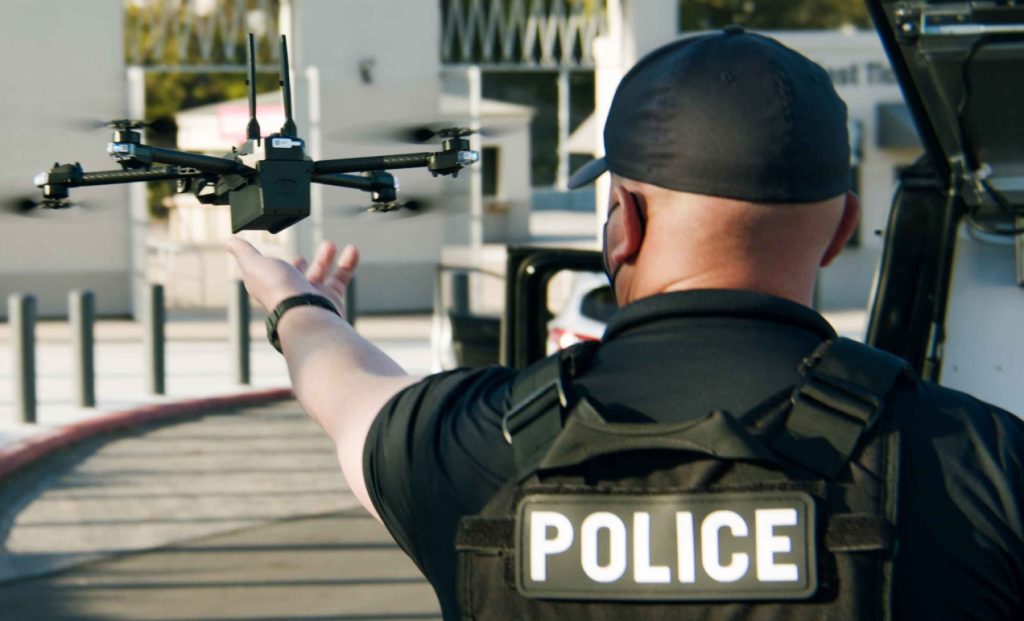
7. Public Safety and SAR
Credit: Skydio
In public safety, “follow me” is usually better described as subject tracking—tracking a person or vehicle as part of a response—often in complex environments where losing the subject or hitting an obstacle isn’t an acceptable failure mode.
This is also where autonomy and obstacle avoidance matter more than cinematic framing. For that reason, professional platforms like the Skydio X10 belong in their own category.
- Best fit: Skydio X10, Matrice 30
- What matters most: autonomy, obstacle avoidance in cluttered environments, operational reliability
- Common failure point: complex urban/wooded environments that break consumer tracking systems
Limitations & Safety: Things to Look Out For
Follow me mode can be incredibly useful. But it’s also the fastest way to get overconfident with a drone.
Tracking works best when the environment is simple, the subject stays visible, and you’re giving the drone plenty of space to make decisions.
The more you push speed, proximity, and clutter, the more likely tracking is to fail.
Why Follow Me Fails (The Big 6 Reasons)
- Occlusion: You pass behind trees, poles, terrain, or other objects and the drone loses visual lock.
- Cluttered backgrounds: Forests, crowds, and busy scenes make it harder for vision tracking to “stick.”
- Backlight and low light: Harsh glare, dusk, and mixed lighting can cause tracking dropouts.
- Speed and sudden direction changes: Bikes, skis, and vehicles can outpace tracking—especially in tight spaces.
- Wind: Wind forces the drone to spend its performance budget staying stable instead of tracking smoothly.
- Weak GNSS / signal conditions: GPS follow-me is less reliable near obstructions, steep terrain, or poor satellite reception.
Obstacle Avoidance Is Not a Force Field
Obstacle avoidance helps, but it’s not a guarantee.
Different drones detect different directions (front/back/side/up/down), and even strong sensing can struggle with thin branches, power lines, reflective surfaces, and fast closing speeds.
In follow mode, those risks stack up because the drone is constantly making movement decisions while trying to keep you framed.
Make sure to use obstacle avoidance as a risk reducer, not a permission slip to fly close to things.
Practical Safety Habits for Follow Me Flights
Here are the best practices for shooting follow-me footage while keeping your drone and the people around it (including you) safe:
- Start in an open area. Test tracking where a mistake doesn’t end in a crash.
- Give the drone space. Wider paths and higher altitudes are more forgiving than tight, low-angle following.
- Do a short test run first. Confirm it tracks you cleanly before you commit to a longer shot.
- Use a spotter when you can. A second set of eyes helps you stay aware of obstacles and bystanders.
- Know your “fail behavior.” If tracking drops, does the drone hover, brake, back off, or drift?
- Check Return-to-Home settings. Make sure your RTH altitude won’t send the drone into trees or terrain.
Follow Me Drone FAQ
Here are answers to some of the most commonly asked questions about follow me drones.
Do DJI Drones Have Follow Me?
Many DJI drones support follow-me-style tracking through subject tracking modes (often branded as ActiveTrack or similar).
In practice, that’s what most people mean when they ask whether a DJI drone can “follow you.” Performance varies by model and environment, so it’s worth treating follow mode as a feature you test and learn, not a guarantee.
Can a Drone Follow You Without a Controller?
Some “self-flying” camera drones are designed to capture follow shots with minimal setup and little to no traditional controller use.
They can be great for simple movement shots, but they’re usually less versatile than a conventional camera drone and can be more limited in how they handle complex environments. If your priority is controller-free follow footage, that’s a category to shop specifically.
Does Follow Me Work in Forests or Cities?
Sometimes. But these are two of the hardest environments for follow-me mode.
Forests introduce frequent occlusion (trees blocking the subject), while cities add clutter, interference, and unpredictable obstacles. If you want the best odds of reliable tracking, choose open spaces and predictable paths whenever possible.
What’s the Best Follow Me Drone on a Budget?
Budget-friendly follow-me tends to be about tradeoffs: you can get usable follow footage, but reliability usually drops as environments get more complex or speeds increase.
If follow-me performance is your top priority, a smaller but more capable drone is often a better “budget” move than a very cheap drone with unreliable tracking. Also consider buying last-gen models when they’re discounted, just make sure they still meet your safety and tracking needs.
How Fast Can a Follow Me Drone Track You?
It depends on the drone and the tracking system. Walking and jogging are usually within reach of most capable tracking modes in good conditions, while biking, skiing, and vehicles raise the difficulty quickly.
Even when a drone’s specs suggest it can “keep up,” real-world performance can be limited by obstacle density, lighting, wind, and how quickly the subject changes direction.
Will a Follow Me Drone Avoid Trees and Power Lines?
Obstacle avoidance helps, but it’s not a guarantee, especially with thin branches, power lines, and fast closing speeds.
Some drones have more complete sensing coverage than others, and even then, systems can miss obstacles depending on angle, speed, and lighting. Treat obstacle avoidance as a risk reducer, not a safety net you can rely on blindly.
What Settings Should I Check Before Using Follow Me?
Before you start tracking, verify your return-to-home altitude, confirm obstacle avoidance is enabled (if available), and make sure you understand what the drone does if it loses the subject.
It’s also smart to check battery level, GPS/signal strength, and any tracking mode options (follow, lead, orbit) so you’re not guessing mid-flight. A short test run in an open area is the fastest way to confirm everything is behaving the way you expect.
Is It Safe to Use Follow Me While Biking or Skiing?
It can be, but it’s higher-risk than slower activities because speed and obstacles stack the odds against tracking.
The safest approach is to use follow mode in open terrain, keep plenty of separation, and avoid tight trails or tree-lined runs where a tracking mistake could cause a crash. If you’re doing anything fast, assume you’ll need multiple attempts and keep your setups conservative.