Worried About DJI’s Future in the U.S.? The FCC Wants to Hear from You—But Comments Close May 11
BY Zacc Dukowitz
7 May 2026The FCC is currently seeking public comments about DJI’s placement on its Covered List.
In plain terms, the FCC is asking: Should DJI be allowed to bring new products into the U.S.?
If you felt left out last year when the DJI ban debate was going on, this is your chance to have your voice heard.
Here’s how to make a comment:
- Go here
- You should see the FCC Proceedings number “26-22” in the first box
- But if you don’t see it, type DJI in the first box labeled “*Proceedings” and select “26-22 | In the matter of SZ DJI Technology Co., Ltd”
- Fill out the rest of the boxes and follow the steps to submit your comment (if you’d like, you can upload your comment as an attachment)
Want to view all the comments that have been made so far? Here you go.
→ If you plan to leave a comment, you should act fast. The deadline to comment is May 11, 2026.
Important clarification: Existing DJI drones are not banned.
If you already own a DJI drone—or if a DJI drone has already received FCC approval, such as the recently-launched Avata 360 and Lito X1—it can still be owned, sold, and flown in the U.S.
The issue is with future products. By adding DJI to its Covered List, the FCC has effectively blocked future DJI drones and other new DJI products from entering the U.S. market.
To put it simply: a currently approved DJI drone can still be sold—like the Mavic 4 Pro—but a future model—like a Mavic 5 Pro—that hasn’t received FCC approval will most likely be blocked from being imported, marketed, or sold in the U.S.
Why Is the FCC Asking for Public Comment about DJI?
The FCC is asking for public comment because DJI is challenging the agency’s move to add DJI to its Covered List.
DJI started this process when it filed a petition back in January asking the FCC to reconsider its decision.
It has also taken the fight to federal court, arguing that the FCC exceeded its authority and violated DJI’s rights when it added DJI products to the list.
That legal and regulatory fight is why the FCC is taking public input now. The agency is building a record as it considers DJI’s request, and comments from drone users will become part of that record.
According to DJI, it could lose roughly $1.5 billion in U.S. sales this year alone because of the FCC’s restrictions. The company also says at least 25 planned product launches will be impacted, including drones as well as other DJI products like cameras and stabilizers.
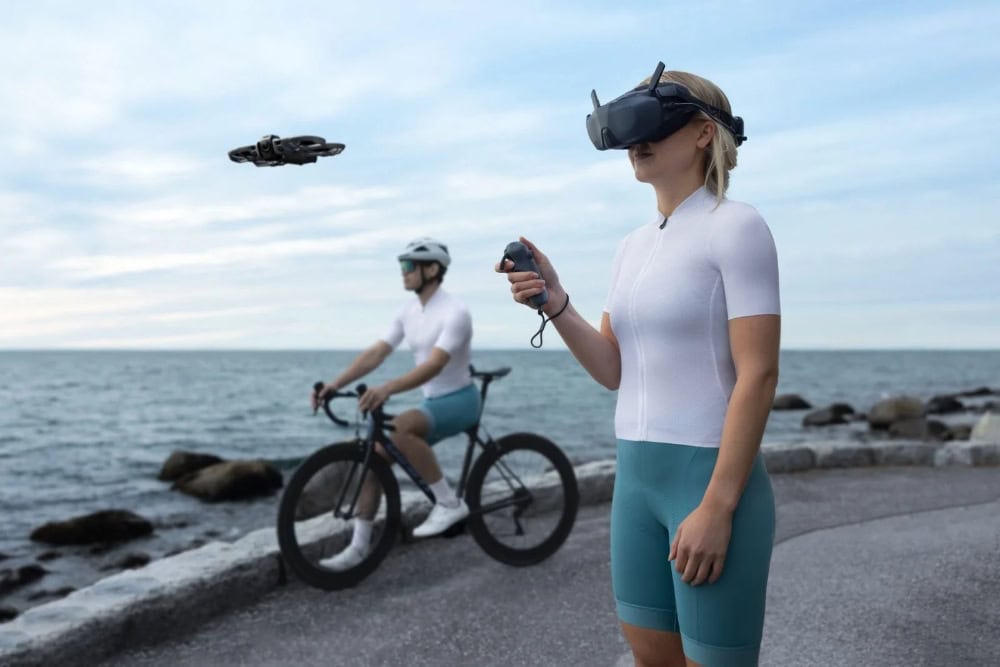
The new DJI Avata 360 | Credit: DJI
Tips for Making an Effective Comment
If you decide to comment, keep it specific and grounded in real experience.
Don’t try to make your comment a legal argument. Instead, talk about how you actually use DJI drones—provide a clear explanation of your drone work and the impact you think DJI restrictions will have on your operations.
Here are some things to consider including:
- What kind of drone work you do
- Which DJI products you rely on
- Whether your work supports public safety, agriculture, inspections, mapping, media, education, and/or small business operations
- Whether comparable alternatives are realistically available at a workable price
- How losing access to future DJI drones or accessories could impact your drone-related work and livelihood
Keep the tone professional, avoid exaggeration, and focus on concrete consequences rather than broad political arguments.
Leave a comment on the FCC’s website.
Why This Matters for Drone Pilots
In late 2025, the FCC moved to place all new foreign-made drones on its Covered List.
That means that DJI isn’t the only company impacted. The restrictions apply more broadly to foreign-made drones and drone components, which means Autel, Antigravity, Zero Zero Robotics, and all other non-U.S. manufacturers are also impacted.
The big problem here is that we really don’t have a domestic alternative to DJI. And this is especially true for consumer drones.
Although Skydio recently announced a $3.5 billion investment in U.S. drone manufacturing—a huge step for domestic drone production—all those drones will be for enterprise customers at places like public safety agencies or private companies.
That means your typical drone solopreneur who owns a one-person drone business, or any hobbyists flying drones for fun, are left with very few options. Because we’re not seeing an investment in domestic drone production for consumer drones—only for enterprise and military drones.
In the short term, DJI isn’t going anywhere, even if the FCC keeps it on the Covered List.
But the concern is that, over time, options will shrink, prices will rise, and the drone ecosystem DJI created—which relies on affordable, high-quality drones—will slowly fade away.
All of that is speculative.
What we know for sure is that FCC commenting closes May 11. If you feel strongly about DJI being able to bring products into the U.S., leave a comment before the deadline.