FAA COAs Explained: Eligibility, Application Steps & Limits
BY Zacc Dukowitz
26 June 2026A COA (Certificate of Authorization) is an FAA authorization that allows public operators to conduct specific unmanned aircraft operations under defined conditions.
You may see COA written a few ways:
- Certificate of Authorization
- Certificate of Waiver or Authorization
- UAS COA
- FAA drone COA
- Public aircraft COA
Most commercial drone operations operate under the FAA’s Part 107 rules. But public safety agencies and other public operators can choose to operate under Part 107, a COA, or both.

Credit: Skydio
COAs provide specific approvals for public safety drone operations. Although they can allow for different types of approvals than Part 107 certification, they’re still not a blank check to fly anywhere, anytime, or under any condition.
In this guide to FAA COAs, we’ll walk you through why they matter, how to decide between Part 107 or COAs if you’re a public safety agency, and how to get a COA.
Here’s everything we cover:
- Why COAs Matter for Public Drone Programs
- Who Can Apply for a COA?
- FAA COA vs Part 107: Which Path Should Your Program Use?
- How to Apply for an FAA COA
- What Happens After Your COA Is Approved?
- FAA COA FAQ
Why COAs Matter for Public Drone Programs
COAs matter most for agencies that want to make drones part of official government operations—not just occasional flights.
For a public safety agency, the question isn’t just: “Can we fly a drone?”
The better question is: “What legal operating path supports the way our program actually works?”
That distinction matters, because the path you choose now will define your operational capabilities in the future.
Public drone programs involve a lot of complexity:
- Recurring missions
- Formal chains of command
- Public records
- Interagency coordination
- Higher expectations for training and documentation
That’s why it’s worth being thoughtful about how you set them up. Because taking the time now can save you a lot more time—not to mention headaches—down the road.
COAs Can Help Agencies Formalize Routine Drone Operations
A COA can be useful when an agency needs a defined operating framework for missions that happen again and again.
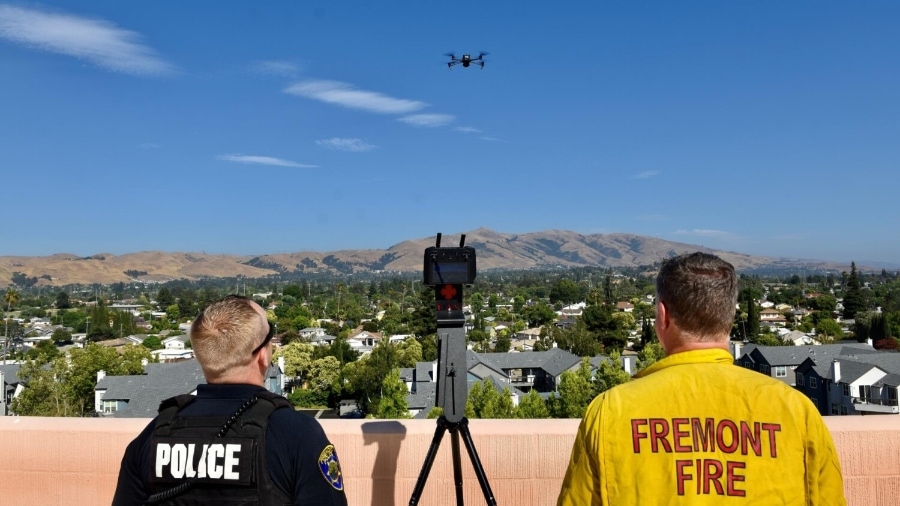
For example, a police department may use drones for crash reconstruction, missing person searches, tactical overwatch, large-event support, or part of a DFR (Drone as First Responder) program.
Or a fire department may use drones for structure fire overwatch, wildfire assessment, hazardous materials response, or post-storm damage checks.
In these situations, the drone isn’t just a camera in the air. It becomes part of the agency’s response workflow.
And this is where a COA can help.
It pushes the agency to define who can fly, what aircraft they use, where flights may happen, what procedures pilots follow, and how the program stays accountable.

Credit: DJI
Who Can Apply for a COA?
FAA COAs for drone operations are primarily intended for public aircraft operators.
That means government organizations—not private drone businesses, real estate photographers, construction companies, or individual commercial pilots.
If you’re running a private commercial drone operation, the FAA’s Part 107 rules will be your starting point.
What Is a Public Aircraft Operator?
Public aircraft operators can include federal, state, local, tribal, or territorial government entities that meet the FAA’s requirements.
In the drone world, this includes agencies like:
- Police departments
- Fire departments
- Emergency management agencies
- Public works departments
- State transportation departments
- Other qualifying government offices or public agencies
To qualify as a public aircraft operator under FAA rules, the agency typically has to be a government entity (federal, state, local, tribal, or territorial) conducting an official governmental function.
That distinction matters for groups that support public safety but are not themselves government agencies.
For example, volunteer search and rescue teams, nonprofit emergency response groups, private contractors working for government agencies, and public-private partnerships may all play a role in public safety—but that doesn’t automatically make them eligible to operate under an FAA COA.
In those cases, the organization may still need to operate under Part 107, unless the qualifying government agency is the one directly operating the aircraft under the COA.
Why Private Companies Use Part 107
Most private companies operate under Part 107 because Part 107 was made for commercial small UAS operations.
If you’re inspecting roofs, mapping construction sites, shooting marketing footage, surveying land, or offering drone services to clients, you’re looking at Part 107—not a COA.
That doesn’t mean Part 107 is simple. Many commercial drone operations still require airspace authorization, waivers, careful planning, and additional approvals.
But the basic difference is clear:
- A COA is a common public-operator pathway
- Part 107 is the typical pathway for commercial drone pilots and private organizations

Credit: Skydio
FAA COA vs Part 107: Which Should Your Program Use?
For a public agency, the choice is usually not “COA or nothing.”
Most agencies are considering two operating paths: flying under Part 107 or applying for an FAA COA.
Making the choice depends on several factors, including the agency’s mission, the timeline, the agency’s structure, and how the drone program will be managed.
In many cases, the practical path is:
- Start with Part 107 for all your drone pilots
- Work on your COA application
- Eventually, your agency may have pilots who are Part 107-certified and operating under a COA
Doing this allows your pilots to get Part 107 trained, lets you get started faster, and lets you ultimately have more flexibility and structure (via the COA).
Still struggling to choose? Here’s a simple breakdown:
| Choose this path | Use it when… | Best fit |
|---|---|---|
| Part 107 | You need a practical way to get trained pilots flying sooner, and the missions fit within standard Part 107 rules. | Simple training flights, basic documentation, low-complexity agency work, or private/commercial operations. |
| FAA COA | Your agency needs a formal public aircraft framework for recurring government missions. | Public safety response, emergency management, search and rescue support, disaster assessment, and recurring public agency operations. |
| Both | You want pilots trained and able to fly under Part 107 while the agency also builds a longer-term COA-based program. | Most public safety programs that need flexibility, structure, and a practical path to start operating. |
Use Part 107 if Speed and Simplicity Matter Most
Part 107 is the FAA’s main rule for small commercial drone operations.
For a public agency, it can be a practical way to get pilots trained and flying sooner. A fire department, police department, or public works office might have pilots earn their Remote Pilot Certificates and begin operating under Part 107 while the agency evaluates whether a COA is worth pursuing.
This can make sense when the missions are straightforward.
For example, if your agency is doing basic training flights, simple documentation work, or low-complexity operations that fit cleanly within Part 107, a COA may not be the first thing you need.
Use a COA if Your Agency Needs Routine Public Aircraft Operations
A COA may make more sense when the drone program is tied to recurring government missions.
That could include public safety response, emergency management, search and rescue support, disaster assessment, infrastructure inspection for a public agency, or other operations where the drone is being used as part of an official government function.
The COA path is more formal. The agency has to define what it wants to do, submit an application, and wait for FAA review.
That extra work can be worth it if the agency needs a clear public-operator framework instead of treating every drone mission as a one-off flight under Part 107.
A COA may also be worth considering when the agency needs to document standard operating procedures, define pilot responsibilities, establish internal oversight, and build a long-term drone program instead of handling flights case by case.
Why Many Public Safety Programs Use Both
As we noted above, a lot of public safety agencies start with Part 107 while applying for a COA.
This approach lets your drone pilots get trained and begin flying sooner, while the agency works through the COA process in parallel.
It also gives the program time to build real-world experience before locking in formal procedures under a COA.
The real question is what your agency needs to do in the field. If you’re building a long-term program, then it’s worth comparing both paths early, before buying aircraft, writing policies, or assigning pilots.
How to Apply for an FAA COA
Applying for an FAA COA starts before you log into an FAA system.
The most important work is defining the operation clearly. The FAA needs to understand who is operating, what aircraft will be used, where flights will happen, what the mission is, and how the agency will manage safety.
If the application is vague, the review becomes harder. A stronger application starts with a clear concept of operations.
Here’s the step-by-step process:
Step 1: Confirm Eligibility
Start by confirming whether your organization qualifies as a public aircraft operator.
This isn’t just an internal label. A public mission does not automatically make an organization eligible for a public aircraft COA.
For example, a city fire department may have a clearer path than a private contractor supporting that same fire department. A nonprofit search and rescue group may support public safety, but that doesn’t automatically mean it qualifies to operate under a COA.
If there is any uncertainty, resolve that question before building the rest of the application.
Start here on the FAA’s website to confirm your organization’s eligibility.
Step 2: Define Your Concept of Operations
Your concept of operations should explain what the drone program will actually do.
This should be specific enough that a reviewer can picture the operation.
“Public safety flights” is too broad by itself. “Daytime search and rescue support over rural areas within the county” is more useful.
At a minimum, define:
- Mission types
- Operating areas
- Aircraft and equipment
- Pilot qualifications
- Normal operating procedures
- Emergency procedures
- How the agency will manage risk
This is also where internal planning matters. If your pilots, command staff, and legal or risk management teams are not aligned, the COA process can expose those gaps quickly.
Step 3: Prepare Aircraft, Pilot, and Safety Documentation
A COA application is easier to support when the agency has already documented how it will operate.
That doesn’t mean every public agency needs a massive policy manual before applying. But the FAA will need enough information to evaluate the proposed activity and the safety controls behind it.
Useful preparation includes:
- Aircraft details
- Pilot training records
- Maintenance procedures
- Lost-link procedures
- Communication plans
- Visual observer procedures
- Emergency procedures
- Internal approval workflows
The goal is to show that your agency has thought through how flights will be conducted safely and consistently, including when conditions are not ideal.
Step 4: Submit Through the FAA’s COA System
Once the agency has the right information ready, the application is submitted through the FAA’s DroneZone portal.
After you submit, the FAA may review the proposed activity, ask for clarification, and issue an authorization with provisions or limitations. Those limits are part of the approval and should be treated as operating requirements.
Program leaders should plan for this process to take time.
Typically, the COA isn’t the fastest path to getting a drone in the air. If your agency needs to start with basic training or simple missions, Part 107 may be useful while the COA process moves forward.
Credit: Fremont Police Department
What Happens After Your COA Is Approved?
Getting the COA isn’t the finish line. It’s actually just the beginning.
The COA gives your agency an FAA-approved operating path for the activities described in the authorization. But the agency still has to train pilots, follow the COA’s limits, document operations, and manage its drone program responsibly.
This is where many drone programs become reliable—or drift into informal, disorganized habits that create risk.
Emphasize Training and Internal Oversight
A COA doesn’t make someone a capable drone pilot.
Your agency still needs a training plan, a way to evaluate pilots, and a process for deciding who can fly which missions.
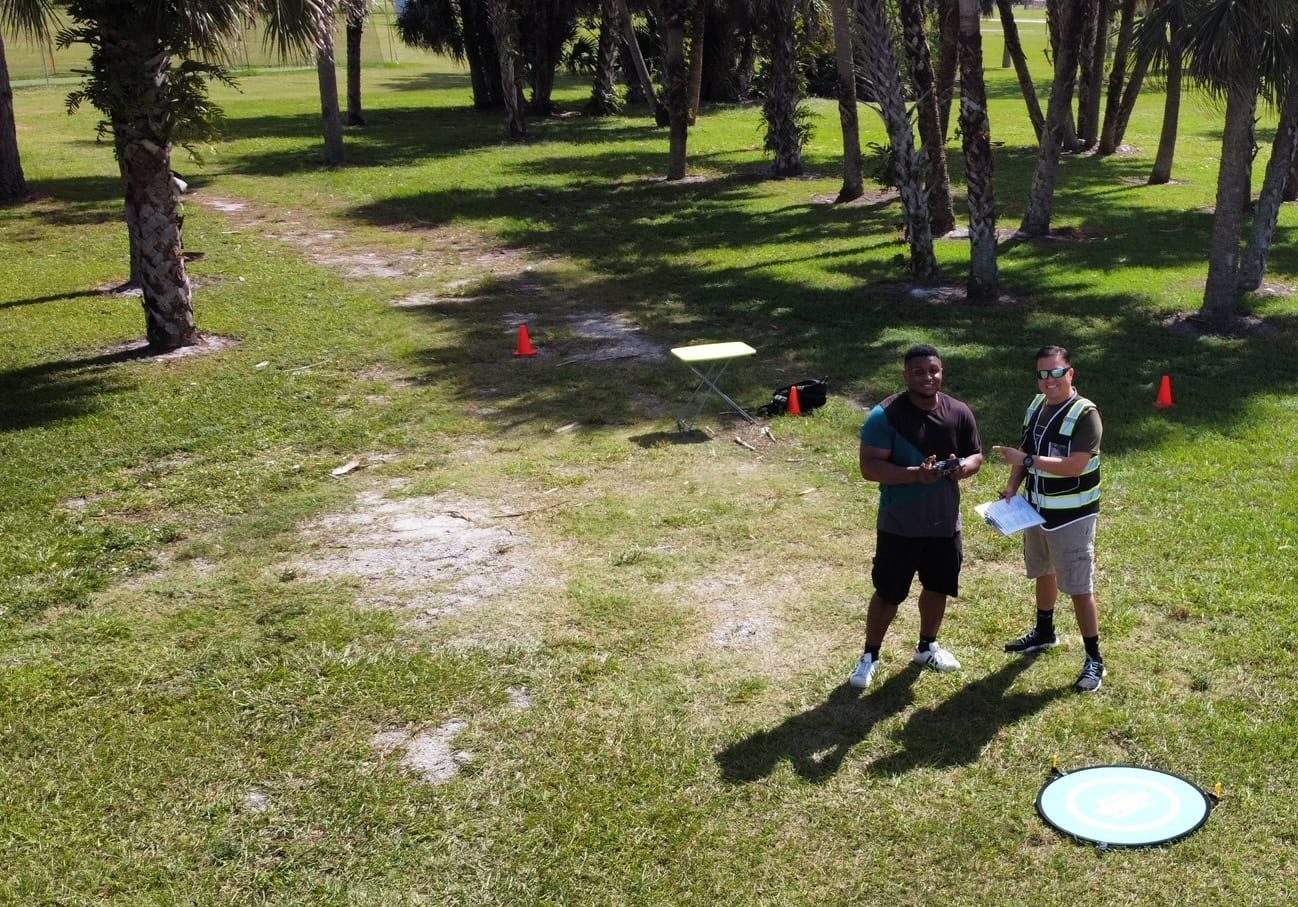
A pilot who is comfortable flying a training grid at a park may not be ready to support a nighttime search, a structure fire, or a traffic crash near active roadways.
Also, internal oversight should be clear.
Someone needs to own the program, review procedures, track aircraft readiness, manage pilot currency, and make sure the agency is flying within the COA’s terms.
Reporting, Recordkeeping, and Operating Limits
After approval, the COA should be treated like a working document.
Program leaders should know what it allows, what it restricts, and what the agency has to report or document. This may include flight records, incident reporting, aircraft information, operating areas, pilot requirements, or other provisions included in the authorization.
Put simply, the agency must be able to prove it’s operating the way it said it would operate.
That matters during routine missions, but it matters even more when something goes wrong.
If there’s a crash, complaint, near miss, or public records request, clean documentation can help show that the program is being run with discipline.
FAA COA FAQ
Here are answers to some of the most commonly asked questions about COAs and the COA process.
Is an FAA COA the Same as a Part 107 Waiver?
No. An FAA COA and a Part 107 waiver are different tools.
A COA is generally tied to a public operator and a specific unmanned aircraft activity. A Part 107 waiver allows a Part 107 operator to deviate from certain Part 107 rules when the FAA approves the safety case.
They may both involve FAA review, but they are not the same operating path.
Can a Private Company Get a COA?
Private companies usually operate under Part 107, not a public aircraft COA.
A private company may support a public agency as a contractor, but that doesn’t automatically make the company a public aircraft operator. If your organization is private, start with Part 107 and evaluate whether any waivers or airspace authorizations are needed for the specific work.
Do Public Agency Pilots Still Need To Be Part 107 Certified?
Not always, but many agencies still have pilots earn a Remote Pilot Certificate.
Even when an agency is operating under a COA, Part 107 training can help pilots understand airspace, weather, regulations, and safe operating practices. It can also give the agency more flexibility if some missions are flown under Part 107 instead of the COA.
How Long Does It Take to Get a COA?
The FAA says that, in most cases, it will provide a formal response within 60 days after a complete application is submitted.
The key word is complete. If the application is unclear, missing information, or based on a poorly defined operation, the process can take longer.
Can a COA Allow BVLOS?
A COA may support advanced operations, including BVLOS, only if the FAA approves those operations in the authorization.
Do not assume that a COA automatically allows beyond visual line of sight flight. BVLOS is a major operational and safety issue, and any authority to conduct it must come from the specific FAA approval and its stated conditions.