Drone Pilot Salary: How Much Does a Drone Pilot Make? [New for 2026]
BY Alan Perlman
8 February 2026
What does a drone pilot salary look like today?
And how much does a drone pilot make every year, or every month—or even every hour?
These are some of the most common questions people ask when considering taking the leap and becoming a commercially certified drone pilot.
In this guide to drone pilot salaries we’ll take a look at the ways commercial drone pilots make money, the highest paying drone jobs, whether to work for yourself or get a full-time drone job, and more.
Here’s a menu in case you’d like to jump around:
- How Much Does a Drone Pilot Make?
- Factors Impacting Drone Pilot Salary
- The Two Ways Drone Pilots Make Money
- Drone Pilot Salary by Type
- How to Make More Money as a Drone Pilot
- Drone Pilot Salary FAQ
How Much Does a Drone Pilot Make?
The average drone pilot salary is:
- $130,916 a year according to ZipRecruiter, with an average hourly salary of $62.94.
- $130,986 a year according to Glassdoor, with an average base salary of $106,269.
- $57,526 a year according to Indeed.
Why the Discrepancy?
One reason for the discrepancy between the Indeed data and the other two might be the skill level of the pilots reported.
Indeed’s data may skew toward entry-level or lower-paying jobs, like real estate shoots or basic roof inspections.
In contrast, the salaries on ZipRecruiter and Glassdoor could reflect higher-paying roles in industries like energy, surveying, and defense, where drone pilots are expected to have advanced skills and certifications.
It’s also possible that ZipRecruiter and Glassdoor are showing total compensation (including bonuses), while Indeed reports just base pay.
But one thing to call out is that the ZipRecruiter and Glassdoor numbers are almost exactly the same—which indicates that, for skilled drone pilots, making money with drones can be pretty lucrative.
Drone Pilot Salary by Industry
Wondering how much an agriculture drone pilot salary differs from the salary of a public safety drone pilot?
This table has annual salaries for all of the top drone jobs on the market, listed from lowest to highest paying.
| Type of Work | Average Annual Drone Pilot Salary |
|---|---|
| Wildlife Conservation Drone Pilot | $35,000 – $60,000 |
| Search and Rescue Drone Pilot | $40,000 – $65,000 |
| Public Safety and Emergency Services Drone Pilot | $40,000 – $75,000 |
| Agricultural Drone Pilot | $40,000 – $80,000 |
| Infrastructure Inspection Drone Pilot | $50,000 – $80,000 |
| Delivery Drone Operator | $54,198 |
| Film and Video Drone Pilot | $69,107 |
| Environmental Services Drone Pilot | $83,856 |
| Real Estate Drone Photographer | $84,459 |
| Transportation Drone Pilot | $85,715 |
| Construction Drone Pilot | $95,168 |
| Mapping and Surveying Drone Pilot | $95,966 |
| Inspection and Monitoring Specialist | $100,600 |
| UAV Pilot Instructor | $100,600 |
| Surveying and Mapping Engineer | $115,000 |
| Aerospace and Defense Drone Pilot | $215,663 |
Note: This salary data came from a range of sources, including searches on job platforms and academic studies.
Factors Impacting Drone Pilot Salary
How much do drone pilots make?
The answer is, as with most things: it just depends.
Namely, it depends on four things: experience level; the sector you work in; your geographic location; and your certifications and skills.
Below, we cover each of these to give you a more concrete sense for why some drone pilots may make $200k in a year while others are making $50k.
1. Experience Level
Drone pilot salaries vary significantly with experience.
No surprise here. Entry-level pilots typically earn less as they build their skills and portfolios, while seasoned professionals command higher pay due to their expertise.
| Experience Level | Average Annual Salary |
|---|---|
| Entry-Level (Less than 1 year) | $42,000 |
| Mid-Career (1-4 years) | $57,000 |
| Experienced (5+ years) | $88,000+ |
These figures highlight the potential for increased earnings as drone pilots gain more experience and establish themselves in the industry.
2. Industry and Sector
Compensation for drone pilots also varies across different industries. Below is a snippet comparison of average salaries in various sectors:
| Sector | Average Annual Drone Pilot Salary |
|---|---|
| Aerospace and Defense | $215,663 |
| Construction | $95,168 |
| Environmental Services | $83,856 |
| Film and Video | $69,107 |
| Mapping and Surveying | $95,966 |
| Real Estate | $84,459 |
| Transportation | $85,715 |
These variations underscore the importance of industry choice in determining a drone pilot’s earning potential.
3. Geographic Location
Geographic location significantly impacts drone pilot salaries, with certain states and cities offering higher compensation due to demand and cost of living.
Take a look:
- California drone pilot salary = about $78,000 a year.
- Texas drone pilot salary = about $68,000 a year.
4. Certifications and Skills
Obtaining specialized certifications and developing advanced skills can enhance a drone pilot’s marketability and salary.
While the FAA’s Part 107 certification is the baseline requirement for commercial operations, additional qualifications can lead to higher-paying opportunities.
Key certifications and skills include:
- Thermography certification. Enables pilots to conduct thermal imaging inspections for industries like construction and energy.
- LiDAR training. Allows for advanced mapping and surveying applications, particularly in environmental and engineering projects.
- Photogrammetry skills. Essential for creating accurate 3D models and maps, valuable in real estate and urban planning.
- GIS proficiency. Facilitates the analysis and interpretation of geographic data, beneficial in agriculture and resource management.
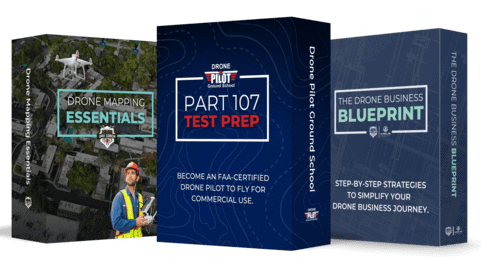
[Want to learn how to do drone mapping with photogrammetry? Check out our Drone Mapping Essentials course and in-person drone mapping workshops to see how you can add drone mapping to your list of drone pilot skills.]

The Two Ways Drone Pilots Make Money
How much you make as a drone pilot depends in part on how you find your work.
There are two ways for drone pilots to make money:
- Working for a Drone Program
- Working for Yourself
Keep reading to learn about each one.
1. Working for a Drone Program
In industries where drone adoption is growing, companies are establishing programs and full departments dedicated to drone operations.
For example, construction companies are adding in-house drone pilots to their staff to conduct aerial surveys of their work sites.
In some cases, larger companies may build multi-person teams of drone technologists to not only fly drones, but to also manage drone operations and process the data collected.
And public safety organizations are setting up drone programs and training their officers to fly drones for search and rescue missions.
These examples represent opportunities for professionals already established within a certain career field to find work flying drones.
2. Working for Yourself
The rising demand for certified drone pilots is matched, or even exceeded by, a growing supply of work.
Setting up your own aerial services business is not something to dive into without careful consideration, but it can provide financial gains for the person who does it right.
If you decide to go it alone, you will need to secure a commercial drone pilot license, business license, insurance, and a client base.
The beauty of setting up your own drone business is that the start-up costs are fairly low. Professional-grade drones are available to just about anyone from dozens of popular retailers.
After obtaining a Part 107 certification and purchasing a quality unit, a person can start a drone photography/videography business for well under $2,000.
An additional draw of the droneprenuer avenue is the wide range of drone services there are to choose from when deciding what offerings to incorporate into their business model.
More and more industries are beginning to realize the value drones can offer, from agriculture to telecommunications. Droneprenuers can create a business around aerial services such as GIS surveying and mapping, thermal imaging, security surveillance, and inspections just to name a few.
[Want to get Part 107-certified? We’ve helped over 70,000 drone pilots get certified, with a 99%+ success rate. Learn more about our Part 107 test prep course Drone Pilot Ground School.]

Drone Pilot Salary by Type
As we covered above, drone pilot salaries vary widely depending on experience, skillset, and industry.
Below is a breakdown of salary tiers, from entry-level work to high-end commercial and defense roles, including insights into freelance and mid-range earning potential.
Entry-Level Drone Pilot Jobs
Starting a career as a drone pilot typically involves entry-level positions that help build experience and skills.
Realistic starting salaries for these roles range from $35,000 to $50,000 annually, depending on factors like location and employer.
Common entry-level job types include:
- Real estate photography. Capturing aerial images and videos of properties to enhance listings.
- Roof inspections. Assisting in assessing roof conditions for insurance claims or maintenance.
- Event coverage. Providing aerial footage for weddings, concerts, and other events.
- Construction site monitoring. Documenting progress and providing visual data for project managers.
While these positions may offer modest pay initially, they provide valuable experience that can lead to higher-paying opportunities as skills and certifications advance.
Freelance Drone Pilot Salaries
Freelancers have more control over their schedule and earnings but face inconsistent workloads and project-based pay.
The average freelance drone pilot salary ranges from $40,000 to $75,000 annually, though skilled freelancers can earn six figures with consistent bookings and strong marketing.
Typical hourly rates range from $25 to $150, depending on the job type, location, and pilot reputation. Freelance work is often found through platforms like Upwork, DroneBase, or direct client outreach.
Mid-Range Drone Pilot Jobs
Pilots with a few years of experience and at least one advanced certification often move into mid-range roles.
These jobs tend to pay between $60,000 and $90,000 annually and involve more technical skills or recurring work for commercial clients.
Examples of mid-range drone pilot work include:
- Multispectral crop monitoring. Using advanced sensors to support precision agriculture.
- Drone mapping and modeling. Supporting construction, mining, and civil engineering with aerial data.
- Insurance inspections. Capturing post-storm or fire imagery for claims processing.
The Highest Paying Drone Jobs
Advanced roles in the drone industry command higher salaries, particularly in specialized fields.
Here are some of the highest-paying jobs and industries for drone pilots:
- Aerospace and defense. Drone operators working in defense or military contracting can earn over $215,000 annually, often supporting surveillance, reconnaissance, or R&D missions.
- LiDAR mapping specialist. LiDAR pilots capture high-resolution 3D data for infrastructure, engineering, and environmental work. Salaries typically range from $90,000 to $120,000.
- Mapping and surveying. Using drones to generate orthomosaics, 3D models, and contour maps for land development and construction. Average pay can exceed $100,000 per year.
- Construction. Capturing progress data, supporting inspections, and improving site management. Drone pilots in construction earn around $95,000 per year.
- BVLOS (Beyond Visual Line of Sight) operations. These high-regulation roles involve flying drones outside the pilot’s line of sight and pay between $85,000 and $110,000 annually.
- Oil and gas pipeline inspection. Conducting inspections of critical infrastructure. Drone pilots in this space earn between $80,000 and $100,000 annually.
- Agricultural analysis. Monitoring crop health, irrigation, and yield using multispectral or thermal imaging. Average pay ranges from $70,000 to $90,000 per year.
- Environmental services. Supporting environmental monitoring, erosion tracking, and wildlife surveys. Typical earnings are around $83,856 per year.
- Transportation and infrastructure. Monitoring roads, bridges, and rail lines. Average drone pilot salaries are about $85,715 annually.
- Real estate. Capturing aerial photography and video for listings and developments. Average earnings hover around $84,459 per year.
- Film and video. Providing dynamic footage for TV, film, and commercials. Drone pilots in this industry make roughly $69,107 annually.
Pilots in these roles typically hold advanced certifications and have several years of experience in the field.
How to Make More Money as a Drone Pilot
Already earn a salary as a drone pilot but you want to make more?
Here are three things you can do:
1. Earn Advanced Skills and Certifications
Obtaining specialized certifications can significantly enhance your earning potential as a drone pilot.
Advanced training equips you with skills that are in high demand across various industries, allowing you to offer premium services.
Key certifications include:
- Drone mapping. Learn how to collect, process, and deliver orthomosaics, elevation models, and contour maps for surveying, construction, and land development projects. Check out our
- Thermography. Enables you to conduct thermal imaging inspections, valuable in fields like building diagnostics and industrial inspections.
- GIS (Geographic Information Systems). Enhances your capability to analyze spatial data, beneficial for environmental monitoring and urban planning.
2. Specialize in High-Paying Niches
Focusing on specialized, high-demand niches can lead to increased income.
By tailoring your services to specific industries, you position yourself as an expert, allowing you to command higher rates.
Notable high-paying niches include:
- Solar panel inspections. Using drones to assess the condition and efficiency of solar installations.
- Powerline mapping. Conducting aerial surveys of powerlines for maintenance and infrastructure development.
- Precision agriculture. Utilizing drones to monitor crop health and optimize agricultural practices.
3. Improve Your Business Skills
Enhancing your business acumen is really important if you want to make more as a drone pilot.
Key areas to focus on include:
- Pricing strategies. Developing competitive yet profitable pricing models for your services.
- Customer acquisition. Implementing effective marketing techniques to attract and retain clients.
- Networking. Building relationships within the industry to open up new opportunities.
Investing in these business skills can lead to a more successful and profitable drone operation.
[Need help launching your drone business? Check out The Drone Business Blueprint, a course we made to help drone pilots start and grow their business.]

Drone Pilot Salary FAQ
Here are answers to the most common questions about drone pilot salaries.
How much do drone pilots make per hour?
Drone pilots typically earn between $25 and $75 per hour, depending on experience, certifications, and the type of work. High-demand specialties like LiDAR mapping or thermal inspections can command rates of $100 per hour or more.
Can drone pilots earn six figures?
Yes, many commercial drone pilots earn six figures, especially those working in sectors like energy, defense, and mapping. To reach this level, pilots usually specialize in high-paying niches and hold advanced certifications.
What’s the average freelance drone pilot salary?
The average freelance drone pilot salary ranges from $40,000 to $75,000 per year, though highly skilled freelancers can exceed $100,000. Income varies based on location, marketing, and the ability to consistently land projects.
What’s the best-paying drone job?
Some of the highest paying drone jobs include LiDAR mapping, BVLOS operations, and defense contracting. These roles can pay over $100,000 annually and often require specialized training and certifications.
How much does an agriculture drone pilot make?
An agriculture drone pilot salary typically ranges from $60,000 to $90,000 per year. Pay depends on whether the work is focused on crop monitoring, spraying, or multispectral analysis for precision agriculture.
How can I increase my drone pilot income?
To earn more, focus on high-value certifications, specialize in a specific industry, and improve your business skills. Marketing, networking, and pricing strategies all contribute to long-term income growth.
Where are drone pilots in highest demand?
Drone pilots are in highest demand in states with large construction, agriculture, and energy sectors—like Texas, California, and Florida. Urban areas also offer steady work for real estate, media, and inspection projects.
How long does it take to become a paid drone pilot?
After passing the FAA Part 107 exam, some pilots find paid work within weeks, especially in entry-level fields like real estate or event photography. Building a steady income typically takes 6–12 months of experience and networking.
What is the average drone operator salary in the U.S.?
The average drone operator salary in the U.S. is around $80,000 per year, though this varies by industry and region. Highly skilled operators working in commercial or government sectors may earn significantly more.