Drone News Roundup: Mavic 3 Pro Iceland Eruption, Cold Weather Flying Tips, and More!
BY Zacc Dukowitz
2 January 2025This week we’re covering a majestic cinematic video shot on the Mavic 3 Pro featuring footage of volcanic eruptions in Iceland.
We’re also covering tips for flying a drone in cold weather, flying a drone in your neighborhood, what to do if someone shoots at your drone, and guidance on how to read a METAR report.
Now let’s get to those links!
DJI Mavic 3 Pro | Erupting Volcano in Iceland

This video shot by drone pilot Jìng Yan is a recent standout submission to the SkyPixel 10th Anniversary Contest. The video was shot entirely on the Mavic 3 Pro. Unlike many of the drone videos we’ve seen of volcanoes erupting in Iceland—and there are a lot of them—this one takes an elegiac, meditative approach to the subject matter, highlighting the awesome beauty of a volcanic eruption with slow, sweeping shots that let you see just how huge the phenomenon is, and music that underscores the majesty of the event.
Want to submit your work to SkyPixel’s contest? The contest will be receiving submissions until February 10, 2025, so you still have plenty of time—follow the link below for the official contest page.
LEARN MORE
Tips for Flying a Drone in Cold Weather

Flying a drone in cold weather comes with its own unique challenges. Check out the video above for our six main tips on flying when it’s cold, or skim this list for a recap:
- Check your drone’s specs to see what its temperature tolerance is.
- Use a battery warmer and use fully charged batteries, since cold depletes batteries faster.
- Store your drone, controller, and batteries in a warm place.
- Bring extra batteries and check your battery life often.
- Use a dry surface for takeoff and landing.
- Allow warm up time for your drone.
LEARN MORE
Can You Fly a Drone in Your Neighborhood?

We’ve trained over 70,000 drone pilots for the FAA’s Part 107 test and we have over 100,000 drone enthusiasts signed up for our weekly newsletter. Through all of our interactions with professional and recreational drone pilots, one of the most common questions we get is: Can I fly a drone in my neighborhood? And the answer is—it depends on a few factors, including what airspace your neighborhood is in, whether you’re making sure not to fly over people, whether there are any special privacy laws in your state or city, and whether you live in an HOA. Watch the video for guidance on how to fly in your neighborhood legally and answers to commonly-asked questions.
LEARN MORE
What Should You Do If Someone Shoots at Your Drone?

Drone shootings seem to be more and more common lately. But shooting at a drone is illegal. Period. No one has the right to shoot a drone, even if it’s flying over their property. That’s because the FAA oversees the national airspace, and has jurisdiction over what happens in it.
But what do you do if someone shoots at your drone? The most important thing is to keep yourself safe. Don’t talk to the shooter—just leave the area as quickly as you can, and file a report later. Second, try to collect evidence of what happened so you can file a report later. But again, only if it’s safe to do so. Watch the video above for more information, and follow the link below for our guide to drone shootings and what to do if you’re a victim of one.
LEARN MORE
How to Read a METAR Report
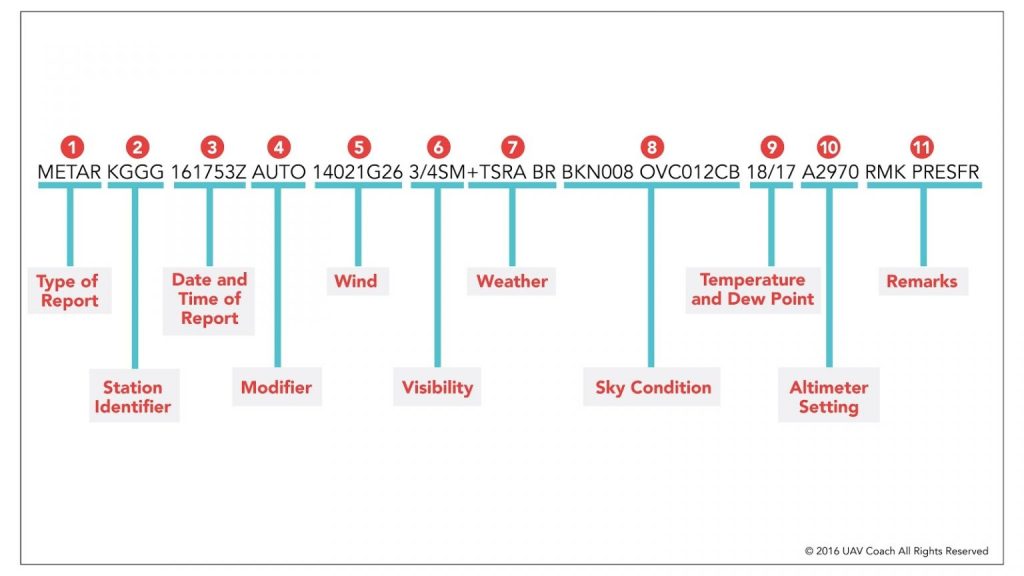
An example METAR report
METARs (Meteorological Aerodrome Reports) are crucial for drone pilots to help them interpret current weather conditions. But how do they work? The truth is, METARs lay out information in a straightforward, predictable way. If you know the formula, you can read them pretty easily.
A typical METAR includes:
- Report type (METAR or SPECI)
- Station identifier (e.g., KGGG for Gregg County Airport)
- Date and time in UTC
- Wind information (direction, speed, gusts)
- Visibility in statute miles
- Present weather phenomena
- Sky conditions (cloud cover and height)
- Temperature and dew point
- Altimeter setting
- Remarks section for additional information
Follow the link below to learn more about METARs, and for examples to help you hone your METAR-reading skills.
LEARN MORE
Make sure to sign up for our free weekly newsletter using the button below so you can get our weekly newsletter every Saturday, with this roundup and our other featured stories from the week.