Drone News Roundup: Canary Islands with the DJI Flip, DJI Shares Why It Dropped No-Fly Zones, and More!
BY Zacc Dukowitz
13 February 2025This week we’re covering a tour of the Canary Islands shot on the new DJI Flip.
We’re also covering Terra Drone’s new indoor inspection drone, more insights from DJI about why it dropped no-fly zones after a decade of enforcing them, Unusual Machines buying Aloft, and the drone bans being considered in several states.
Now let’s get to those links!
DJI Flip Tour of the Canary Islands

The DJI Flip hits the sweet spot for creators—it’s easy to use, it has a prosumer-grade 1/1.3″ sensor, and it weighs less than 249 grams, which means you don’t have to register it with the FAA. But can it actually capture good footage? YouTuber darylswalker answers that question with a resounding yes in this video he shot recently on Gran Canaria, one of the most populated of the Canary Islands. He flew in a range of terrain throughout the island, including over windy sand dunes, along the craggy northern coastline, and in the higher reaches of the inland mountains. About shooting with the Flip, Walker said: “24mm focal length, bright f1.7 aperture and dual native ISO make the footage from this drone incredible and definitely up there with the Mini 4 Pro . . . with added LIDAR, the tracking is second to none in [such a small] drone.” Want to learn more? Follow the link below for our comparison of the DJI Flip and the DJI Neo.
LEARN MORE
DJI Opens Up about Why It Dropped No-Fly Zones
Credit: DJI
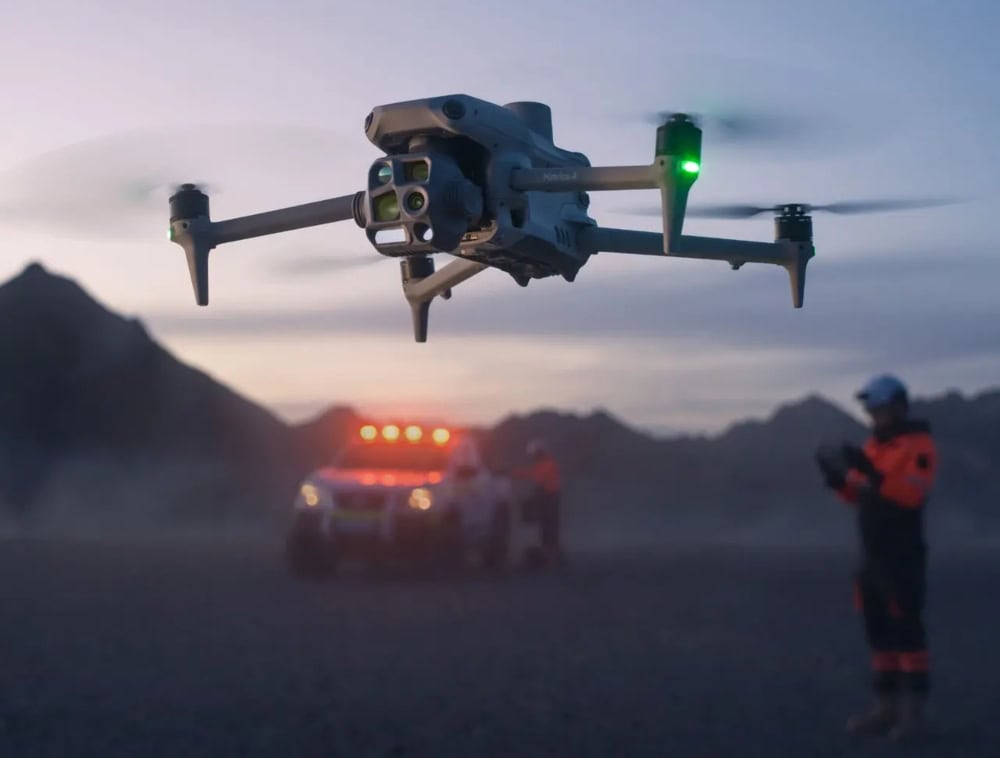
Adam Welsh, DJI’s global head of policy, recently shared more information on why the company decided to drop no-fly zones and put the responsibility on drone pilots to avoid flying in restricted airspace. One big insight Welsh shared was about timing and education. When DJI first implemented no-fly zones over ten years ago, consumer drones were still relatively new and people didn’t know the rules. So it made sense to build drones with the rules baked in rather than trust new drone pilots to understand the nuances of airspace classification. Now, people are more aware of drone laws and where they can fly—plus Remote ID helps make geofencing less necessary by broadcasting drone and pilot locations during flights.
Welsh also pointed out the ways that no-fly zones have hurt drone pilots, and potentially those they were trying to help:
- Emergency response delays. According to Welsh, first responders often faced critical delays in obtaining permissions to fly drones in restricted areas, even when authorized by other agencies. These delays could hinder life-saving operations, such as locating missing persons or managing active shooter situations.
- Operational costs for drone businesses. Drone operators conducting commercial tasks like roofing surveys or inspections in controlled airspace often experienced delays in unlocking no-fly zones. This led to missed job opportunities and financial losses for businesses unable to wait for permissions.
Read everything Welsh had to share in the article linked below.
LEARN MORE
Terra Drone Launches Xross 1 Indoor Inspection Drone

Japan-based Terra Drone recently launched the Xross 1, a drone made specifically for indoor inspections. The Xross 1 uses LiDAR to enhance stability in challenging indoor environments, helping it fly smoothly in dusty or dark conditions, like those you might find inside a cement silo or a large industrial boiler. Flyability created the market for indoor inspection drones with its Elios series. But while the Elios 3 costs between $50,000 and $70,000 depending on add-ons, the Xross 1 sells for $25,000.
Here are the key specs for the Xross 1:
- Stable flight in challenging environments. The drone uses a combination of visual odometry sensors and LiDAR technology to maintain stability in cramped, dark, and dusty conditions. This allows for reliable operation without advanced piloting skills.
- Advanced imaging. The Xross 1 is equipped with a 4K camera that can tilt 180° vertically, along with powerful LED lighting, helping ensure high-quality images and videos even in low-light conditions.
- Extended flight time. Terra Xross 1 supports both battery-powered operation and a tethered power module, offering continuous flight without the risk of power depletion.
- Real-time 3D mapping. The drone provides real-time 3D data views, enhancing situational awareness and ensuring safe navigation around obstacles during Beyond Visual Line of Sight (BVLOS) operations.
- Efficient data management. The Terra Xross Cloud platform allows for 3D visualization of captured data, streamlining point cloud data and video management for improved workflow efficiency.
LEARN MORE
U.S.-Based Unusual Machines Acquires Aloft

Unusual Machines has signed a binding agreement to acquire Aloft Technologies, the software company known for providing LAANC services to drone pilots. The acquisition is happening in a stock-based transaction valued at $14.5 million. In acquiring Aloft, Unusual Machines will have ownership of the company that’s the leading FAA-approved provider of UAS services, accounting for over 70% of LAANC authorizations. Aloft has processed 1.6 million authorizations, including 400,000 in 2024 alone. In its announcement about the acquisition, Unusual Machines emphasized the need for U.S.-based drone hardware and software companies to maintain cybersecurity and ensure secure data management as the U.S. drone industry tries to move away from its reliance on Chinese technology.
LEARN MORE
Several States Are Considering Drone Laws Right Now
Credit: DJI
A U.S.-wide DJI ban has been put on hold as the federal government works to conduct a risk assessment over the next year.
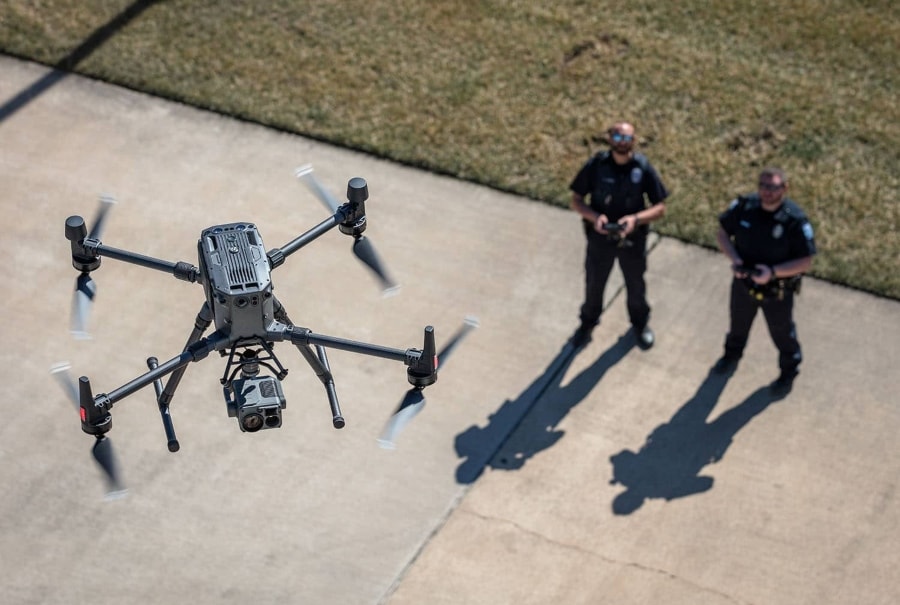
But some states are taking matters into their own hands. Last month, North Dakota banned state agencies from using Chinese drones, including DJI drones. And other states are following suit, barring state agencies from using Chinese drones.
Here are all the state drone laws that are under consideration or recently passed:
State Chinese Drone Bans—Under Consideration
- Connecticut. SB 00003 is being drafted. It would prohibit state agencies from purchasing drones manufactured by “covered foreign entities,” particularly targeting China and Russia. (This law is similar to a law that failed to pass last year in the state.)
- Kansas. House Bill 2820 aims to implement a drone ban based on country of origin concerns.
- Massachusetts. HD 79 proposes restrictions on procuring and using drones based on their country of origin.
- Missouri. HB 210 and two additional bills seek to impose restrictions on the purchase and use of drones based on country of origin.
- Nebraska. LB660 proposes restrictions on certain drones unless they are included on a newly created list of secure drones.
- New Jersey. A270 and S 3483 aim to prevent public safety use of DJI drones and impose additional restrictions.
- Oklahoma. SB 488 would prevent state agencies from drone purchases unless they are on an approved list.
- Virginia. HB 2038 mandates a list of approved drones for public safety agencies based on cybersecurity risk assessments.
- Washington. SB 5302 aims to prevent the acquisition and use of drones based on their manufacturing origin.
State Chinese Drone Bans—Passed
- Mississippi—recently passed. As of January 1, 2025, state agencies must purchase drones exclusively from U.S. manufacturers, with a preference for Mississippi-based companies. The law explicitly bans Chinese-made drones.
- Nevada—recently passed. A law enacted on January 1, 2025, gives the state more control over drone purchases and usage by agencies. This includes potential bans on vendors like DJI and strict data collection limitations.
- North Dakota—recently passed. House Bill 1038, passed in January 2025, requires state agencies to replace 307 Chinese-made drones with U.S. or allied-nation alternatives within two years. The bill provides $15 million in funding for drone replacements.
- Arkansas—already law. Enacted legislation prohibiting public entities from purchasing drones manufactured or assembled by companies tied to countries considered national security risks, specifically mentioning China and Russia. (Arkansas Act 525, enacted in 2023.)
- Florida—already law. Has already implemented a ban on government agencies using DJI drones. (Minimum Security Requirements rule under Section 934.50 of Florida’s statutes, enacted in 2023.)
What can you do? If you want to have your voice heard about one of the laws being considered you can:
- Contact your legislator. Reach out via email, phone, or by scheduling a visit to discuss your concerns or support for the bill.
- Attend town hall meetings. Engage with legislators during public forums to express your views and learn more about the bill’s implications.
- Network with others. Join or form citizen groups to amplify your voice and work collectively toward influencing the legislative process.
LEARN MORE
Make sure to sign up for our free weekly newsletter using the button below so you can get our weekly newsletter every Saturday, with this roundup and our other featured stories from the week.