DJI’s Dock 3 Is a Drone-in-a-Box You Can Mount on a Vehicle
BY Zacc Dukowitz
5 March 2025DJI recently launched the Matrice 4D and Dock 3.
The release marks the 3rd generation of DJI’s drone-in-a-box solution, following up on the Dock 2/Matrice 3D and Dock/Matrice 30.

What’s the Difference Between DJI’s 3 Drone-in-a-Box Solutions?
In terms of size, the Dock 3 and Matrice 4D fall right between the Dock and the Dock 2. While the original Dock was huge, weighing over 230 pounds, the Dock 2 was less than a third its size, weighing just 75 pounds.
The drones that came with them followed these trends in size, with the Matrice 30 weighing 8.5 pounds compared to the Matrice 3D, which weighed just 3 pounds.
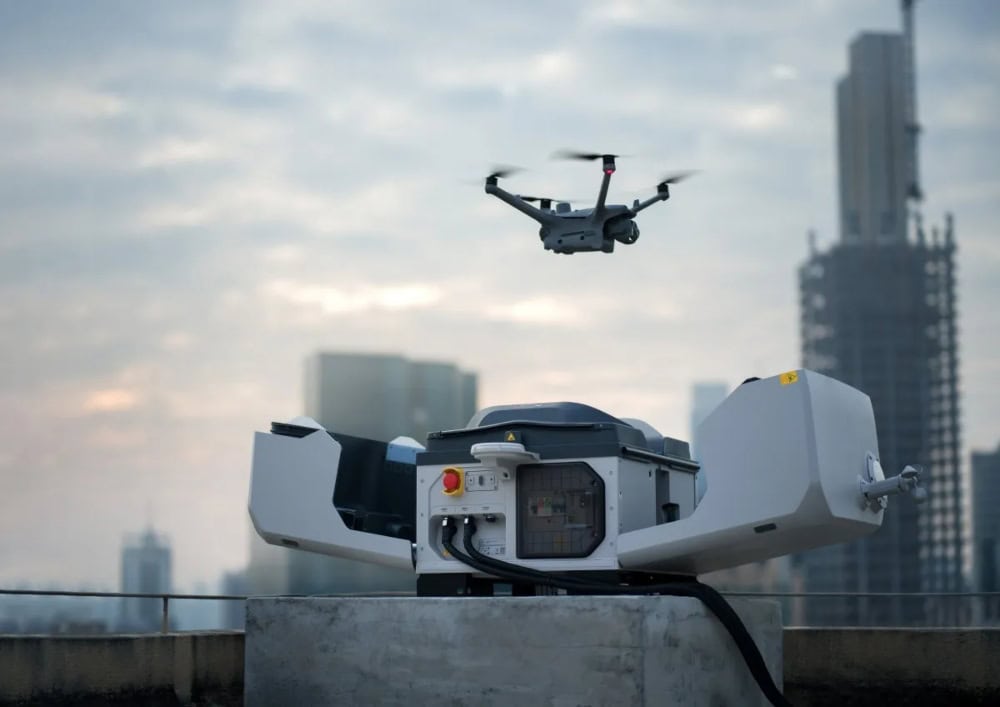
The Dock 3 and Matrice 4D fall right in the middle between these two, with the dock weighing 121 pounds and the drone weighing 4.6 pounds.
Wondering what else is different between the three? Check out this chart for a side-by-side comparison:
| Feature | Dock 1 / Matrice 30 | Dock 2 / Matrice 3D | Dock 3 / Matrice 4D |
|---|---|---|---|
| Environmental durability | IP55 rating -35°C to 50°C operating range |
IP55 rating -25°C to 45°C operating range |
IP56 rating (dock), IP55 (drone) -30°C to 50°C operating range |
| Wind resistance | 12 m/s (operation) 8 m/s (landing) |
12 m/s (operation) 8 m/s (landing) |
12 m/s (operation and landing) |
| Flight time and charging speed | 41 minutes flight time 25 min charge (10%-90%) |
50 minutes flight time 32 min charge (20%-90%) |
54 minutes flight time 27 min charge (15%-95%) |
| Camera capabilities | Wide-angle and zoom cameras Thermal imaging (M30T) |
20MP wide-angle camera Thermal imaging (M3TD) |
Tri-camera system with wide-angle, medium tele, and telephoto Thermal imaging (M4TD) |
| Drone compatibility and standalone use | Compatible with M30 and M30T (Dock versions) | Compatible with M3D and M3TD Standalone use supported |
Compatible with M4D and M4TD Standalone use supported |
| Size and weight | Dock: 231 pounds (105 kg) 1675x885x735 mm (open) 800x885x1065 mm (closed) Drone: 8.5 pounds (3870 g) |
Dock: 75 pounds (34 kg) 1228x583x412 mm (open) 570x583x465 mm (closed) Drone: 3.1 pounds (1410 g) |
Dock: 121 pounds (55 kg) 1760x745x485 mm (open) 640x745x770 mm (closed) Drone: 4.6 pounds (2090 g) |
Specs for the Dock 3 and Matrice 4D
Now for brass tacks—here are the main specs for the Dock 3 and Matrice 4D:
DJI Dock 3
- Weight. 121 pounds (55 kg)—without aircraft
- Operating temperature. -30° to 50° C (-22° to 122° F)
- Harsh weather protection. IP56
- Charging time. 27 minutes (15% to 95%)
- Max allowable landing wind speed. 39 f/s (12 m/s)
- Max operating altitude: 2.8 miles (4500 m)

DJI Matrice 4D Drone
- Weight. 4 pounds/1850 g (with battery, propellers, microSD card)
- Flight time. 54 minutes
- Harsh weather protection. IP55
- Max transmission distance. 15 miles/25km (FCC), 7.5 miles/12 km (CE)
- Max wind speed resistance. 39 f/s (12 m/s)
Camera System
- Wide-angle camera. 4/3″ CMOS, 20 MP, 24 mm equivalent
- Medium tele camera. 1/1.3″ CMOS, 48 MP, 70 mm equivalent
- Tele camera. 1/1.5″ CMOS, 48 MP, 168 mm equivalent
- Laser range finder: Range up to 1.1 miles (1800 m)
Here are the top five features of the Dock 3/Matrice 4D solution:
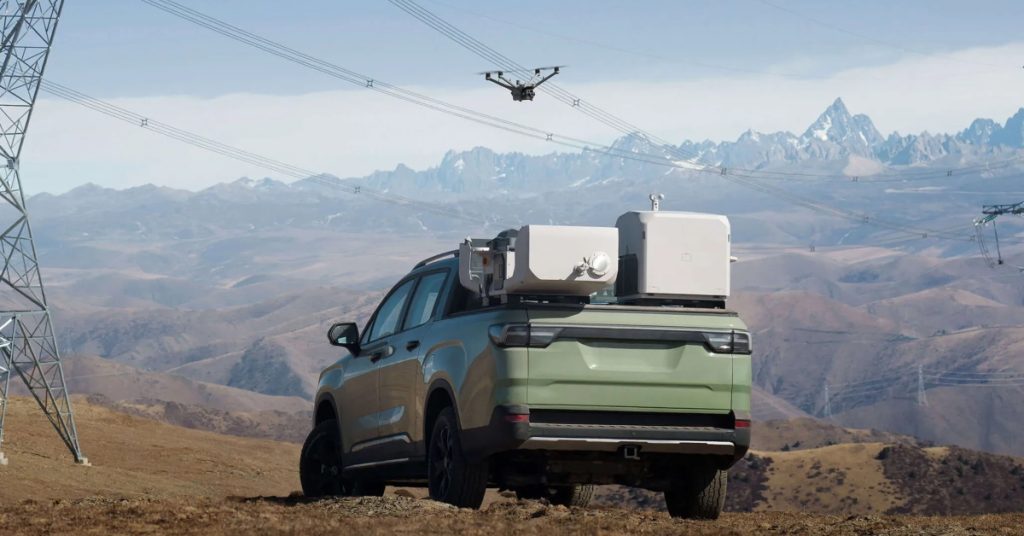
1. Mobile Vehicle-Mounted Deployment
Designed for temporary use in fast-moving scenarios, the Dock 3 can be mounted on a vehicle and deployed from the vehicle—even while it’s still in motion.
2. Built for Extreme Environments
The dock can operate in extreme temperatures from -20°C to 50°C, with preheating down to -30°C. It comes with IP56 protection for the dock and IP55 for the Matrice 4D, making both dust- and water-resistant. The Matrice 4D also has anti-icing propellers for reliable flight in freezing conditions and winds up to 39 f/s (12 m/s).
2. Dual-Drone Rotation
If you want to get two docks for continuous drone operations, you can do that with the Dock 3. Using two docks at a single location, a single drone can rotate between missions and eliminate downtime. Cloud-based management through DJI FlightHub 2 allows for remote mission scheduling.
3. Advanced Intelligent Features
The Dock 3 comes with Intelligent Change Detection for analyzing area changes over time and a Virtual Cockpit with “Mouse Look” for precise camera adjustments.
4. Security and Compliance
According to DJI, the Dock 3 prioritizes data security with ISO 27001 certification for DJI FlightHub 2. It also has custom permission management with an on-premise version of FlightHub 2, and includes a built-in flight termination system (FTS) as well as supporting third-party safety integrations, like parachutes.
5. Lots of Accessories
The Dock 3 has a range of accessory options, including a Gimbal-Following Spotlight, Real-Time Voice Speaker, Obstacle Sensing Module, DJI Cellular Dongle 2, and DJI Power Solutions. It also supports the D-RTK 3 Relay Fixed Deployment Version and the DJI RC Plus 2 Enterprise Controller.
How to Think about the Matrice 4, Matrice 4D, and Upcoming Mavic 4 Series
The Dock 3 was one of our top predictions for DJI launches this year (other top predictions are the Mavic 3 Pro and the Matrice 400A). But one prediction we missed was the launch of the Matrice 4, which came out in early January.
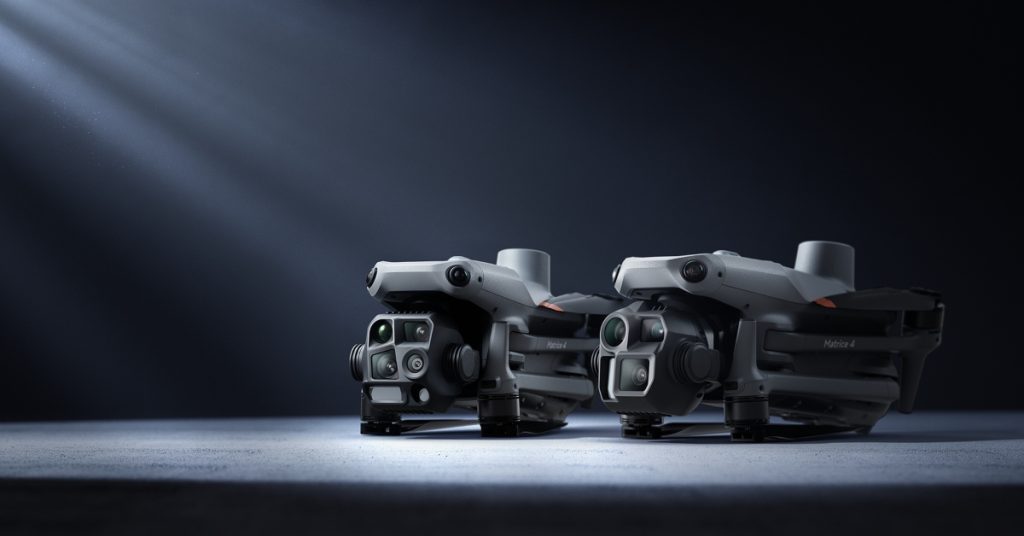
The Matrice 4E and 4T
At the time of the Matrice 4 launch, we thought that DJI might be so eager to push out new drones that it was launching the drone that would go with the Dock 3 before the new dock was ready.
That thinking was clearly wrong, since the Dock 3 has come out with the Matrice 4D.
But why did DJI release these two similarly-named drones—the M4 and the M4D—in such short order? And why did they start the single-digit Matrice line at 4? That is, there’s no Matrice 3 or 2 that comes prior—so what’s up with the Matrice 4?
The Matrice 4 IS the Mavic 4 Enterprise
Here’s the most likely scenario: the Matrice 4 is the Mavic 4 Enterprise. Bear with us for just a moment.
The Mavic 4 Pro has been leaked a lot, and we expect it to come out this year. We’ve also seen leaks for the Mavic 4, which we expect to have both a cine and standard version, just like the Mavic 3.
But there haven’t been any leaks about the Mavic 4 Enterprise. And we think that’s because there won’t be a Mavic 4 Enterprise. And that’s because the Matrice 4 has already filled that role.
When you look closely at the Matrice 4’s specs, it looks an awful lot like what you’d expect the next drone after the Mavic 3 Enterprise to look like.
Check it out:
- Both drones have a tri-camera system. The Matrice 4 series is only the 2nd DJI drone to feature a tri-camera system, following the Mavic 3 series. Both the Matrice 4 and the Mavic 3 series include wide-angle, medium telephoto, and telephoto cameras, with similar focal lengths and functionality.
- Camera specs. The Matrice 4 series shares significant overlap with the Mavic 3 Enterprise in terms of imaging capabilities—both drones have a 48MP medium telephoto camera (70mm equivalent) and telephoto options with comparable zoom ranges (168mm for Matrice 4 vs. 166mm for Mavic 3 Enterprise).
- Portability and design. While the Matrice 4 is a little bigger and heavier than the Mavic 3 Enterprise, its overall design—including its compact form—echoes the Mavic 3 Enterprise, and is distinct from other Matrice drones.
- Thermal option. Just like the Mavic 3E and Mavic 3T, the Matrice has two models—the Matrice 4 and Matrice 4T.
- Enterprise features. Like the Mavic 3 Enterprise series, the Matrice 4 integrates professional tools like RTK modules for precision mapping and surveying, pairing them with enhanced AI capabilities (e.g., Smart Track and FlyTo modes) and advanced imaging tools like a laser rangefinder.
According to this logic, the single-digit Matrice line will now take over the Mavic Enterprise line, making a clear split going forward:
- The Matrice series is strictly for professionals.
- The Mavic series, including the Mavic Pro series, is strictly for prosumers.
And now we can answer the original question about what’s different between the M4 and the M4D.
The M4 is basically the Mavic 4 Enterprise, and the M4D is a less-advanced but still enterprise-level drone that accompanies the Dock. (We expect Matrice D drones to continue accompanying future iterations of the dock).
Of course, we’ll have to wait for the Mavic 4 launch to see if this logic holds out.
But fortunately we shouldn’t have to wait very long. With all the leaks, it looks very likely it will be out well before the end of 2025.