DJI Shell Companies Surge Ahead of December Ban Deadline
BY Zacc Dukowitz
1 October 2025We’re seeing more and more DJI shell companies crop up as the December deadline to ban DJI approaches.
The deadline was written into the 2024 National Defense Authorization Act (NDAA) last year.
→By shell companies, we mean any company that’s basically making a DJI drone, but calling it a different name.
According to the 2024 NDAA, a U.S. national security agency must conduct a formal security review of DJI by the end of 2025 or the company will be automatically banned from being imported or sold in the U.S.
DJI has pushed for the audit but, as the deadline nears, no review has happened. Unless that changes, the ban is almost certain.
DJI’s Shell Company Playbook
DJI is clearly taking the looming deadline seriously.
Why do we say that? One big reason is the sheer number of shell companies created as the deadline nears.
These companies use DJI parts and designs to skirt export controls and FCC rules ahead of the December cutoff. And they could be used to continue selling drones in the U.S. even when DJI can’t any more.
Fikaxo: A Shell Company Case Study
One of the newest DJI shell companies is Fikaxo.

The company uses sophisticated tactics to hide its connections to DJI.
But security researchers were able to uncover them by:
- Using FCC data. Cross-referencing FCC registration data and firmware identifiers alongside frequency analysis to confirm operational and supply chain overlaps.
- Automated frequency monitoring. Running automated systems that analyze the radio frequency (RF) signals emitted by drones during flight.
- Frequency-domain analysis. Examining backscattered signals to detect mechanical signatures such as propeller rotation speed and number of blades unique to specific drone models.
- Signal signature matching. Comparing detected RF communication patterns with those of known DJI drones to find distinctive matches.
Together, these tactics create a workaround.
Fikaxo seems to be deliberately obscuring its DJI connections by rebranding, modifying product markings, and routing operations through a web of subsidiaries and shell companies.
While these tactics have managed to delay regulatory action, cybersecurity experts have called out this cloak-and-dagger approach as a clear attempt to evade U.S. import restrictions—though so far, regulators have yet to intervene directly.
Other Proxy Brands
Beyond Fikaxo, several other DJI shell companies have surfaced, often with blurry ownership and complex supply ties that echo DJI’s footprint.
These proxies might appear suddenly with a limited product line, then disappear, or try to establish a market presence before the ban hits.
Some notable names include:
- Cogito Tech Company
- WaveGo Tech LLC,
- SZ Knowact Robot Technology Co.
- Ltd, Skyhigh Tech LLC,
- Jovistar Inc.
Each of these companies has filed drone models with the FCC showing close overlaps with DJI hardware or firmware, suggesting attempts to mask DJI’s involvement while keeping access to U.S. customers.
Jovistar, for example, has submitted an FCC filing for a drone closely mimicking the DJI Mini 5 Pro, even featuring LiDAR capabilities that match DJI’s standard battery specs. Details from the filing strongly point to cloned DJI tech under a different brand to evade import restrictions.
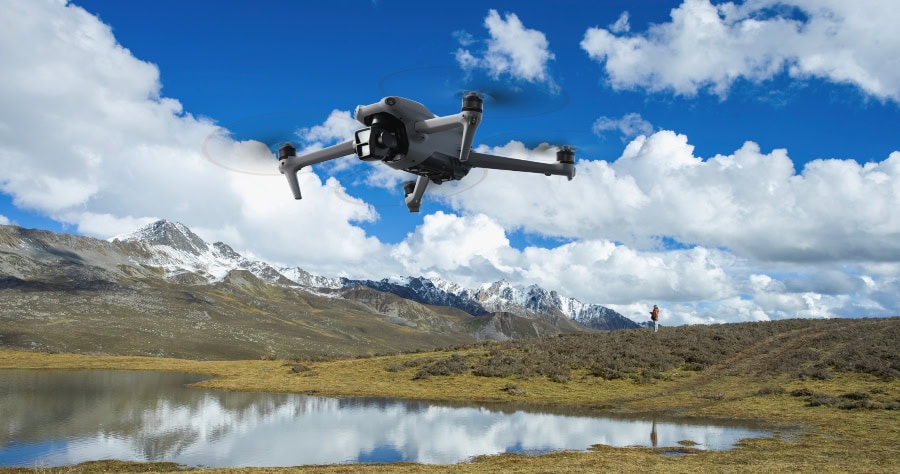
Credit: Cogito Tech
And Cogito Tech denies any connections to DJI, but its Specta Air (shown above) has the same flight time, camera, range and software as the DJI Air 3.
WaveGo and Skyhigh Tech operate similarly, moving DJI products through different channels under new names, often blurring the lines of origin. SZ Knowact, a lesser-known entity, also shows ties to DJI’s supply chain, housing components and designs that align closely with DJI’s proprietary tech.
These shell companies highlight the escalating sophistication of the proxy network.
While technically distinct companies, their products often use the same engineering DNA as DJI drones, making it harder for regulators to block or track end-users of DJI technology.
Should You Buy a Drone from a DJI Shell Company?
These shell companies exist to keep DJI technology available in the U.S., but the experience you have with them may not be the same as buying a direct DJI product.
Here are key points:
- Support and reliability. Shell companies often have limited customer support infrastructure. Reports from some users and public safety agencies highlight reliability concerns with certain proxy brands, especially compared to proven DJI products. Service networks and timely repairs may not be guaranteed.
- Insurance and warranties. Insurance providers and warranty programs may hesitate to insure or exclude coverage for drones from lesser-known proxy brands. This could lead to higher out-of-pocket costs if something goes wrong.
- Technology quality. Although these drones often share hardware or firmware roots with DJI, the quality control and software updates may be inconsistent. Some proxies rely heavily on DJI firmware or supply chains, potentially leaving them vulnerable to regulatory or technical disruptions.
- Legal and compliance risks. Because these companies often aim to circumvent or work around the DJI import ban, there’s uncertainty about long-term availability and legal standing in the U.S. market.
So What Should I Do?
For organizations and individuals weighing options, the safest bet remains NDAA-compliant drones or officially licensed products.
Proxies can fill gaps but come with real risks around support, warranty, and ongoing regulatory compliance.
What about Anzu Robotics?
Anzu Robotics sells a drone called the Raptor that’s based on the the DJI Mavic 3 Enterprise through a licensing agreement with DJI.

The Raptor | Credit: Anzu Robotics
This setup isn’t a shell company. Anzu isn’t trying to claim it’s a completely different company with no ties to DJI.
Instead, it’s made its connections to DJI clear, while also emphasizing its supply chain differences—that is, the Raptor isn’t made in China, and is NDAA compliant. (The company is based in Austin, TX and its drones are made in Malaysia.)
Anzu Robotics also differentiates itself by developing flight control software and data security protocols independently, and partnering with U.S.-based Aloft Technologies to handle app development and data storage on American servers.
But some U.S. lawmakers are skeptical about Anzu’s approach, questioning whether this licensing deal is a legitimate business arrangement or a workaround to keep DJI’s technology accessible under a different brand name. All the same, Anzu is open for business and gaining ground among government and enterprise customers who require NDAA-compliant drones.