DJI Mini 5 Pro Redefines Mini Drones—But It’s Not Coming to the U.S. Any Time Soon
BY Zacc Dukowitz
17 September 2025After months of leaks and speculation, DJI has launched the Mini 5 Pro.

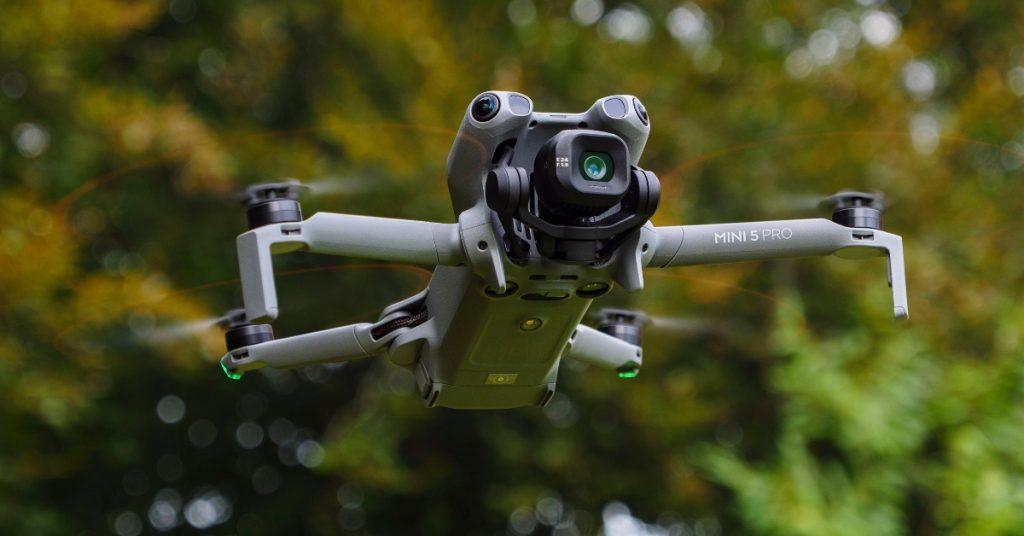
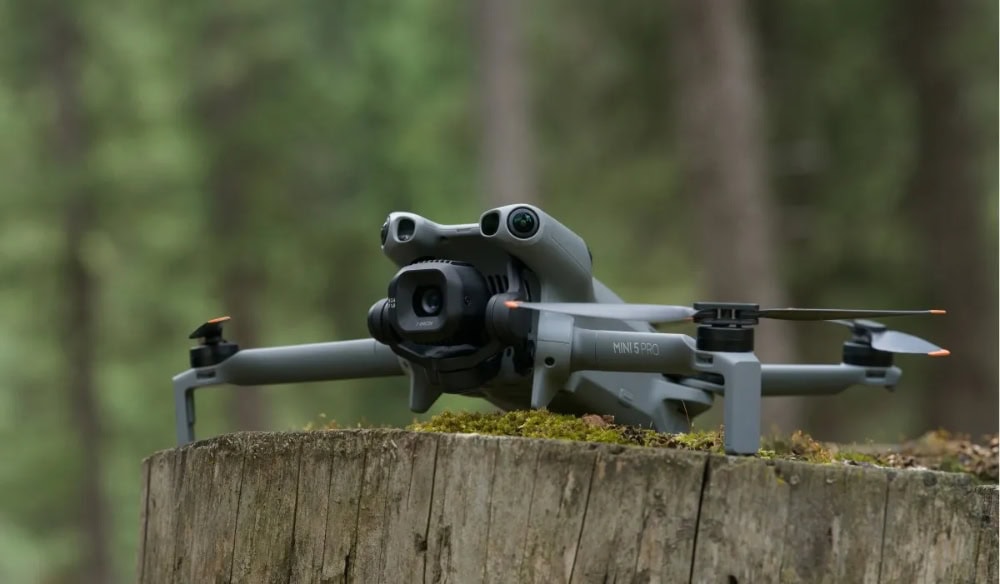
The Mini 5 Pro is the first Mini to come with LiDAR, which supports the drone’s new Nightscape omnidirectional obstacle sensing system. Nightscape combines forward-facing LiDAR and vision sensors to detect obstacles in all directions, enhancing flight safety even in low-light or complex environments.
But LiDAR isn’t the only improvement. DJI packed a 1″ sensor into a drone light enough to fly without registration in the U.S.—a trademark characteristic of DJI Minis—while adding 4K slow-motion video at 120fps and a gimbal that can tilt beyond vertical.
There’s just one catch: DJI has made it clear the Mini 5 Pro won’t officially launch in the U.S. market, at least for now.
Professional Features in a Palm-Sized Package
Since the first DJI Mini launched, the series has become a go-to for pilots seeking lightweight, travel-friendly drones that don’t require FAA registration.
Credit: DJI
But the Mini 5 Pro shifts the narrative by cramming serious, pro-level camera and flight tech into a sub-250g frame, raising the stakes for what a Mini can do.
At the core of the Mini 5 Pro is a 1″ 50MP sensor, a feature previously reserved for larger, heavier drones, which delivers stunning detail and excellent low-light performance.
The Mini 5 Pro also introduces a gimbal with a full 225° roll rotation, letting you capture dynamic vertical and rolling shots without cropping or sacrificing quality—perfect for today’s social media demands.
On the safety side, the drone debuts Nightscape omnidirectional obstacle sensing, powered by forward-facing LiDAR and vision sensors, letting pilots fly safely even after sunset.
And its upgraded ActiveTrack 360° uses smarter tracking algorithms to keep subjects in frame more reliably, whether jogging on the beach or cycling along city streets.

Credit: DJI
Specs and Features for the Mini 5 Pro
The Mini 5 Pro strikes a smart balance—offering advanced features that typically come on larger drones, while maintaining the portability and ease-of-use that made the Mini series famous.
Here are its standout features:
- Camera. 1″ 50MP CMOS sensor with f/1.8 aperture delivers sharp stills and superior low-light performance.
- Video. Supports 4K video at 60fps HDR and slow-motion 4K up to 120fps, with 10-bit recording in D-Log M and HLG color profiles for advanced post-production.
- Gimbal. Rotates up to 225°, enabling true vertical shooting and dynamic roll shots without cropping—ideal for creative filmmaking and social media content.
- Obstacle sensing. Nightscape omnidirectional system with forward-facing LiDAR and vision sensors enhances safety during low-light and complex flights.
- ActiveTrack 360°. Upgraded subject tracking adapts smoothly across environments for reliable footage capture.
- Flight time. Up to 36 minutes per battery with fast charging options to extend flight sessions.
- Weight and portability. Weighs just under 250 grams, allowing for registration-free flying in many countries and easy transport.
How Does the Mini 5 Pro Stack Up?
Wondering how the Mini 5 Pro compares to the Mini 4 Pro? What about the Mini 3 Pro, or the DJI Air 3S?
Here are the main things to know:
- Larger 1″, 50MP sensor. Bigger than the Mini 4 Pro’s 1/1.3″ sensor, providing enhanced image quality and better low-light performance.
- Advanced video features. Supports 4K HDR video at 60fps and 120fps slow motion, higher than the Mini 4 Pro and Mini 3 Pro.
- 225° gimbal rotation. Allows true vertical and creative roll shots not available on earlier Mini models.
- Nightscape omnidirectional obstacle sensing with forward-facing LiDAR. Offers superior safety in dark or complex environments compared to vision sensors alone.
- Longer flight time. About 36 minutes, a modest improvement over the 34 minutes of previous Minis.
- Compact and regulation-friendly. Weighs under 250 grams, enabling registration-free flying in many countries.
Check out this chart for a feature-to-feature comparison:
| Spec | DJI Mini 5 Pro | DJI Mini 4 Pro | DJI Air 3S | DJI Mini 3 Pro |
|---|---|---|---|---|
| Flight time | 36 min | 34 min | 46 min | 34 min |
| Weight | Sub 250g | Sub 250g | 1.6 lbs (725g) | 249g |
| Camera(s) | 1″ 50MP, 4K/60 HDR, 4K/120fps slow-mo | 1/1.3″ 48MP, 4K/60 HDR, 4K/100fps slow-mo | Dual camera: 50MP wide + 48MP tele (4K/60fps) | 1/1.3″ 48MP, 4K/60 HDR |
| Obstacle sensing | Nightscape omnidirectional with LiDAR | Omnidirectional vision sensors | Omnidirectional with LiDAR | Omnidirectional vision sensors |
| Gimbal rotation | 225° roll, vertical shooting | 90° roll, vertical shooting | Standard 3-axis gimbal | 90° roll, vertical shooting |
| Transmission | O4+ (up to 10 km CE version) | O4 (up to 10 km CE) | O4+ (up to 12 km CE) | O3 (up to 8 km CE) |
Should You Wait for the Mini 5 Pro, or Buy a Mini 4 Pro?
The DJI Mini 5 Pro delivers impressive upgrades, but getting your hands on one won’t be as simple as clicking “Buy” on DJI’s website.
Following the recent pattern set by the Mavic 4 Pro, DJI has confirmed that the Mini 5 Pro will not be officially sold in the U.S. due to ongoing regulatory and geopolitical challenges.
Credit: DJI
So, how can you get a Mini 5 Pro?
The options are limited and come with trade-offs:
- Buy from third-party international retailers or resellers who import the Mini 5 Pro, though expect higher prices and limited warranty support.
- Use freight forwarding services to import the drone personally, managing customs and shipping logistics yourself.
- Buy from third-party sellers on marketplaces like Amazon or eBay, but beware of inflated prices and uncertain warranty conditions.
These factors mean many U.S. pilots may find the Mini 4 Pro a more practical, easier-to-get alternative for now.