DJI Flip vs. DJI Neo: Which Should You Buy?
BY Zacc Dukowitz
28 January 2025DJI recently released two small drones for creators, the Flip and the Neo.
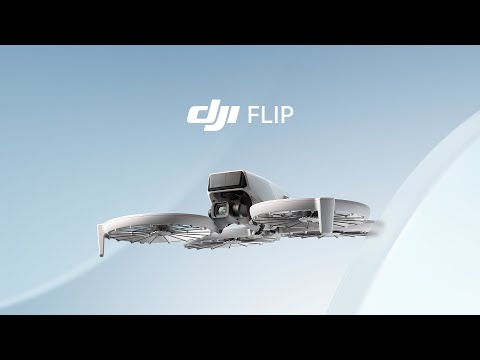

Both drones are attractive for beginners, coming with automated flight features and propeller guards, making them easy to use and protecting them in case they crash.
And they’re both affordable. The Flip starts at $439 with a remote control (there’s no option without one) and the Neo is $289 with a remote control ($199 without).
In fact, the Flip is so similar to the Neo—at least on the surface—that some people were asking why DJI even made the Flip when it came out a few weeks ago.
But the truth is, they’re not the same. And there are reasons to consider buying each one.
In this article, we’ll compare the Flip and the Neo, and help you make a choice between the two.
DJI Flip and Neo Side-by-Side Comparison
To get started, let’s do a quick comparison of the key features of each drone:
| Specification | DJI Flip | DJI Neo |
|---|---|---|
| Weight | < 249 g (< .55 lbs) | 135 g (.3 lbs) |
| Dimensions (folded) | 136 x 62 x 165 mm | 130 x 157 x 48.5 mm |
| Dimensions (unfolded) | 233 × 280 × 79 mm | N/A (non-folding design) |
| Image Sensor | 1/1.3″ | 1/2″ |
| Max Photo Resolution | 48 MP | 12 MP |
| Max Video Resolution | 4K up to 100 fps | 4K up to 30 fps |
| Lens | 24mm equivalent, f/1.7, FOV 82.1° | 14mm equivalent, f/2.8, FOV 117.6° |
| Stabilization | 3-axis mechanical gimbal | Single-axis mechanical gimbal |
| Internal Storage | 2 GB | 22 GB |
| External Storage | MicroSD up to 512 GB | None |
| Max Bit Rate | 150 Mb/s | 75 Mb/s |
| Digital Zoom | Up to 4x (resolution dependent) | No zoom |
| Photo Format | JPEG, DNG (RAW) | JPEG |
| Color Profile | Normal, D-Log M | Normal |
| Max Flight Time | 31 minutes | 18 minutes |
| Wind Resistance | Not specified in search results | 8 m/s (Level 4) |
Here’s what jumps out when you look at the chart above:
- Neo doesn’t require FAA registration. The Neo weighs less than 250 grams, which means you don’t have to register it with the FAA. It’s also just smaller and more portable overall.
- Flip has a more advanced camera system. With a 1/1.3″ sensor, up to 4x digital zoom, and the ability to shoot stills at 48MP, the Flip’s winner when it comes to its camera specs.
- Neo has more internal storage. The Neo has a 22 GB of internal storage to the Flip’s 2 GB—but the Flip has a microSD slot, allowing it to store way more data overall.
- Flip has a 3-axis mechanical gimbal. The Neo only has a single-axis mechanical gimbal, which means the Flip will be able to shoot smoother footage, making it the better choice for shooting video.
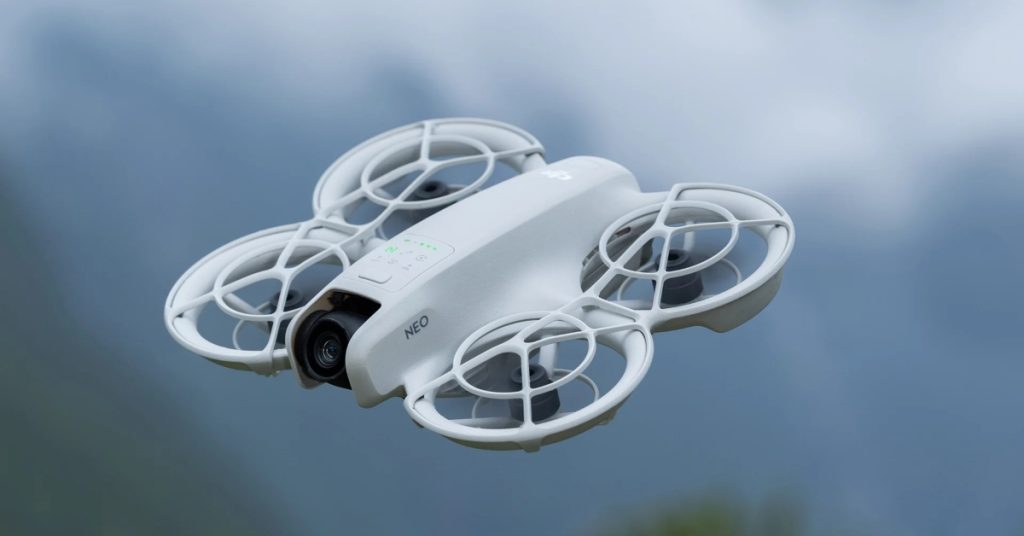
The DJI Neo
What Are You on the Market For?
Some clarity emerges from the side-by-side comparison we did above.
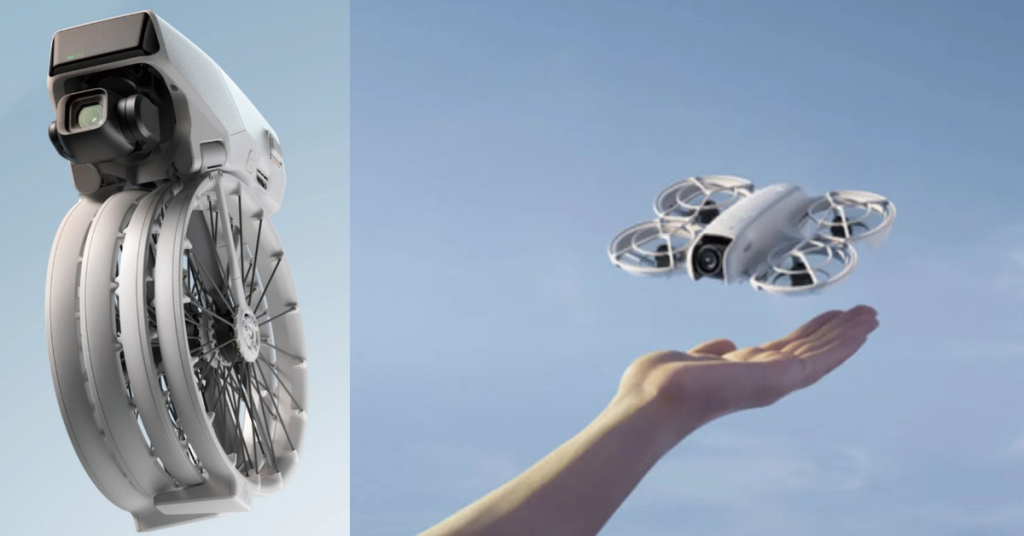
The Neo is smaller and less expensive, which means you don’t have to register it with the FAA and you can easily take it with you for quick, fun shoots (think social media, or just for fun).
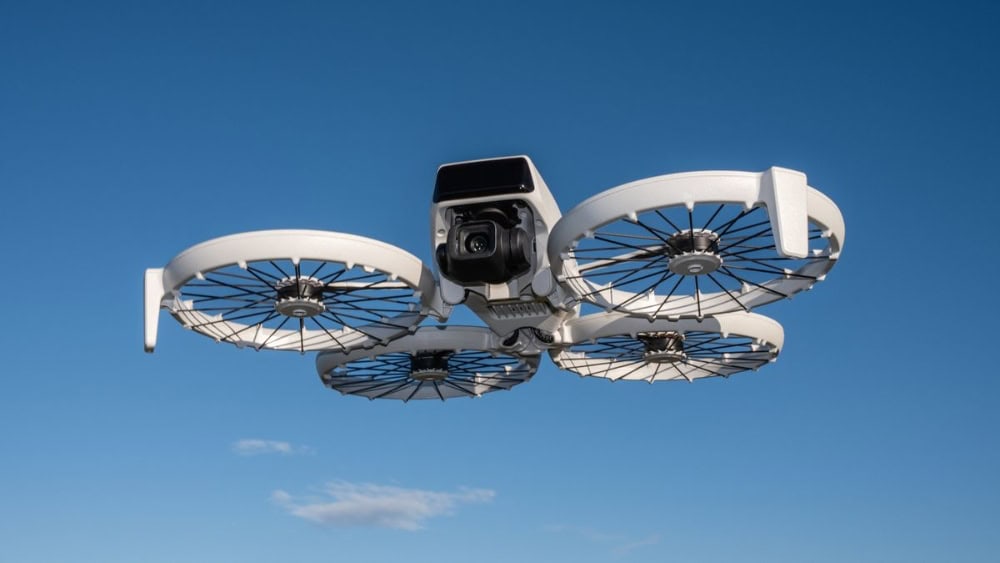
The Flip, on the other hand, is a little bigger, a little more expensive, but packs more power for getting good stills and video (think beginner prosumer, someone starting a business, or someone with a photography business who wants an easy way to get quick aerial shots).
Who Should Choose the DJI Neo?
- Casual hobbyists. If you’re looking for a fun, easy-to-fly drone for personal use, the Neo’s lightweight design and simple operation make it a great pick.
- Social media creators. If your goal is to capture quick, shareable content for Instagram, TikTok, or other platforms, the Neo’s ultra-wide-angle lens and portability are a big plus.
- First-time drone users. If this is your first drone and you just want to explore flying without worrying about FAA registration, the Neo is the more approachable option.
- Travelers and backpackers. At only 135g and with a compact, non-folding design, the Neo is easy to pack and take anywhere, making it ideal for travel photography.

And Who Should Choose the DJI Flip?
- Beginner prosumers. If you want a step up from entry-level drones but aren’t quite ready to invest in a higher-end prosumer drone, the Flip offers better image quality and stabilization.
- Content creators who need higher video quality. With 4K at up to 100 fps, a 1/1.3” sensor, and D-Log M color profile support, the Flip is the better choice for those who want more control over video production.
- Photographers looking for RAW support. The Flip’s ability to capture photos in RAW format (DNG) makes it a stronger tool for professional editing.
- Users who want expandable storage. The Flip supports microSD cards up to 512 GB, making it a better option if you plan to shoot a lot of content.
So Which Drone Should You Buy?
Ultimately, both drones serve different needs. And the right one to buy will come down to what you’re looking for in a drone.
If you’re looking for a fun, lightweight, ultra-portable drone for casual use and social media content, the Neo is a great choice.
If you want better image quality, improved stabilization, and the ability to work with RAW photos and log video, the Flip is the way to go.
Dive deeper: