Will Firmware Updates Still Be Allowed for DJI Drones?
BY Zacc Dukowitz
27 January 2026If you bought a DJI Mini 5 Pro last month, will you be able to get firmware updates for it later this year?
The FCC says yes. At least for now.
In a recent statement, the FCC clarified that all foreign-made drones that already have FCC approval can continue getting firmware updates until January 1, 2027.
This is big news. Up until now, there’s been uncertainty about what exactly support might look like if you bought a DJI drone right now—or any other foreign-made drone, for that matter.
Sure, you could buy it. But would you get the same support as before? And could you keep getting firmware updates?
Now we know the answer is yes, at least through the end of this year.

The DJI Neo 2 | Credit: DJI
This Isn’t Just about DJI
To be clear, this isn’t just about DJI. Late last year, the FCC placed all new foreign-made drones on its Covered List, effectively banning them from the U.S.
That’s for future drone models—say, a DJI Mini 6 Pro, or a Flyability Elios 4. (And a future Elios 4 will probably get an exemption, though that process isn’t 100% clear just yet.)
All the drones that already have FCC approval can still be imported and sold in the U.S. So you can still buy the Mavic 4 Pro, the Mini 5 Pro, and the Neo 2. Long story short, any drone you could buy before, you can still buy.
[See the full list of DJI drones you can still buy.]
But now we know that not only can you buy them, you’ll also be able to get firmware updates on them for the next year.
Corner Cases—The Avata 360 and More
Credit: Tech Traveler
This firmware policy also applies to those drones in a special group—those that got FCC approval but haven’t been released yet.
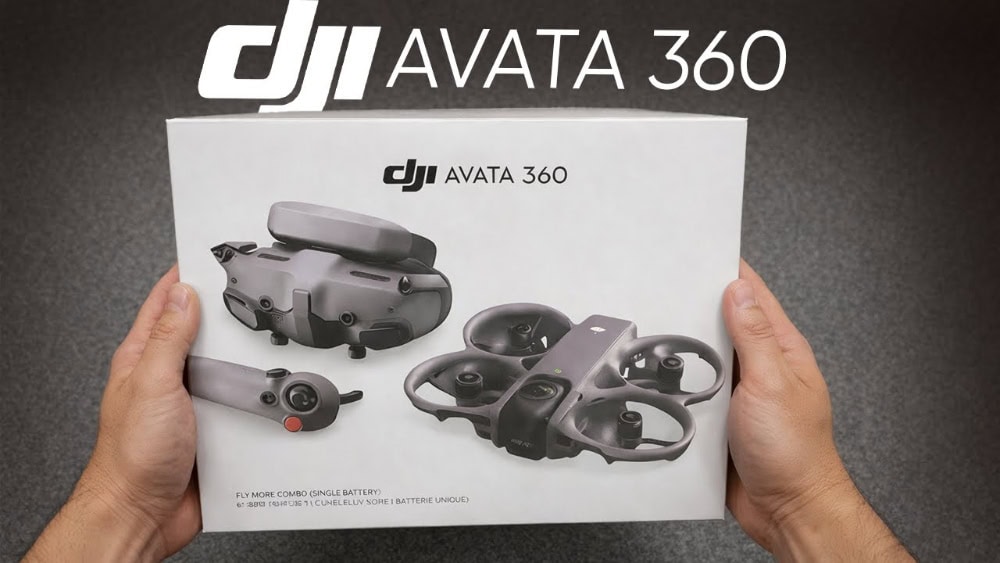
This means that DJI’s unreleased Avata 360, Lito 1 and Lito X1, and Agras T55 will all be able to get firmware updates after their release.
And there could be a few more surprises in the FCC filings—it looks like some more drones may have squeaked out approvals in the eleventh hour, but we’re still waiting for final confirmation on that.
Why Firmware Updates Matter
Firmware updates are usually pretty boring. They come along every so often, you do them, and that’s it.
But it’s hard to overstate how messy things would get if they suddenly stopped.
Firmware updates are how drone makers push out changes that keep everything working.
Changes like:
- Security patches
- Bug fixes
- Stability improvements
- Compatibility updates as phones, tablets, and operating systems change
- Feature updates—sometimes small, sometimes major—that change how the drone flies or operates
Without updates, drones won’t just “brick” overnight. Instead, they get slowly worse.
Apps stop working as well with your OS. Random glitches start showing up. Security holes don’t get patched.
And if you’re managing a fleet of drones—public safety, inspections, mapping—these small issues can stack up fast.
Consider the Mavic 3
Firmware updates don’t just fix bugs. Sometimes, they literally change what a drone can do.
A good example is the Mavic 3.
When DJI released it, the hardware was clearly there, but the software experience needed some work.
To close these gaps, DJI released a series of firmware updates, refining features, improving performance, and expanding the drone’s capabilities.

The DJI Mavic 3 | Credit: DJI
More recently, DJI pushed out a Mini 5 Pro firmware update that improved its low-battery Return-to-Home behavior and added formal support for propeller guards. These are exactly the kind of “this changes how I fly” improvements that go beyond just fixing minor bugs.
Over time, these changes add up so that your drone slowly morphs into a better version of itself. And it isn’t unique to DJI.
Skydio has done the same on the enterprise side.
Within the last year, a Skydio X10 update added NightSense support in Map Capture and enabled Speaker/Mic attachments and emergency light patterns. These updates made the X10 better, and different, in ways that matter for actual public safety missions.
What the FCC Firmware Announcement Means Right Now
What this update from the FCC tells us is that we’re in a moment of clarification—not collapse.
Over the past year, U.S. drone policy has shifted fast, and a lot of questions have been left unanswered.
The firmware update issue was one of the biggest points of uncertainty. But now we have clarity: if you’re buying and flying a drone that already has FCC approval, it won’t be frozen in time.
That doesn’t mean everything is settled. More guidance is still coming, and some long-term questions—especially around future models—remain open.
But this clarification is a meaningful signal that regulators are paying attention to real-world impact, not just policy.
For drone owners, the takeaway is simple and reassuring: your drone will keep working, support will continue, and major disruptions aren’t looming tomorrow.