Which New DJI Drones Got FCC Approval Before the Ban? Avata 360, Lito X1 & More
BY Zacc Dukowitz
14 January 2026Late last year, DJI was feverishly filing products with the FCC.
The company had a looming deadline. On December 23, 2025, it would face a block on all new FCC approvals, effectively banning it from importing new drones.
But before that date came, DJI got FCC approval for five new products, including the Avata 360.
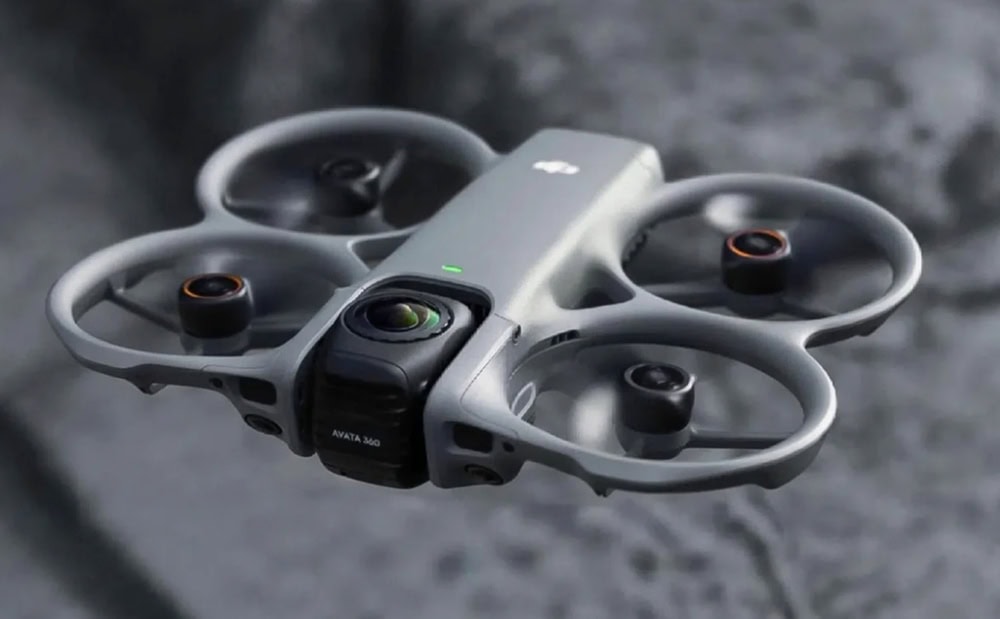
A leaked photo of the DJI Avata 360
The Avata 360 is a 360 camera drone made to compete with the new Antigravity A1. The A1 is the first ever off-the-shelf 360 drone, and the Avata 360 will be the second.
Here are all five products DJI got approved before the deadline:
- DJI Avata 360
- DJI Lito 1
- DJI Lito X1
- DJI Agras T55
- DJI RC Mini (new remote controller)
Since all of these products received FCC approval, they should all be eligible for import and sale. And it’s very likely all of them will launch this year.
Keep reading for everything we know about each one.
What is the DJI ban?
- Existing DJI drones can still be imported and sold. All drones that already had FCC approval—that is, any drone you could already buy in the U.S.—can still be imported and sold. Also, any drone that got FCC approval but hasn’t launched yet can be imported and sold, including new drones like the Avata 360.
- All new foreign-made drones were banned, not just DJI. Much of last year, it seemed like DJI was going to be singled out and banned. Instead, on December 23, 2025, the FCC blocked all new foreign-made drones from getting approval to be imported or sold in the U.S., including DJI.
DJI Avata 360
FCC ID: SS3-DVN3NT
FCC Approval Date: November 19, 2025
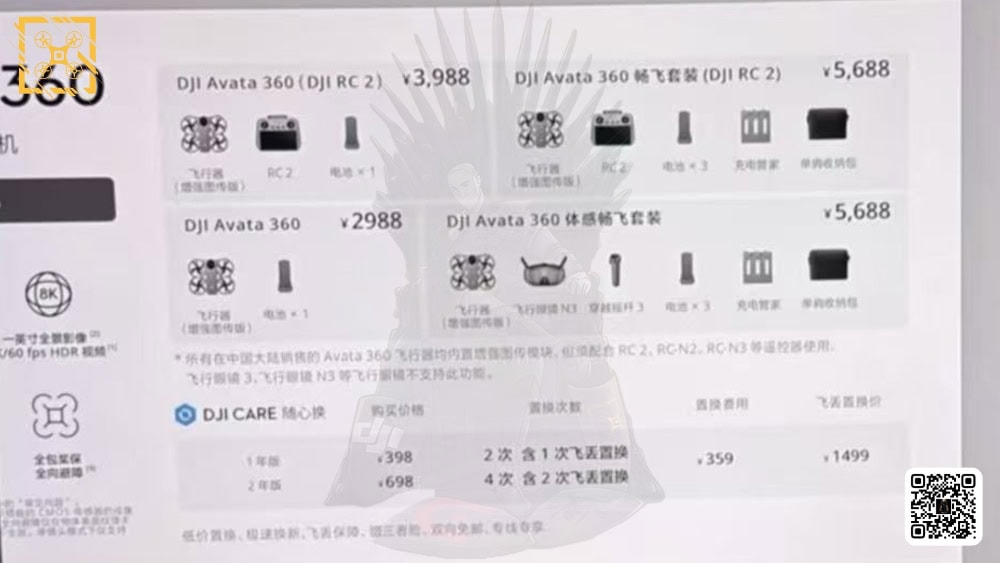
Credit: Igor Bogdanov of @Quadro_News
The Avata 360 continues the Avata cinewhoop-style line, but with a big catch—it comes with a native 360 camera. The target user is a creator who wants that immersive feeling, especially for action sports, travel, and social content, without the learning curve of a custom FPV build.
Pricing for the Avata 360 was recently leaked in China as 2,988 yuan, or about $425. But the price could be much higher in the U.S. due to tariffs and other pressures on importing DJI drones. Either way, we should know the exact price soon—according to recent leaks, DJI plans to launch the Avata 360 this month.
Here’s what we know so far about the Avata 360:
- Camera. Dual 180° fisheye lenses for 360° capture; rumored 8K 360° video at 50–60 fps, 5K/4K FPV mode at 60–120 fps; ~100–120 MP stitched stills
- Battery life. Extended endurance over prior Avata models (though we don’t know exactly how long yet)
- Sensors. Dual 1″ or 1/1.1″ type sensors
- Obstacle sensing. Near-omnidirectional vision sensors plus LiDAR-type ranging
- Transmission. O4/O4+ video link, up to 12.4 miles (20 km) range, 1080p/120 fps live feed
- Controller. Compatible with DJI RC 2-style and FPV/Avata goggles
- Storage. 128 GB internal + microSD expansion
DJI Agras T55
FCC ID: SS3-T55A2510
FCC Approval Date: December 19, 2025

The Agras T55 is an enterprise agriculture drone aimed at professional spray operators and agricultural service providers.
Based on our research, the T55 will be a step change from existing Agras models like the T25 and T50, with an emphasis on safety features critical for commercial ag operations.
Here’s what we know so far about the Agras T55:
- Target users. Agricultural operators and spray service providers
- Positioning. Mid-range addition to DJI’s professional Agras agricultural lineup
- Connectivity. Multi-band transmission optimized for reliable long-range ag operations
- Safety features. Enterprise-grade obstacle avoidance and stability systems for commercial use
DJI Lito 1
FCC ID: SS3-DGN12
FCC Approval Date: December 11, 2025
The Lito 1 is pretty mysterious. The only concrete information we have so far is that it’s a “wireless communication device with modern DJI-style connectivity features.”
If the Lito line turns out to be a new entry-level drone family, the likely target persona will be first-time buyers and casual users who want an inexpensive drone that’s easy to fly. But if that’s true, it’s a little hard to know where it will fit in the DJI lineup, since the Flip and the Neo already occupy that space.
Here’s what we know so far about the Lito 1:
- Wireless tech. Bluetooth Low Energy (BLE) + Wi-Fi 6 (802.11a/b/g/n/ac/ax) across 2.4 GHz, 5.2 GHz, 5.8 GHz
- Transmission. Software Defined Radio (SDR) capabilities for stable signal handling and interference resistance
- Antenna. Built-in omnidirectional dipole antenna optimized for UAV use (max gain 15 dBi at 5.8 GHz)
- Power input. Supports 5V/9V/12V up to 3A maximum
- Compliance. Meets FCC Part 15C/E standards for emissions, RF exposure; label in battery compartment (battery sold separately)
- Weight class. Speculated ultralight/under-250g design, potentially below Mini series
DJI Lito X1
FCC ID: SS3-DGP14
FCC Approval Date: November 27, 2025
👉So, there’s a small clue. Although it doesn’t tell us much, it’s still something…DJI Lito X1.)#dji #DJILitoX1 pic.twitter.com/p19byDtYPG
— Igor Bogdanov (@Quadro_News) November 30, 2025
Like the Lito 1, there’s almost no information out there about the Lito X1 yet.
All we know is so far is that it’s a distinct product from the Lito 1, with its own distinct FCC ID. But if the Lito is a new drone series, we can guess that the X1 may be an advanced version.
Here’s what we know so far about the Lito X1:
- Wireless tech. Bluetooth Low Energy (BLE) + Wi-Fi 6 (802.11a/b/g/n/ac/ax) across 2.4 GHz, 5.2 GHz, 5.8 GHz
- Transmission. Software Defined Radio (SDR) capabilities for stable signal handling and interference resistance
- Antenna. Permanently attached omnidirectional dipole antenna optimized for UAV use (max gain 15 dBi at 5.8 GHz)
- Power input. Supports 5V/9V/12V up to 3A maximum
- Compliance. Meets FCC Part 15C/E standards for emissions, RF exposure; label in battery compartment (battery sold separately)
- Weight class. Speculated ultralight/under-250g design, potentially below Mini series
DJI RC Mini
FCC ID: SS3-TKMI2507
FCC Approval Date: December 19, 2025
The RC Mini is a smaller, simpler DJI remote controller. From what we know so far, the RC Mini will be bundled with compact drones, providing a lower-cost option than the RC 2.
Our research shows that it has remarkable flexibility in band and bandwidth operation, giving it broad compatibility across DJI platforms.
Here’s what we know so far about the RC Mini:
- Connectivity. Multi-band Wi-Fi support with flexible bandwidth operation for broad DJI ecosystem compatibility
- Design. Compact, lightweight form factor optimized for portability and bundled drone packages
- Compatibility. Expected support for compact/entry-level DJI drones (specific models unconfirmed)
The good news about all these products? We should know more about them soon—it’s likely that all of them will launch some time in 2026.