DJI Alternatives: An In-Depth Guide [New for 2026]
BY Zacc Dukowitz
16 February 2026DJI has long dominated the drone market, offering a wide range of reliable, feature-rich platforms that have become the default choice for both hobbyists and professionals.
But over the past several years, interest in DJI alternatives has surged—especially among commercial drone operators and government agencies.
The shift is being driven by a mix of security, compliance, and geopolitical concerns.
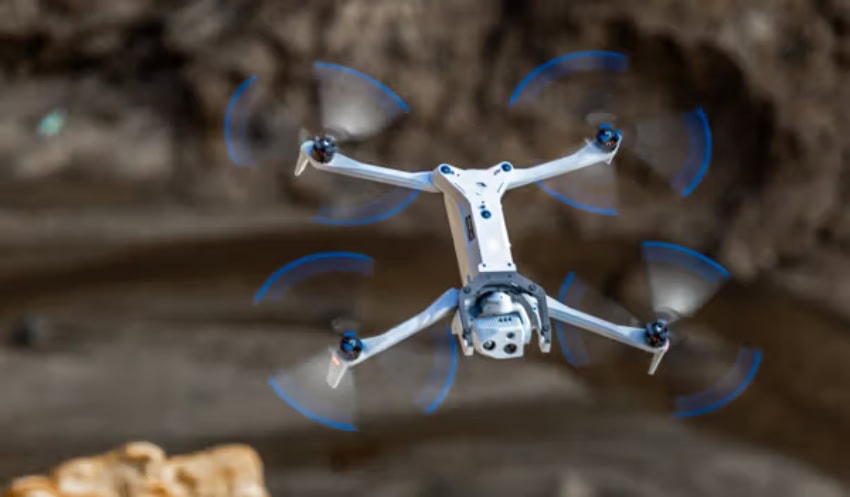
The Skydio X10 is a favored DJI alternative for public safety use cases
Data privacy issues have placed DJI under increasing scrutiny, with fears around where flight data is stored and who has access to it. At the same time, regulations like the National Defense Authorization Act (NDAA) now restrict the use of certain foreign-made components in federal drone operations, making many DJI drones ineligible for government-funded work.
And the trade war and resulting tariffs have only heightened interest in DJI alternatives. Consider, for example, that the Mavic 4 Pro—one of the most anticipated drone launches of 2025—didn’t launch at all in the U.S. and you’ll understand why people may want to know what else is out there when it comes to prosumer and consumer drones.
This guide is designed to help professionals working in industrial drone use—such as infrastructure inspection, surveying, mapping, and public safety—find the best DJI competitors on the market.
We’re not covering consumer drones or hobbyist platforms. Instead, we’re focusing exclusively on commercial drone applications where reliability, compliance, and performance are mission-critical.
Here’s a menu to help you navigate this guide to DJI alternatives:
- 3 Categories of DJI Alternatives
- Top NDAA-Compliant DJI Alternatives [New for 2025]
- Top Non-NDAA Compliant DJI Alternatives [New for 2025]
- Why Consider Alternatives to DJI?
- Pros and Cons of DJI Alternatives
- DJI Alternatives FAQ
3 Categories of DJI Alternatives
Not all DJI alternatives are created equal.
For commercial drone operations, selecting the right platform depends on your regulatory requirements, mission objectives, and technical capabilities.
Below, we break down the three most common types of alternatives to DJI drones to help you align your platform selection with your operational needs.
1. NDAA-Compliant Drones
NDAA-compliant drones are built to meet the requirements of the U.S. National Defense Authorization Act, which prohibits federal agencies from using drones made with certain foreign components—particularly those from China.

AgEagle’s eBee X is a solid NDAA-compliant commercial platform
Here are the requirements for a drone to be considered compliant with the NDAA:
- No Critical Components from Covered Foreign Countries. Drones must not contain critical components such as flight controllers, radios, data storage units, or operating software, that are manufactured by or sourced from entities in the following countries: China; Russia; Iran; North Korea
- Supply Chain Transparency. Manufacturers must provide a clear bill of materials and demonstrate that their products are free from components sourced from restricted entities.
- Cybersecurity and Data Integrity. Drones must adhere to high cybersecurity standards, including secure communication protocols, encrypted data transmission, and robust operational controls, to prevent unauthorized data access and espionage.
Drones can be made outside the U.S. and be NDAA-compliant. Also, NDAA-compliance is self-reported—there’s no official organization that grants it.
That being said, the Green UAS program created by AUVSI and the DOD presents a path for companies to certify their drones as NDAA-compliant.
2. Non-NDAA Compliant but Commercially Viable Drones
While NDAA compliance is essential in some sectors, it’s not required across the board.

Parrot’s ANAFI AI is a reliable non-NDAA compliant commercial option
Many companies in agriculture, construction, media production, and private-sector inspections continue to use non-compliant drones—often because they offer high performance at a lower price point. In these contexts, operational value, image quality, and platform reliability may take precedence over regulatory alignment.
There are numerous drone competitors to DJI that, while not NDAA compliant, still deliver strong commercial value.
Also, there are several companies that make a single drone that is NDAA-compliant while the majority of their drones are not compliant. That’s because NDAA-compliance can be costly and complicated, and it’s only necessary for clients in the federal government or at companies that take extra precautions with the supply chain.
3. Open-Source and Custom-Built Drones
Open-source and custom-built drones represent a third category—ideal for organizations with unique requirements that off-the-shelf drones can’t address.
These platforms are often powered by open-source flight control software like PX4 or ArduPilot and are built on modular architectures that allow for payload customization, specialized sensors, and proprietary software integration.
This third route may appeal to research institutions, engineering firms, and drone programs with in-house technical talent capable of managing and maintaining complex systems.
While these solutions offer maximum flexibility, they also demand greater time and expertise. They’re not turnkey, but they can be highly effective when tailored to specific mission profiles—especially in emerging or experimental commercial drone applications.
Top NDAA-Compliant DJI Alternatives [New for 2025]
As U.S. regulations tighten around DJI and similar brands, agencies and enterprises are shifting to NDAA-compliant drones to meet federal standards for security, supply chain transparency, and legal use.
Whether you’re working in industrial inspection, tactical response, or aerial mapping, NDAA-compliant drones offer secure, U.S.-vetted alternatives that align with commercial and government drone requirements.
Comparison of NDAA-Compliant Drones
| Drone Model | Manufacturer | Country of Origin | Key Features | Target Use Cases |
|---|---|---|---|---|
| Skydio X10 | Skydio | USA | Autonomous navigation, 48MP RGB camera, thermal imaging, 40-min flight time | Infrastructure inspection, situational awareness |
| Freefly Alta X | Freefly Systems | USA | 15.9 kg payload, 50-min flight time, modular design | Heavy-lift applications, LIDAR mapping, cinematography |
| ACSL SOTEN | ACSL | Japan | Swappable cameras (RGB, IR, multispectral), 25–30 min flight time | Commercial inspections, mapping |
| Parrot Anafi USA | Parrot | USA | 32x zoom, FLIR Boson thermal sensor, 32-min flight time | Defense, inspection, public safety |
| Inspired Flight IF1200A LRT | Inspired Flight | USA | Heavy-lift capabilities, LIDAR support, 43-min flight time | Aerial data capture, industrial applications |
| ModalAI VOXL 2 | ModalAI | USA | Open-source autopilot, AI-powered, Blue UAS framework | Autonomous drone development, secure flight control |
| BRINC Responder | BRINC Drones | USA | Two-way audio, thermal and optical payloads, indoor flight | Emergency response, law enforcement |
| AgEagle eBee X | AgEagle | USA | 90-min flight time, covers up to 500 hectares, multiple sensors | Large-scale mapping, agricultural monitoring |
| WingtraOne Gen II | Wingtra | Switzerland | VTOL design, 59-min flight time, 1 cm GSD accuracy | Surveying, mining, construction |
Keep reading for more information on each of these drones.
Enterprise & Industrial Drones
Skydio X10

Designed for automated inspections and tactical ops, the Skydio X10 combines AI-driven autonomy with high-end sensors in a U.S.-made, NDAA-compliant package.
Key details about the X10:
- Autonomous navigation with onboard AI
- 48MP RGB camera, thermal, and narrow-view zoom payloads
- 40-minute max flight time
- NDAA compliant, manufactured in the U.S.
- Ideal for infrastructure inspections and situational awareness
Learn more about the Skydio X10.
Freefly Alta X

The Alta X is a heavy-lift, modular platform built for industrial applications including LIDAR mapping and cinematic payloads.
Key details about the Alta X:
- Payload capacity up to 15.9 kg (35 lbs)
- 50-minute flight time (unloaded)
- Fully customizable, open-architecture design
- Made in the U.S., NDAA compliant
- Supports a wide range of industrial sensors
Learn more about the Freefly Alta X.
ACSL’s SOTEN Drone
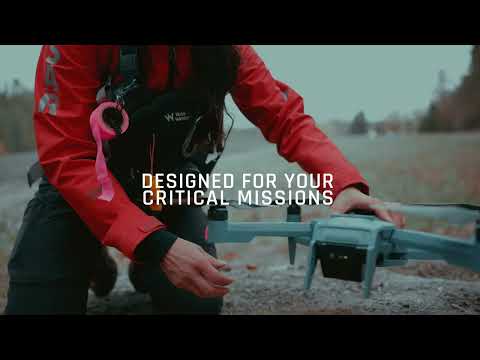
Developed by Japan-based ACSL, the SOTEN is a secure, modular drone for commercial inspections and mapping, now fully NDAA-compliant and approved for U.S. use.
Key details about the Soten:
- Payload options: RGB, IR, multispectral
- 25–30 minutes flight time
- Encrypted communications and secure data handling
- NDAA compliant and approved for U.S. government use
Learn more about the ACSL SOTEN.
Parrot’s Anafi USA
Built for defense and inspection use, the Anafi USA combines compact portability with dual thermal and zoom capabilities.
Key details about the Anafi USA:
- 32x zoom camera and FLIR Boson thermal sensor
- 32-minute max flight time
- IP53-rated weather resistance
- NDAA compliant, assembled in Massachusetts
- Popular with first responders and infrastructure teams
Learn more about the Parrot Anafi USA.
Inspired Flight’s IF1200A LRT

Built for heavy-duty payloads like LIDAR, the IF1200A LRT is a U.S.-made multirotor platform optimized for aerial data capture.
- Heavy-lift capabilities
- LIDAR and advanced sensor support
- NDAA-compliant and Blue UAS listed
- Manufactured in California
Learn more about the Inspired Flight IF1200A LRT.
ModalAI’s VOXL 2
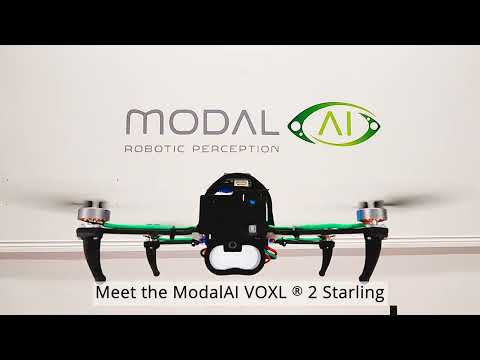
ModalAI supplies secure autopilots and flight controllers that power many NDAA-compliant drones, enabling U.S.-built platforms with trusted autonomy.
- Open-source VOXL autopilot platform
- Developed with U.S. government funding
- Supports Blue UAS architecture
- NDAA compliant and widely integrated
Learn more about the ModalAI VOXL 2.
Public Safety & Tactical Drones
BRINC Responder
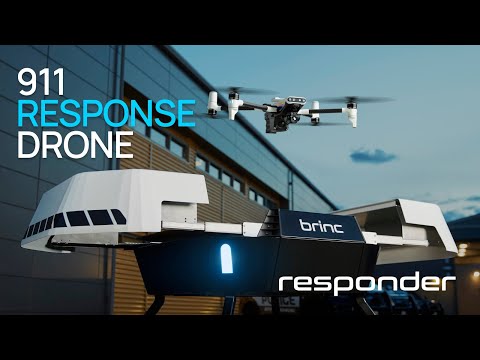
Engineered for emergency response, the BRINC Responder gives law enforcement and crisis teams real-time eyes, ears, and voice inside critical incidents.
Key details about the BRINC Responder:
- Two-way audio communication
- Thermal and optical payloads
- Designed for confined space and indoor flight
- NDAA compliant, U.S.-manufactured
- Secure cloud-free data storage options
Learn more about the BRINC Responder.
Mapping & Surveying Drones
AgEagle’s eBee X
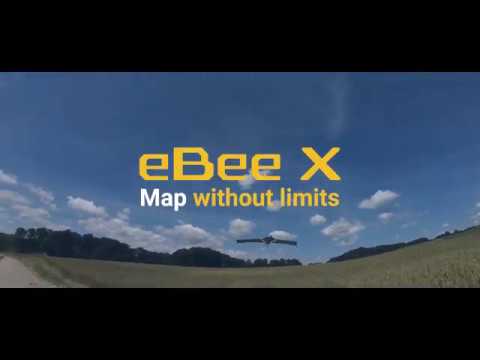
The eBee X is a fixed-wing platform built for large-scale mapping and agricultural monitoring, offering long endurance and sensor flexibility.
Key details about the eBee X:
- Up to 90-minute flight time
- Covers up to 500 hectares in a single flight
- Multiple sensor options including RTK and multispectral
- NDAA compliant, assembled in the U.S.
Learn more about the AgEagle eBee X.
WingtraOne Gen II
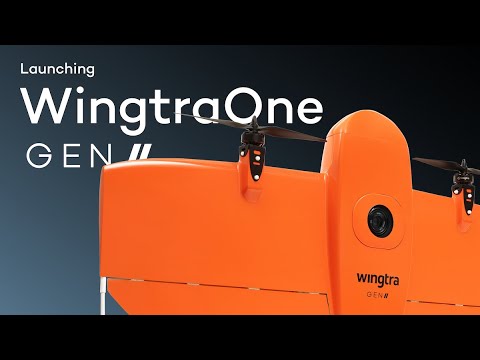
A high-precision VTOL mapping drone, WingtraOne Gen II is used in surveying, mining, and construction for its accuracy and ease of use.
Key details about the WingtraOne Gen II:
- 59-minute max flight time
- Survey-grade accuracy (1 cm GSD)
- Vertical takeoff and landing (VTOL) design
- NDAA compliant for U.S. operations
Learn more about the WingtraOne Gen II.
Top Non-NDAA Compliant DJI Alternatives
While NDAA-compliant drones are essential for federal and government-funded operations, they are not required for most private-sector commercial drone applications.
Industries like agriculture, construction, media production, and real estate continue to rely on non-NDAA drones to meet operational needs at competitive price points—and that’s why DJI continues to dominate.
But DJI isn’t the only company that makes non-NDAA compliant drones.
Many of these DJI alternatives offer strong technical capabilities, robust ecosystems, and proven track records in commercial drone applications.
Note: With rising U.S. tariffs on Chinese-made drones, pricing on some platforms could be impacted in the near future.
Comparison of Companies that Make Non-NDAA Compliant Drones
| Company | Country of Origin | Recommended Drones | Primary Use Cases | NDAA Compliant Options? |
|---|---|---|---|---|
| Parrot | France | Anafi Ai, Anafi Thermal, Anafi 4K | Inspection, photogrammetry, real estate, public safety | Yes (Anafi USA) |
| Yuneec | China | H520E, Typhoon H Plus | Surveying, inspection, aerial photography | No |
| JOUAV | China | CW-007, CW-25E, PH-20 | Mapping, surveillance, wide-area industrial inspections | No |
| XAG | China | XAG P100 Pro, XAG V40, XAG M500 | Agriculture, crop spraying, farm automation | No |
Keep reading for more information on each of these companies and the drones they offer.
Parrot
Parrot is one of the few European drone manufacturers with a strong presence in both consumer and professional markets. In addition to their non-NDAA offerings, they also produce the NDAA-compliant Anafi USA for secure operations.

The Parrot Anafi AI
Anafi Ai
A 4G-connected drone with an open API, designed for photogrammetry and inspection workflows with real-time cloud integration.
Anafi Thermal
Combines a FLIR thermal sensor with a visible-light camera for dual imaging—suited for inspections, firefighting, and search and rescue.
Anafi 4K
A lightweight, foldable drone that delivers high-resolution imagery for general commercial use, including real estate and surveying.
Yuneec
Yuneec manufactures professional-grade hexacopters known for stability and payload flexibility, widely used in commercial inspection and photogrammetry.
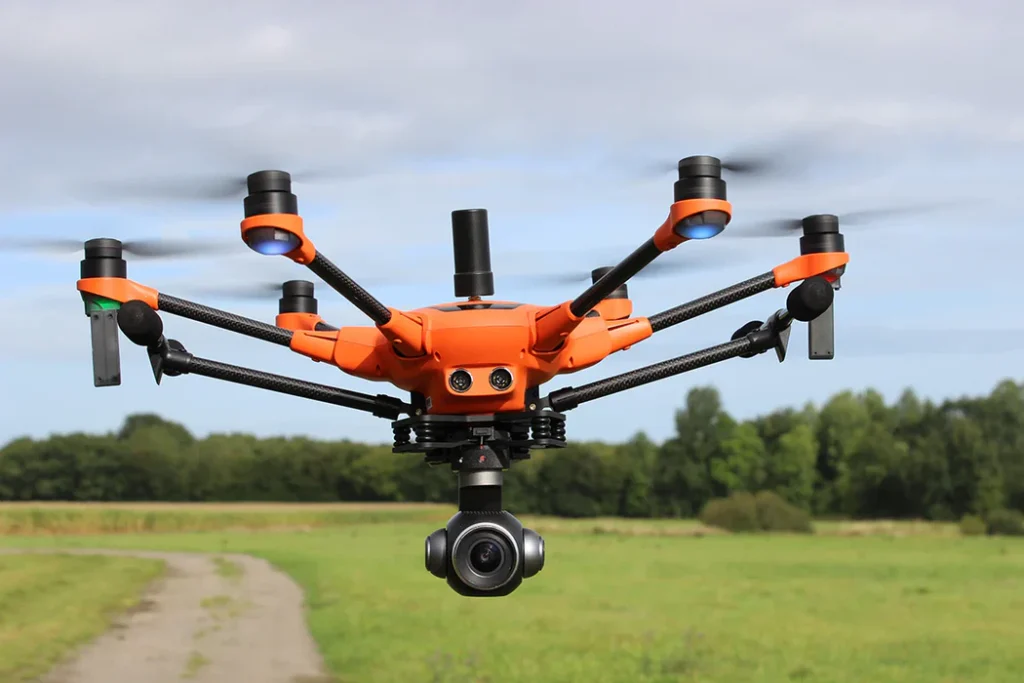
The Yuneec H520E RTK
Yuneec H520E
A professional hexacopter designed for inspection, surveying, law enforcement, security, and mapping. It features stable flight, long focal-length lenses, and compatibility with various payloads, including thermal and RGB cameras.
Yuneec H520E RTK
This model builds on the H520E by adding RTK (Real-Time Kinematic) positioning for centimeter-level accuracy, making it ideal for surveying, mapping, and precision industrial applications.
Typhoon H Plus
Delivers high-quality imaging with a 1″ 20MP sensor and stable flight performance—popular for aerial photography and light industrial use.
JOUAV
JOUAV specializes in long-endurance, fixed-wing UAVs for industrial and government applications, especially in mapping, surveying, and public safety.
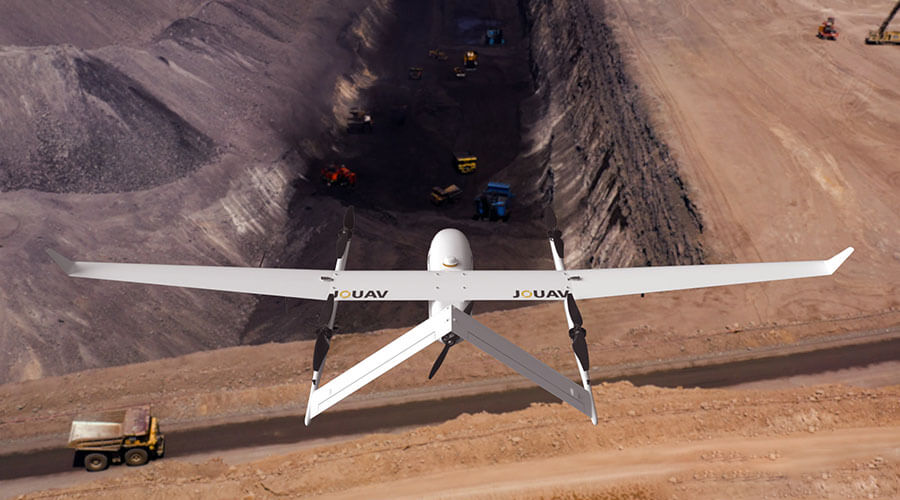
The JOUAV CW-25E
CW-25E
Offers up to 4 hours of flight time and supports multiple sensors, making it ideal for corridor mapping and wide-area inspection.
CW-007
A compact VTOL fixed-wing drone suited for quick-deploy mapping and surveillance missions in complex terrain.
PH-20
A hybrid VTOL drone used in utility and agricultural sectors for high-endurance aerial data collection with modular payloads.
XAG
XAG is a global leader in agricultural drone technology, with a focus on precision spraying, crop monitoring, and large-scale farm automation.

The XAG P100 Pro
XAG P100 Pro
A powerful multi-functional platform for crop spraying and broadcasting with centimeter-level navigation accuracy.
XAG V40
A dual-rotor UAV with efficient spraying capability and full autonomous operation for modern farming environments.
XAG M500
Designed for aerial mapping and field scouting, the M500 is a versatile solution for agronomic data collection and analysis.
Why Consider Alternatives to DJI?
DJI remains the dominant player in the global drone market, but a growing number of professionals in commercial drone operations are actively exploring alternatives.
The reasons are practical, not ideological—rooted in compliance mandates, data security concerns, geopolitical risk, and evolving operational needs.
Here are the four main reasons people are looking into DJI alternatives:
1. Regulatory Compliance
One of the biggest factors driving the search for DJI alternatives is regulatory compliance—especially with the National Defense Authorization Act (NDAA).
The NDAA prohibits federal agencies from procuring drones that use certain Chinese-made components, including many found in DJI products. This restriction affects not just federal drone programs, but also state and local agencies that rely on federal funding, as well as private contractors working in sectors like energy, transportation, and utilities.
To meet compliance requirements, organizations are prioritizing NDAA compliant drones that provide the documentation and component traceability necessary for government work. DJI, despite its technical capabilities, currently does not offer NDAA-compliant platforms—effectively ruling it out for a growing portion of high-stakes, publicly funded operations.
2. Data Security Concerns
Data privacy remains a key consideration, especially for sensitive commercial or government drone operations.
DJI has frequently faced scrutiny regarding its handling of flight logs, imagery, and telemetry data. U.S. government agencies, including the Department of the Interior and the Department of Defense, have imposed restrictions or grounded DJI fleets over concerns about potential data transmission and storage practices.
However, it is important to note that multiple independent third-party audits have found no evidence of data privacy violations by DJI. Notably, a 2024 audit by FTI Consulting confirmed that DJI’s products, including the Mavic 3T, RC Pro controller, and DJI Pilot 2 software, offer robust privacy controls and that U.S. user data remains on U.S.-based servers unless users choose to share it. These findings are consistent with previous reviews by Booz Allen Hamilton, Kivu Consulting, and assessments by the U.S. Department of the Interior and Idaho National Laboratory.
DJI has also introduced features such as “Local Data Mode,” which disables all network traffic, ensuring that no data leaves the device unless the user opts in. These privacy controls have been validated in independent audits, which found that DJI’s Local Data Mode results in no outbound data traffic.
To date, DJI has not been proven to have violated any data privacy laws; rather, the company has faced allegations and concerns, but no court or regulatory body has found DJI guilty of any data privacy breaches.
For organizations managing critical infrastructure, public safety, or proprietary data, full confidence in data sovereignty remains essential. As a result, some continue to turn to DJI competitors with more transparent supply chains or domestic support, even as third-party reviews affirm DJI’s commitment to data security.
3. Supply Chain and Geopolitical Factors
Relying on a single, foreign-owned manufacturer for mission-critical hardware introduces real risk.
Geopolitical tensions between the U.S. and China continue to escalate, leading to export controls, sanctions, and political pressures that can disrupt access to parts, support, or even entire product lines.

The DJI Mavic 4 Pro
A recent example is the absence of a U.S. release for the DJI Mavic 4 Pro, a highly anticipated model that launched in other markets but was notably withheld from the U.S.
This omission has fueled speculation about DJI’s long-term access to the U.S. commercial drone market and is a clear signal that the regulatory landscape is tightening. For many commercial operators, diversifying away from DJI is a hedge against future disruptions in availability and service continuity.
4. Operational Requirements
Even apart from regulatory concerns, DJI drones don’t always meet the full range of needs in industrial drone use.
Many operators require payload flexibility, extended flight times, or open SDKs to integrate custom sensors or workflows. DJI’s closed ecosystem can limit adaptability, especially in specialized applications like underground inspections, confined space entry, or multisensor thermal/RGB mapping.
In contrast, several DJI alternatives offer modular systems designed for field customization and integration. Platforms from companies like Freefly and Inspired Flight allow teams to select specific payloads, adjust configurations, and plug into enterprise software ecosystems—capabilities that many large-scale operations find essential for success.
Pros and Cons of DJI Alternatives
DJI has long set the benchmark in the drone industry, offering reliable, feature-rich platforms at competitive price points.
But for organizations with specific compliance needs or operational priorities, exploring DJI alternatives is increasingly common.
Whether you’re evaluating NDAA-compliant drones, open-source platforms, or regionally manufactured systems, it’s important to understand the trade-offs involved when moving away from the DJI ecosystem.
Pros of DJI alternatives
- NDAA compliance. Many non-DJI drones are built to meet U.S. government security standards, enabling legal use in federal and critical infrastructure operations.
- Improved data security. Some DJI competitors offer enhanced data isolation, onboard processing, or cloud-free operation—ideal for sensitive missions.
- U.S. or allied manufacturing. Drones made in the U.S. or by trusted international partners reduce supply chain risks and simplify procurement for government contractors.
- Modular design & open architecture. Many DJI alternatives prioritize flexibility, allowing users to integrate custom payloads, sensors, or onboard computing systems.
- Vendor diversity. Relying on non-DJI drones expands your hardware sourcing options and reduces dependence on a single global supplier.
- Mission-specific platforms. Some alternatives are purpose-built for agriculture, tactical response, or long-endurance surveying, offering a better fit for niche commercial drone applications.
- Support for custom integration. Open-source or developer-friendly platforms may offer more control over software and system behavior.
Cons of DJI alternatives
- Higher upfront costs. NDAA-compliant and domestically produced drones often come with a higher price tag due to component sourcing and lower production scale.
- Less mature software ecosystem. DJI’s mobile apps and cloud platforms are highly refined—some competitors may lack equivalent flight planning or data management tools.
- Limited automation features. Autonomous flight, obstacle avoidance, and advanced AI functions may not be as advanced or user-friendly on non-DJI drones.
- Smaller user community. Fewer users can mean less online support, third-party accessories, and community-driven troubleshooting resources.
- Lower availability & distribution. Some DJI competitors have smaller distribution networks, which can impact access to parts, repairs, or customer service.
- Shorter track record. Newer drone makers may not have DJI’s long-term history of performance, product updates, or mission-proven deployments.
- Compatibility gaps. Third-party software and accessories may not integrate as smoothly as they do with DJI systems, potentially requiring workflow adjustments.
DJI Alternatives FAQ
Why are organizations looking for alternatives to DJI drones?
There are several key reasons why organizations are exploring DJI alternatives. First, many government agencies and federally funded programs are required to use NDAA-compliant drones, which DJI does not currently offer. This makes DJI platforms ineligible for certain public sector applications. Second, concerns about data privacy and security—specifically where flight data is transmitted and stored—have prompted scrutiny of DJI drones in sensitive or classified environments.
Geopolitical tensions and trade policy uncertainty have also contributed to procurement risk. Organizations that rely on consistent access to parts, service, and long-term support are wary of the potential for supply chain disruptions tied to U.S.-China relations. As a result, some are proactively shifting toward secure, U.S.-vetted drone alternatives to future-proof their operations.
Do you need an NDAA-compliant drone for commercial work?
No, NDAA compliance is not required for most private-sector commercial drone applications. If you’re operating in fields like construction, agriculture, real estate, or media production, you can legally use non-compliant drones—including DJI products—without issue. However, if your projects involve federal contracts, grants, or infrastructure work funded by government sources, NDAA compliance may be a mandatory requirement.
Organizations working alongside federal agencies or on critical infrastructure should check their contract requirements carefully. In those cases, using NDAA-compliant drones is often a condition for procurement eligibility, especially when working with defense, energy, or transportation sectors.
Are drones made in China banned in the U.S.?
There is currently no blanket ban on drones made in China. However, some federal agencies have restricted or grounded Chinese-manufactured drones—including DJI—due to security concerns. These internal policies don’t extend to private operators, but they do affect which drones can be purchased or used in federally funded programs.
Separately, tariffs on Chinese drone imports have been imposed or reintroduced, which could drive up the cost of Chinese-made UAVs over time. While not a ban, these developments create both regulatory and economic friction that organizations must weigh when choosing between DJI and other drone competitors.
What should I consider when evaluating DJI competitors?
When looking at DJI alternatives, start with your mission requirements. Consider flight time, payload capacity, range, and sensor compatibility. Some alternatives offer open architectures that allow for custom integrations or specific industry payloads, like LIDAR or multispectral sensors.
Also examine the software ecosystem. Is the drone compatible with your existing data workflows or fleet management tools? Factor in support and maintenance options, especially for field operations. And finally, assess regulatory compliance—whether NDAA compliance is needed—and check how the drone’s country of origin may affect long-term procurement or operations.
Are NDAA-compliant drones more expensive than DJI drones?
Yes, in most cases, NDAA-compliant drones do cost more than comparable DJI drones. This is due to several factors, including higher manufacturing costs in the U.S. or allied countries, smaller production volumes, and the use of vetted or domestically sourced components.
However, for organizations that require NDAA compliance, the added cost is often outweighed by reduced procurement risk, enhanced data security, and eligibility for government contracts. Over the long term, these platforms may also provide better lifecycle support and regulatory assurance.
Can I still use my DJI drone for commercial flights?
Yes, DJI drones are still widely used in commercial operations, especially in the private sector. Unless you’re working on a project that explicitly requires NDAA compliance or prohibits foreign-made drones, there is no legal barrier preventing DJI use in typical commercial drone applications.
That said, some clients—particularly in energy, defense, and critical infrastructure—may have internal policies that restrict or disqualify DJI platforms. It’s important to review the terms of each contract or client engagement to ensure your drone hardware meets all applicable requirements.