Cold Weather Drones: Tips for Flying in the Cold [Updated for 2026]
BY Zacc Dukowitz
16 February 2026
Can drones fly in cold weather?
Absolutely! But it’s important to note that it’s simply riskier to fly your drone in cold weather than warm weather.
This is because the LiPo batteries drones use don’t work well in cold weather. The colder it is, the shorter your battery life will be due to the slowing down of the chemical activity within the battery.
Because of the way cold weather impacts a drone’s battery performance, as well as your own performance, it’s important to plan ahead and take the proper precautions.
This article covers our key advice for how to make sure you’re ready to fly this winter:
- Best Practices for Flying a Drone in Cold Weather
- Battery Care for Flying a Drone in Cold Weather
- Drone Pilot Care for Flying a Drone in Cold Weather

Best Practices for Flying a Drone in Cold Weather
Just looking for the main tips on flying a drone in the cold? Here you go:
- Check your drone’s specs. Start by checking your drone’s specs for its operational temperature ranges and comparing that to the day’s forecast. If the low temp allowed for your drone is within 5-10 degrees of the forecast, make sure you’re extra vigilant when you go out, and consider not flying if you’re getting too close to that bottom.
- Use fully charged batteries. Cold depletes batteries more quickly than normal temperatures, so make sure you have fully charged batteries.
- Be mindful of storage and transportation. Before the day of your mission and on the day of your mission, make sure your drone, controller, and batteries are stored in a warm place, if possible.
- Consider using a battery warmer. On the storage topic, a battery warmer may be a good investment if you plan to fly often in cold weather.
- Bring extra batteries. Since batteries get drained more quickly when flying in cold weather, bring as many fully charged backup batteries as you can.
- Use a dry surface for takeoff and landing. Bring a launch pad or find a dry piece of ground for takeoff and landing, being mindful that moisture from snow or water on the ground could hurt your drone’s motors.
- Allow warm up time. In the field, start by letting your drone warm up for a few minutes before trying to fly.
- Check your battery life often. Be extra mindful of your drone’s battery life when flying in the cold, checking its level often and looking out for fast loss of life. Also, consider bringing in your drone sooner than you usually would, generally operating with more caution around battery life than you typically would.
- Wipe your drone down after the flight. Moisture may collect on your drone while flying, so it’s important to wipe it down after you fly, again to protect its motors.
Now that we’ve covered these best practices, let’s take a closer look at some of the key things to think about when flying a drone in cold weather.
Battery Care for Flying a Drone in Cold Weather
Battery care is the biggest factor when flying in the cold.
Most drones are powered by lithium-polymer (LiPo) batteries. LiPo batteries are ideal for situations where weight matters—like flying a drone!—but they’re also pretty sensitive, and require special care, especially for use in cold weather.
Here are some things to keep in mind regarding your LiPo batteries when flying in the cold:
1. Pay Close Attention to the Temperature
In cold weather, the chemical reactions that allow LiPo batteries to work slow down, which lowers their overall capacity.
Where a fully charged LiPo battery could provide 20-25 minutes of flight time in warmer weather (59°F or above), in colder weather flight time could drop to 10-15 minutes or lower.
The colder it is, the shorter your battery life will be.
Here are some things to keep in mind:
- You’ll start to see decreased performance at 59°F (15°C) or colder.
- If it’s below 14°F (-10°C), LiPo usage is not recommended at all since your battery could suddenly fail without warning, bringing your drone crashing down.
2. Battery Storage Is Crucial
Temperature extremes, both cold and hot, are bad for LiPo batteries. That’s why you should always store your LiPo batteries in a cool, dry place, aiming for keeping them at room temperature.
Do not store them in a hot garage or in a refrigerator. Even though a cold battery has less chemical reactions taking place, and this can prolong its lifespan, taking a battery out from a cold fridge can cause condensation to occur on the inside of the battery, which can be very dangerous.
Here are a few more tips for storage:
- Make sure to disconnect the batteries when you’re not using them, and store them in a fireproof container.
- Don’t story batteries in extreme cold or heat, including sunlight. The ideal temperature range for storage is 14°F to 113°F.
- If storing for a long period of time without any use (i.e., several months or more), ideal temperature range is 73°F to 82°F.
- Don’t store loose batteries together. This could lead to the terminals touching, which might cause a short circuit.
Bottom line, be thoughtful not just about what you do right before you fly (which we’ll get into below) but also about how you care for and maintain your batteries between flights.
3. Warm Your Batteries
It’s a good idea to warm your batteries before flying. The target temperature should be about 75°F (25°C).
We recommend using a battery heater like this one.
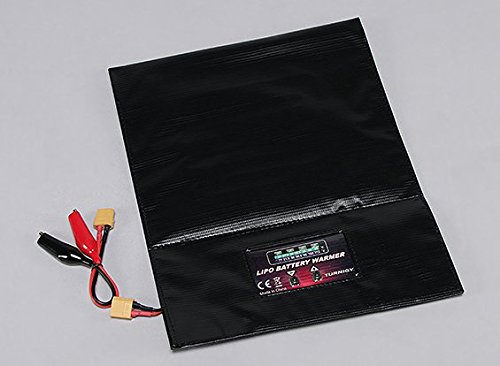
If you don’t have a battery heater, hand warmers can be an OK alternative for warming your batteries (though not ideal).
But be warned—don’t ever put hand warmers in direct contact with your batteries. Make sure to cover your batteries in something that will protect them from the heat the warmers put off, like a shirt, towel, or some other kind of material.
4. Keep Your Flights Short
Because the cold weather will shorten your battery life, make sure to avoid flying for very long.
To prepare shorter flights, make sure to plan ahead and know exactly what you want to shoot. This way you can go up, get your shot, and get down without risking a crash due to battery failure.
A good rule of thumb is that the colder it is, the shorter your flight should be. For example, we’ve been able to fly for 10 minutes in 20° weather, but we’ve had some other pilots tell us they only risk 30-60 seconds at a time when they fly in 20° weather (in addition to initial hovering).
A good way to approach flying on a specific cold day is to do some test flights, seeing how quickly your battery drops, so you can establish a baseline for performance. Then, use that information to inform how you approach the rest of your shooting for the day.
Drone Pilot Care for Flying a Drone in Cold Weather
All of the advice we’ve shared up to this point focuses on optimizing your drone’s performance for flying in cold weather.
But cold weather can also impact the pilot’s performance.
Here are some things to keep in mind as a drone pilot when planning to fly in the cold.
1. Keep Your Hands Warm
Frozen thumbs can be just as risky for a safe flight as frozen batteries.
We recommend buying gloves made just for flying in the winter, which will allow you to keep your hands warm but also maintain enough sensitivity for flying.
Alternately, you can buy a transmitter glove like the one shown below.
Yes, it looks a little funny, but weigh that against keeping your hands toasty and limber while keeping your thousand-dollar drone up in the air. Seems like a small price to pay.

2. Hover Before Flying
Hovering is one more way to help your batteries warm up before flying.
Depending on the temperature, you’ll want to hover anywhere from 30 seconds to a full minute or two, extending the time as needed in cold weather.
Why hover? Because it lets your batteries get warm and it gives you time to check in with yourself.
Do you have enough feeling in your fingers to fly competently? Are you confident that you can control your drone in these conditions?

Image source
3. Be Mindful Visibility
Cold weather can also come with poor visibility. According to the FAA, drone pilots must have three-mile visibility at a minimum to fly a drone.
So make sure you can see well enough to fly, and be cautious about flying when visibility is poor or when it looks like bad weather may be rolling in.
More Cold Weather Flight Tips for Drone Operators
We paired up with SkyWatch.AI to come up with more advice for flying your drone in cold weather. Check out this video of our top five tips, and make sure to read the full article for further guidance on flying in the cold.
Video Source: SkyWatch.Ai
Ready to plan your flight? We offer suggestions on where to fly your drone in over 25 of the most populated U.S. cities in our Where to Fly Your Drone Guide. We’d also love for you to share your tips for flying a drone in cold, winter weather on our community forum.