TABLE OF CONTENTS

Blue UAS

The Full List of DOD Approved "Blue Drones"

Blue UAS are drones approved by the U.S. Department of Defense (DOD) for use by the federal government. (UAS = Uncrewed Aerial Systems—or, in other words, drones.)

To be given the Blue UAS designation drones must meet specific, rigorous standards related to security and trusted technology. These standards ensure that the drones don’t pose risks associated with potential data breaches or unwanted data transmission to foreign entities.

blue-uas-skydio-x2d

The Skydio X2D | Credit: Skydio

When the Pentagon first rolled out the Blue UAS program back in 2020 there were only 10 approved drone models on the list.

From that foundation, the Defense Innovation Unit (DIU)—the sector of the DOD responsible for the Blue UAS initiative—grew the program, with a focus on speeding the vetting process for including new drones on the Blue UAS list.

Now, there are over 9 drone companies and over 16 drones on the list, with more being added all the time.

In this guide to Blue UAS we cover what the Blue UAS program is in more detail, what’s required to become a Blue UAS, and all of the drones that have been given the Blue UAS designation. (By the way, if you’re looking for DJI alternatives, Blue UAS drones are a good place to start.)

Just want to see the list? Jump there now.

Here are the topics we cover in this guide in case you’d like to jump around:


01 CHAPTER

What Is Blue UAS?

Blue UAS refers to a program created by the U.S. Department of Defense that identifies and approves drones for government use.

These “blue drones” must meet stringent security and operational standards, going through a strict vetting process to ensure they’re suitable for military and federal applications.

blue-uas-parrot-anafi-gov

The Parrot ANAFI USA, GOV Edition | Credit: Parrot

The Blue UAS designation also implies compliance with the National Defense Authorization Act (NDAA), emphasizing the drones’ security, reliability, and suitability for critical operations.

In the context of Blue UAS and drones, compliance with the NDAA is all about the supply chain—put simply, if a drone isn’t made in or use parts from a “covered foreign country” then it’s NDAA-compliant.

Covered foreign countries are those that could be considered to have interests counter to those of the U.S.—specifically, China, North Korea, Russia, and Iran.

Why Was the Blue UAS Program Launched?

The Blue UAS program was first formed in response to concerns that drones made by foreign companies, especially those from covered foreign countries like China, might secretly have backdoors or other vulnerabilities that would compromise the data they collect or the networks they connect to.

This concern has risen to such prominence over the last four years that in early 2024 Chinese drones were completely banned from use by the federal government.

Does the DOD Have to Buy Blue UAS Drones?

No. But it is a lot easier to do so.

While the Blue UAS program provides a streamlined pathway for government procurement, it does not restrict the DOD from purchasing non-Blue, certified compliant UAS that fit their mission needs.

That being said, being listed as Blue UAS can significantly enhance a company’s credibility and marketability within the defense sector.

And the Blue UAS label can help companies sell their drones to private companies as well. For large, security- and image-concerned clients, buying Blue UAS could be appealing since it’s a way to show that they’re taking every precaution when it comes to security.

Can a Drone Be Removed from the Blue UAS List?

Yes.

A drone can be taken off the Blue UAS list if:

  • There isn’t enough demand for it from the DOD.
  • Its capabilities no longer meet the DOD’s needs.
  • Cybersecurity issues in the drone aren’t addressed within a designated timeline, whether through inaction or inability.
  • The drone or critical components of the drone are End-of-Life, or will no longer be updated.
  • Significant changes are rolled out to the drone without formal approval by DIU.


02 CHAPTER

Blue UAS List—All of the Approved DIU Blue Drones

In total, 9 companies have drones that have been approved for the Blue UAS list.

Of those 9 companies, three of them have multiple platforms that have been approved by the DOD for the list—Anduril,  Skydio, and Teal Drones.

In total, when you count all the drones from each of these companies, there are 16 DOD-approved drones on the list (as of February, 2025).

Below you’ll find the complete list of companies with Blue UAS-approved drones, including every drone that’s been approved from the company. Use the link for each company to jump down to a section with more information, where we’ve provided specs and promotional materials for the approved drone (for companies with multiple drones we’ve only provided specs for the first one listed).

Here’s the list of drones:


1. Anduril

Blue UAS from Anduril:

  • Ghost
  • Ghost X

About the Ghost and Ghost X

Ghost-X: Modular, Multi-Mission sUAS

The Ghost and Ghost X are advanced autonomous small unmanned aerial systems (sUAS) developed by Anduril Industries. Designed for military and defense applications, these drones offer high endurance and versatility for various missions.

Ghost and Ghost X Specs & Features

  • Endurance: Extended flight times suitable for prolonged operations.
  • Payload Capacity: Supports multiple payloads for diverse mission requirements.
  • Autonomy: Advanced AI-driven autonomous capabilities for complex missions.
  • Durability: Built to withstand challenging operational environments.

Learn more on the Anduril website.


2. Easy Aerial

Blue UAS from Easy Aerial:

  • Osprey

About the Osprey

blue-uas-easy-aerial

The Osprey is a robust hexacopter notable for its carbon composite construction and motor redundancy, which help enhance its reliability. The combination of durability, payload capacity, and all-weather capability make the Osprey suitable for a variety of missions, particularly in adverse conditions.

Osprey Specs & Features

  • Weight and payload capacity. Weight of 12 pounds (5.5 kg ) without payload. Can carry up to 6.6 pounds (3.0 kg) of payload.
  • Flight time and range. 55 minute flight time and range of 12.4 miles (20 km).
  • Top speed and weather endurance. Can reach a top speed of 62.13 mph (100 km/h) and is designed to operate in all weather conditions, including rain, snow, and fog.
  • Versatile payload options. Supports a range of payloads, including Nighthawk, Echodyne Radar, LED Lights, Speakers, Dragoneye, Spinning LiDAR, Multispectral Camera, and Thermal Camera.

Learn more on the Easy Aerial website.


3. Flightwave

Blue UAS from Flightwave:

  • Edge 130

About the Edge 130

Experience the FlightWave Edge™ UAS

The Edge 130 by FlightWave is a military-grade tricopter designed for long-range mapping, inspection, surveillance, and reconnaissance missions. The combination of endurance, speed, and payload flexibility makes the Edge 130 Blue suitable for a range of government and military applications.

Edge 130 Specs & Features

  • Weight. Approximately 2.65  pounds (1,200g), allowing for easy transport and deployment.
  • Flight time. An incredible 125 minutes of battery life, which is one of the longest flight times of any professional drone on the market.
  • Speed and wind resistance. Can reach a maximum cruise speed of 62 mph (100 kph) and withstand wind speeds up to 40 mph (64 kph).
  • VTOL-enabled. Features vertical take-off and landing capabilities, enabling it to operate in varied environments.
  • Payload options. Supports quick and tool-free swapping of various payloads, increasing its versatility for different mission requirements.

Learn more on the Flightwave website.


4. Freefly Systems

Blue UAS from Freefly Systems:

  • Astro

About the Astro

Introducing - Astro Prime

The Astro is a high-performance drone known for its combination of payload capacity, flight endurance, and adaptability, making it suitable for a range of professional and industrial applications.

Astro Specs & Features

  • Weight and payload. The Astro has a maximum takeoff weight of 15 pounds (6,950 g) and can carry a maximum payload of 3.3 pounds (1,500 g), making it a compact option for a wide range of missions.
  • Flight controller and modes. Enjoy precise camera and gimbal control with Pilot Pro. Discreet controls for all key drone and gimbal commands allow pilots to capture more and work faster.
  • Flight time. 38 minutes with no payload, 28 minutes with a 30 pound payload.
  • Environmental tolerance. Designed to operate in challenging conditions, providing versatility for different operational environments.

Learn more on the Freefly Systems website.


5. Hoverfly Technologies

Blue UAS from Hoverfly Technologies:

  • Spectre

About the Spectre

Spectre 2.0 Reveal Trailer | Tethered Drone Solutions

The Spectre is a state-of-the-art tethered drone system, recognized as the first and only tethered UAS platform cleared for the DIU Blue UAS List. Engineered for defense, security, and public safety applications, the Spectre provides continuous aerial coverage with unlimited flight time, enhancing situational awareness and communication capabilities.


Spectre Specs & Features

  • Payload Capacity: Supports advanced multi-payload configurations up to 8 lbs, accommodating various sensors and equipment.
  • Flight Duration: Unlimited flight time enabled by tethered power supply, ensuring persistent aerial presence.
  • Certification: Both Blue List and Green List certified, ensuring compliance with security and NDAA standards.
  • Applications: Ideal for persistent ISR (Intelligence, Surveillance, Reconnaissance), on-the-move operations, and variable height antenna deployments.

Learn more on the Hoverfly Technologies website.


6. Neros Technologies

Blue UAS from Neros Technologies:

  • Archer

About the Archer

The Archer by Neros Technologies is a high-performance, American-made First-Person View (FPV) drone, certified by Blue UAS. Designed for long-range missions, the Archer is battlefield-proven, cost-effective for large-scale deployment, and optimized to resist electronic warfare, ensuring reliability in contested environments.


Spectre Specs & Features

  • Speed: Capable of reaching speeds up to 160 km/h, facilitating rapid response and mission efficiency.
  • Manufacturing: Proudly designed and manufactured in Los Angeles, California, ensuring secure supply chains and quality control.
  • Deployment: Engineered for scalability, making it suitable for extensive operational requirements.
  • Resilience: Built to withstand electronic warfare, maintaining operational integrity in contested scenarios.

Learn more on the Neros Technologies website.


7. PDW

Blue UAS from PDW:

  • C100

About the C100

c100-pdw-blue-uas

The C100 drone by PDW is a portable, long-endurance quadcopter notable for its combination of long flight time, substantial payload capacity, and adaptability. Its professional-grade specs make it suitable for a range of applications, including surveillance and reconnaissance missions.

C100 Specs & Features

  • Flight time and payload. Can fly for up to 74 minutes with an ISR payload and has a maximum payload capacity of 15 pounds (6.8 kg).
  • Dimensions and weight. The drone measures 15 x 24 x 13 inches when folded, and it weighs 21 pounds (9.6 kg).
  • Range and speed. Range of 6 miles (10 km) and a maximum flight speed of 40 mph (64 km/h).
  • Operational temperature. The C100 operates efficiently in temperatures ranging from -4º C to 134º F.
  • Payload options. Offers various payload options, including high-resolution cameras and laser pointers.

Learn more on the PDW website.


8. Skydio

Blue UAS from Skydio:

  • X2D Color 1.8 GHz
  • X2D Color 5 GHz
  • Thermal 1.8 GHz
  • Thermal 5 GHz
  • X2D Multiband
  • X10D

About the X2D

The Blast - X2D Ready for Duty, Episode 1

The Skydio X2D is a rugged, portable UAS designed for situational awareness, asset inspection, and security patrol. Its specifications make the Skydio X2D an advanced tool for defense and public safety applications, offering high-end imaging capabilities and robust operational flexibility.

X2D Specs & Features

  • Camera. Equipped with a 4K60P HDR color camera and a FLIR® 320p thermal sensor.
  • Battery life. Up to 35 minutes.
  • Wireless range. Capable of a wireless range of 3.7 miles (km) with 5GHz or 6.2 miles (10 km) with 1.8GHz.
  • Autonomy. Features 360° obstacle avoidance powered by Skydio Autonomy technology.
  • Operational capabilities. Suitable for night operations with GPS flight and strobe lighting, making it versatile for various mission scenarios.

Learn more on the Skydio website.


9. Teal Drones

Blue UAS from Teal Drones:

  • Teal 2
  • Golden Eagle

About the Teal 2

Teal 2 sUAS - Dominate the Night


The Teal 2 drone is equipped with advanced features, including a dual-axis electro-optic/infrared gimbal system and a FLIR Hadron 640R sensor for high-quality thermal imaging. Its compact and sturdy design makes it suitable for various applications, including reconnaissance and surveillance missions.

Teal 2 Specs & Features

  • Weight. 2.75 pounds (1.25 kg).
  • Flight time. About 30 minutes.
  • Speed. Can reach a speed of 23 mph.
  • Maximum altitude. Capable of reaching up to 10,000ft above mean sea level (MSL).

Learn more on the Teal Drones website.


03 CHAPTER

Blue UAS Requirements

Achieving Blue UAS status signifies that a drone is trustworthy, secure, and capable of meeting the exacting demands of government and military operations.

To attain the Blue UAS designation, a drone must meet strict requirements that ensure its security and operational integrity so that it can be trusted for sensitive government and defense applications.

In addition to meeting high security standards, the drone must also be robust and capable enough to actually do the work needed.

blue-uas-osprey

The Osprey | Credit: Easy Aerial

Here’s an overview of the key requirements a drone must meet to get added to the Blue UAS list.

1. Security Compliance

Blue drones must adhere to strict cybersecurity protocols, including data encryption and secure communication channels, to protect against unauthorized access or data breaches.

2. Manufacturing Standards 

Blue UAS are typically manufactured in the United States or by close allies, ensuring the integrity of the supply chain and reducing the risk of foreign surveillance or sabotage.

3. Operational Capabilities

Drones must demonstrate advanced operational capabilities suitable for military or federal government use, such as tactical reconnaissance and surveillance.

4. Technical Performance

High-level technical performance in areas such as flight duration, payload capacity, and navigation accuracy is essential.

5. Testing and Validation

Rigorous testing and validation are required to prove the drone’s performance, durability, and reliability in various operational scenarios.

The 4 Phases of the Blue UAS Program

So how does a drone actually meet these requirements? That is, what does a drone company have to do to get its drone added to the Blue UAS list?

To become a Blue UAS, a drone must go through a stringent vetting process established by the DOD’s Defense Innovation Unit (DIU).
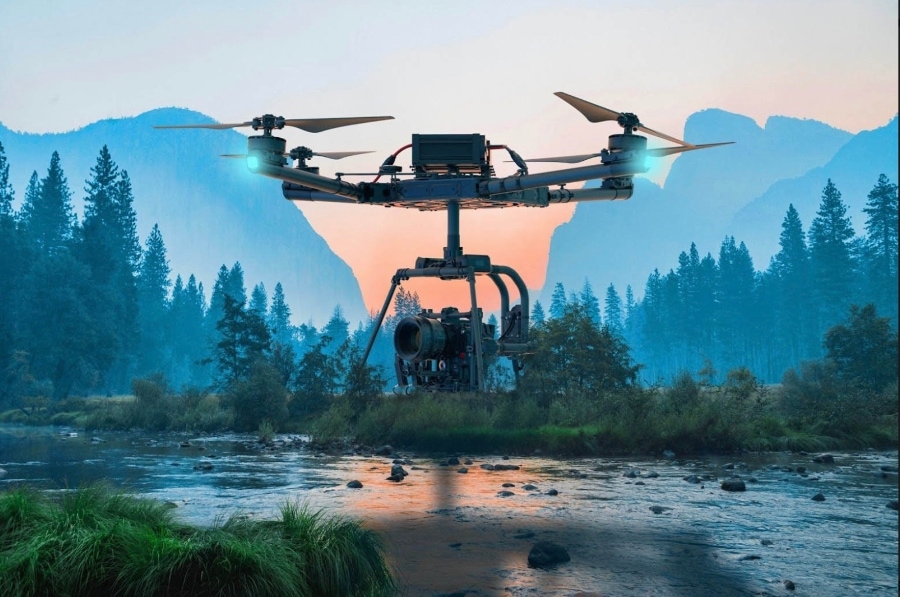
blue-uas-freefly-alta-x

The Alta X | Credit: FreeFly Systems

Here are the four phases that every drone must go through in order to get added to the list.

Phase 1—Blue UAS Framework

This initial phase involves the development of components and software. The DIU provides guidance to ensure that the final product meets their criteria.

Phase 2—Foundry Process

In this phase, design teams work on prototypes based on suggestions from federal users to create products that meet specific needs.

Phase 3—On-Ramp

This step represents a streamlined drone approval process, marking the drone as ready for government procurement. It ensures that drones are robust and secure for government use.

Phase 4 —Blue UAS Cleared List

Drones that successfully pass the previous steps are added to the DIU Blue UAS list. The list is updated regularly to include drones that meet evolving mission needs.

Key Considerations for Drone Companies

Getting your drone added to the Blue UAS list could be a game changer for your company, opening the door to lucrative government contracts and establishing your security credibility to boost sales to private companies.

But the process isn’t easy, and it can be pretty expensive.

For most companies, getting through the phases listed above is resource-intensive, requiring substantial investment in research, development, and testing to meet the DOD’s standards.

If you work at a drone company that’s thinking about going through the process, here are some things to keep in mind.

1. You’ll Need a DOD Sponsor

A DOD sponsor is required for a drone to be considered for the Blue UAS program. The sponsor should be willing to fund initial and ongoing platform compliance and cybersecurity testing and intend to purchase the platform upon its addition.

2. Your Drone Should Have a Unique Capability or Serve a Unique Need

The drone should offer a new capability or meet a need in a way not previously done by existing blue drones, and not be duplicative of UAS that are already available.

3. Commitment to Continuous Improvement

Your company should be committed to ongoing development and enhancement of the platform and its capabilities.

4. Compliance with Laws and Cybersecurity

The drones your company makes must be compliant with legal standards and thoroughly vetted for cybersecurity.

04 CHAPTER

What Is the Difference Between Green and Blue UAS?

The main differences between Green UAS and Blue UAS are:

  • The drone’s level of security compliance
  • The drone’s intended use or application
  • The drone’s certification process
  • The drone’s operational requirements
  • Procurement processes—Blue UAS are specifically approved for government purchases while Green UAS cater to a broader market, including state, local, and private industry use.

While Blue UAS are designed for secure, government-sanctioned operations, Green UAS cater to a broader, often less security-sensitive market. This distinction is crucial for government and military entities that require the highest standards of security and reliability in their unmanned aerial operations.

Green UAS

Green UAS refers to consumer or commercial drones that meet rigorous security standards and NDAA compliance. Though Green UAS’ security requirements are less stringent than Blue UAS they are still rigorously vetted, offering a more accessible certification process for non-defense applications while ensuring a high level of trustworthiness and safety.

green-uas-skyfront-perimeter-8

The Perimeter 8 | Credit: Skyfront

Green UAS:

  • Have rigorous security standards, though less stringent than Blue UAS
  • Must comply with NDAA requirements, but the geographical source of manufacturing is not a specific criterion (both Green and Blue UAS focus on security and compliance rather than manufacturing location)
  • Are intended primarily for commercial and non-defense applications, offering a more accessible certification process for drone manufacturers targeting civilian markets

Learn more about Green UAS.

Blue UAS

On other hand, Blue UAS—as we’ve covered in detail above in this guide—are drones that have met rigorous requirements established by the DOD and subsequently been approved for use by the federal government.

blue-uas-teal-golden-eagle

The Golden Eagle | Credit: Teal Drones

Blue UAS:

  • Have a very high level of security compliance
  • Comply with the NDAA’s requirements regarding supply chain security
  • Are intended for governmental uses and applications that may relate to matters of national security

Join a global community of

100,000+

drone enthusiasts.

Subscribe

Drone Pilot's Guide to DJI Mini 4 Pro

  • Navigate the DJI Fly app and flight modes with ease
  • Adjust camera and safety settings for better control
  • Understand intelligent flight features and how to use them
  • Avoid common beginner mistakes
  • Get the most out of your drone—without the guesswork

Drone Pilot's Guide to DJI Air 3S

  • Navigate the DJI Fly app and flight modes with ease
  • Adjust camera and safety settings for better control
  • Understand intelligent flight features and how to use them
  • Avoid common beginner mistakes
  • Get the most out of your drone—without the guesswork

Hands-On Flight Training

$295

400+ 5-Star Reviews

  • Team up with a knowledgeable, friendly instructor at a convenient outdoor spot — like a park or athletic field
  • Fly a top-rated drone provided for you, or bring your own to get personalized guidance
  • Spend most of your time in the air with hands-on practice — learning about composition, camera angles and cinematic motion
  • Explore the DJI Fly app and learn how to use camera settings like ISO, shutter speed and aperture
  • Unlock the power of Intelligent Flight Modes to fly smoother, smarter, and with less stress
  • Get access to our Aerial Photo & Video online course with additional exercises and pro-level editing workflows – using Snapseed, Photopea, Adobe Lightroom, DJI LightCut, and Premiere Pro

Aerial Photo & Video for Drone Pilots

$179

3,500+ 5-Star Reviews

  • How to dial in the right camera settings like ISO, shutter speed, and aperture
  • The best angles & altitudes for different types of shots (real estate, landscapes, cityscapes, and more)
  • The secret to cinematic drone motion that makes your footage feel like a Hollywood movie
  • How to enhance colors, remove distractions, and sharpen details – even in tricky lighting
  • Pro-level editing workflows – whether you’re using Lightroom, free tools, or mobile apps

The Recreational UAS Safety Test

Free

150+ 5-Star Reviews

  • Required for U.S. recreational flyers of drones
  • Launched June 2021 by the FAA
  • Takes about 30 minutes to complete
  • No prior drone knowledge needed
  • Test allows unlimited attempts to pass

Drone Mapping Essentials Workshop

$799

3,500+ 5-Star Reviews

  • Expert instruction from expert drone pilots with over 100 hours of flying experience
  • Hands-on training of live data capture and how to process deliverables for your clients
  • Peer-to-peer networking with other professional drone pilots in the mapping industry
  • Free access to the online course, Drone Mapping Essentials

Flight Skills for Drone Pilots

$99

75+ 5-Star Reviews

  • 16 engaging video lectures with key takeaways
  • Action items with concrete steps so you put into practice what you learn
  • Pre-flight checklists to help you plan your flights
  • Resource links to websites, products and software for further learning and discovery

Drone Business & Mapping Bundle

$617 $397

3,500+ 5-Star Reviews

  • Drone Pilot Ground School
    1. 1:1 support with a Part 107 exam success coach
    2. Study 100% online at your own pace
    3. Unlimited practice exams with 400+ real FAA test questions
  • Drone Mapping Essentials
    1. 100+ instructional videos focused on real-world application with high-quality videos
    2. Downloadable resources like data capture checklists to utilize in your missions
    3. Monthly live instruction with course instructor, Dylan Gorman, to go deeper on topics where you need more clarification
  • The Drone Business Blueprint
    1. Expert instruction from industry veteran, Eno Umoh, who brings real-world experience in building successful drone businesses.
    2. 14 Comprehensive modules covering everything from business setup to marketing strategies
    3. 30 Downloadable resources to apply your learning immediately

Hands-On Flight Training

$295

400+ 5-Star Reviews

  • 45-60 minutes of hands-on flying time to master orientation and flight maneuvers tailored to your skill level
  • Learn how to handle obstacles such as lost GPS, low battery charge or emergencies
  • Practice flying under various intelligent flight modes
  • Ask questions about regulations, software, flight operations management, and more

The Drone Business Blueprint

$119

3,500+ 5-Star Reviews

  • Expert instruction from industry veteran, Eno Umoh, who brings real-world experience in building successful drone businesses.
  • 14 Comprehensive modules covering everything from business setup to marketing strategies
  • 30 Downloadable resources to apply your learning immediately
  • AI tools and techniques to boost productivity and streamline your operations

Commercial Drone Business Bundle

$418 $334

4,000+ 5-Star Reviews

  • Drone Pilot Ground School
    1. 1:1 support with a Part 107 exam success coach
    2. Study 100% online at your own pace
    3. Unlimited practice exams with 400+ real FAA test questions
  • The Drone Business Blueprint
    1. Expert instruction from industry veteran, Eno Umoh, who brings real-world experience in building successful drone businesses.
    2. 14 Comprehensive modules covering everything from business setup to marketing strategies
    3. 30 Downloadable resources to apply your learning immediately

Drone Mapping Essentials

$199

3,500+ 5-Star Reviews

  • 100+ instructional videos focused on real-world application with high-quality videos
  • Downloadable resources like data capture checklists to utilize in your missions
  • Quizzes to test your knowledge so you can succeed in the field
  • Monthly live instruction with course instructor, Dylan Gorman, to go deeper on topics where you need more clarification

Drone Pilot Pro Bundle

$713 $499

3,500+ 5-Star Reviews

  • Drone Pilot Ground School
    1. 1:1 support with a Part 107 exam success coach
    2. Study 100% online at your own pace
    3. Unlimited practice exams with 400+ real FAA test questions
  • Drone Pilot Skill Builder
    1. 16 engaging video lectures with key takeaways
    2. Action items with concrete steps so you put into practice what you learn
  • Hands-On Flight Training
    1. 45-60 minutes of hands-on flying time to master orientation and flight maneuvers tailored to your skill level

Drone Pilot Ground School

$299

4,000+ 5-Star Reviews

  • 1:1 support with a Part 107 exam success coach
  • Study 100% online at your own pace
  • Unlimited practice exams with 400+ real FAA test questions
  • Personalized study plans, virtual flashcards, and 12-page cram sheet
  • Weekly webinars on acing the Part 107 exam and monthly webinars to elevate your journey post-certification