Best Drone for Kids: A Practical Buying Guide for Parents
BY Zacc Dukowitz
6 May 2026Buying a drone for a kid who’s just learning to fly is completely different than buying one for an adult beginner.
For kids, the best choice is the drone that matches the child’s age, attention span, flying environment, and ability to handle mistakes.
For younger kids, that usually means something small, simple, and durable enough to survive indoor crashes.
For older kids and teens, it can mean a lightweight camera drone that teaches real flight control without being too expensive.
This guide to finding the best drone for kids is for parents, grandparents, and anyone else trying to choose a drone that’s fun, practical, and safe.
Here’s everything we cover:
- Best Drones for Kids: Quick Picks
- Best First Drone for Most Kids: DJI Neo 2
- Best Lower-Cost Camera Drone for Kids: DJI Neo
- Best Crash-Tolerant Drone for Younger Kids: Holy Stone HS210
- Best Camera Drone for Older Kids and Teens: DJI Mini 4K
- Best Drone for Learning Real Flight Controls: Potensic ATOM 3
- Best Safer Step-Up Drone for Teens: DJI Flip
- 4 Steps to Help You Find the Right Drone for Your Child
- Drones for Kids FAQ
Best Drones for Kids: Quick Picks
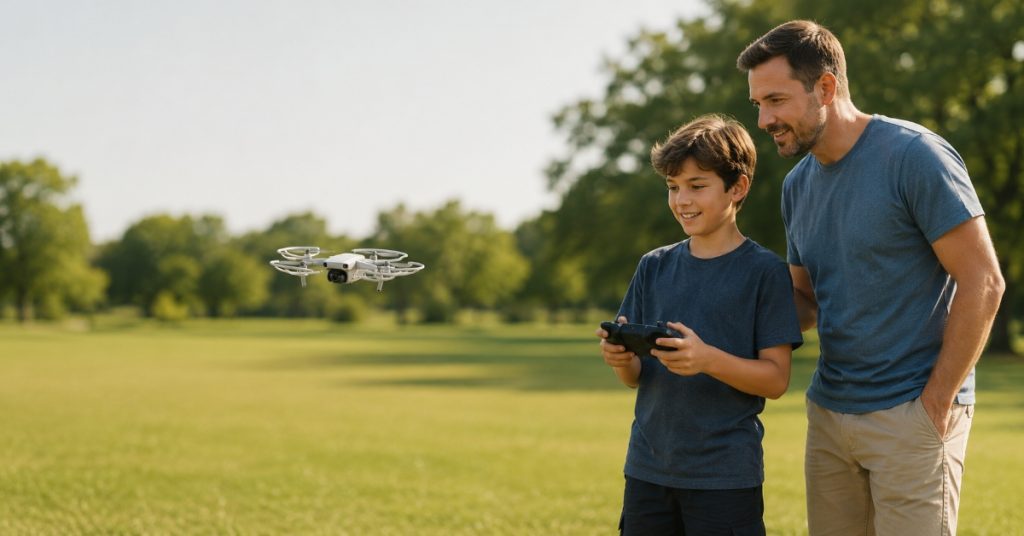
If you want a quick answer, this is the simplest way to think about it: the best drone for a kid depends on how and where they’ll actually fly it.
Most buying mistakes happen when someone picks a drone based on features instead of actual use.
A drone that works well outdoors can be frustrating indoors. And a drone that’s great for a teen may be a bad fit for a younger child.
Here are our recommendations:
| Best for | Drone | Why it works |
|---|---|---|
| Most kids | DJI Neo 2 | Simple controls, stable flight, and built-in prop protection |
| Lower-cost camera drone | DJI Neo | Similar beginner-friendly experience at a lower price |
| Younger kids and indoor flying | Prop-guarded toy drone | More durable and better suited for crashes and tight spaces |
| Older kids and teens | DJI Mini 4K | Real camera drone experience without moving into higher-end territory |
| Learning real flight control | Potensic ATOM 3 | GPS-assisted flying with beginner-friendly smart features |
| Safer step-up drone | DJI Flip | More capable camera drone with full propeller protection |
If you’re unsure, start simpler than you think you need.
Most kids benefit from learning basic control on an easy, forgiving drone before moving up to something more capable.
Best First Drone for Most Kids: DJI Neo 2
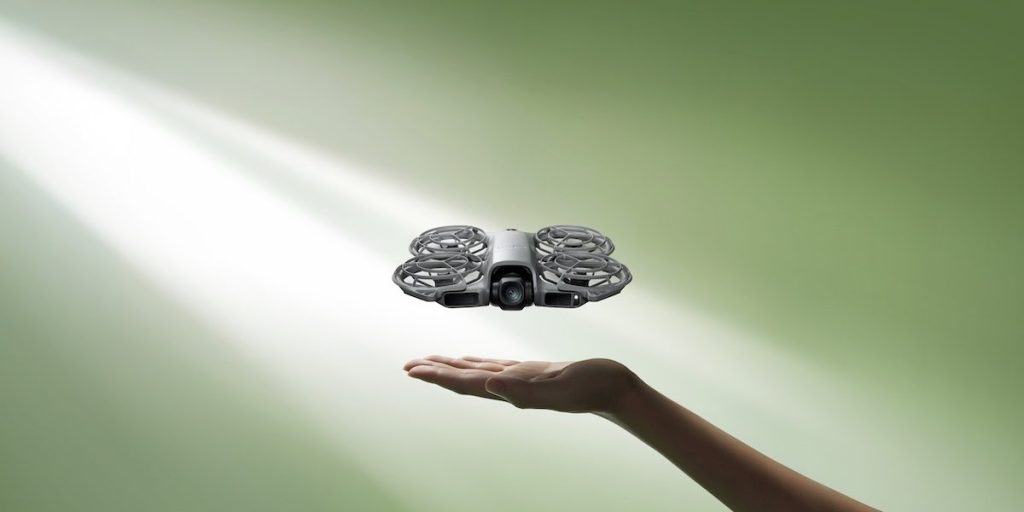
The DJI Neo 2 | Credit: DJI
- Best for: Older kids or supervised beginners who are ready for a real camera drone
- Skip if: The child will mainly fly indoors or needs a drone that can handle repeated crashes
- Why it stands out: Simple automated flight, stable hovering, and built-in propeller protection
The DJI Neo 2 is a solid option for kids because it’s so easy to fly. In fact, it basically flies itself.
Here’s a quick overview of the Neo 2’s main features:
- Flight style: Mostly automated
- Best environment: Open outdoor areas
- Safety features: Built-in propeller protection
- Camera: 4K video
Instead of relying on manual flight control, the Neo 2 leans heavily on automated flight modes and stable hovering. That makes it much easier for a beginner to get usable results early, which is a big part of keeping kids interested.
In practice, this means a kid can launch the drone, capture a short clip or photo, and land it without needing to manage every stick movement perfectly. That’s very different from older beginner drones, where small mistakes quickly turn into crashes.
It also has built-in propeller protection, which matters more than most people expect. Early flights often involve small collisions, and that extra protection helps reduce both damage and risk.
Check pricing for the DJI Neo 2.
Best Lower-Cost Camera Drone for Kids: DJI Neo

The DJI Neo | Credit: DJI
- Best for: Families who want a simple beginner camera drone at a lower price
- Skip if: The child will mainly fly indoors or needs something highly crash-tolerant
- Why it stands out: Beginner-friendly automated flying without the higher cost of newer models
The DJI Neo sits just below the Neo 2. For many families, it’s the more practical starting point simply because it costs less while still delivering a reliable flying experience.
Here’s a quick overview of the Neo’s main features:
- Flight style: Mostly automated
- Best environment: Open outdoor areas
- Safety features: Enclosed propeller guards
- Camera: 4K video
The Neo is built around the same core idea: make flying simple enough that beginners can focus on getting comfortable instead of constantly correcting mistakes. As with the Neo 2, stable hovering and automated flight modes do most of the work, which helps reduce frustration early on.
In real use, most kids won’t notice a major difference between the Neo and the Neo 2 when they’re just learning. They’ll still be able to take off, capture footage, and land without needing precise control inputs.
Where the difference shows up is in refinement—things like flight performance, camera quality, and overall polish. Those improvements matter, but they’re not always critical for a first drone.
Check pricing for the DJI Neo.
Best Crash-Tolerant Drone for Younger Kids: Holy Stone HS210
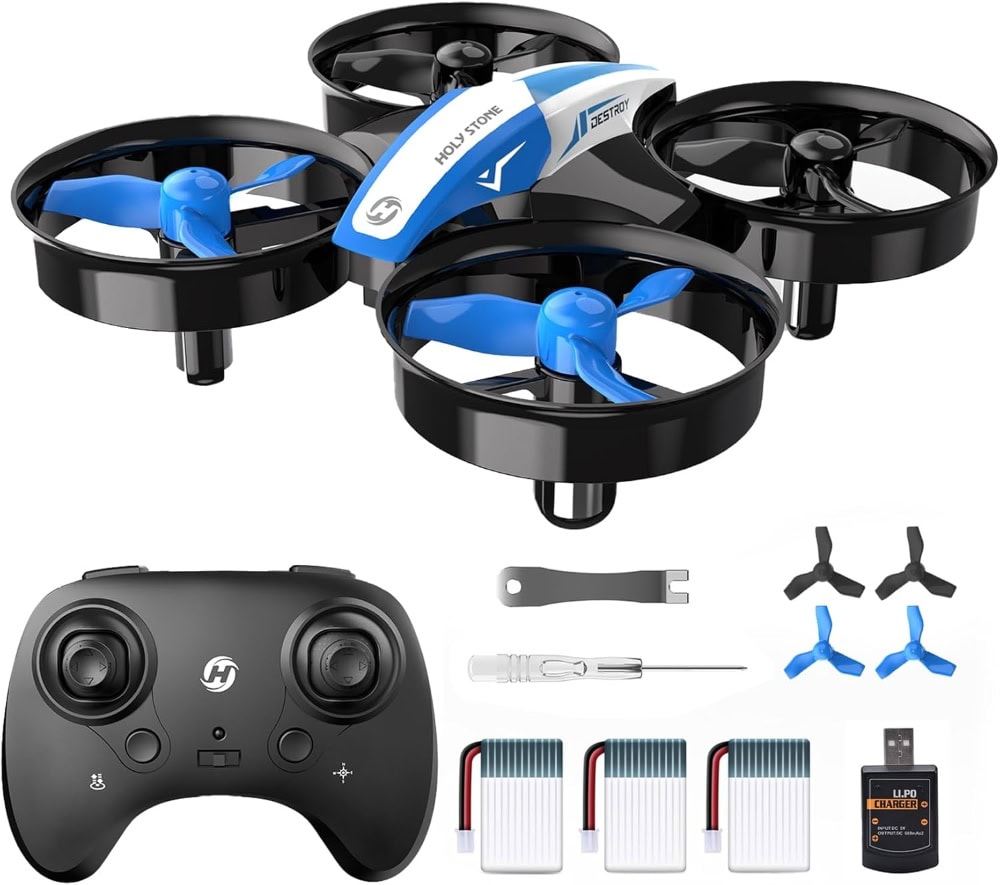
The Holy Stone HS210 | Credit: Holy Stone
- Best for: Younger kids, indoor flying, and early learning
- Skip if: The child wants a real camera drone or plans to fly mostly outdoors
- Why it stands out: Durable design, full propeller guards, and simple controls built for beginners
For younger kids, the Holy Stone HS210 is the kind of drone that usually makes the most sense.
Here’s a quick overview of the Holy Stone HS210’s main features:
- Flight style: Manual beginner flying
- Best environment: Indoors
- Safety features: Full propeller guards
- Crash tolerance: High
The Holy Stone HS210 is designed for the reality of how kids actually learn to fly: short flights, uneven control inputs, and frequent bumps into walls or furniture. The lightweight design and full propeller guards help it survive those early mistakes without immediately breaking.
That matters more than camera quality at this stage. A durable drone that keeps flying after a rough landing is usually much more fun for a younger child than a more advanced drone that feels stressful to use.
The HS210 also flies slowly and uses simple controls, which makes it easier to manage indoors. That slower, more forgiving flight style is one reason small toy drones work so well for early learning.
Check pricing for the Holy Stone HS210.
Best Camera Drone for Older Kids and Teens: DJI Mini 4K
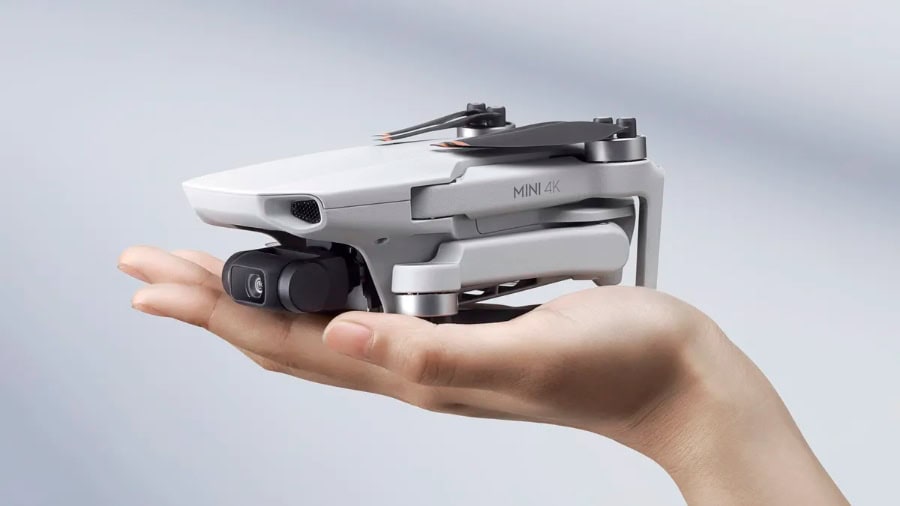
The DJI Mini 4K | Credit: DJI
- Best for: Older kids and teens who want to learn real drone flying and capture quality video
- Skip if: The child mainly flies indoors or still needs a highly crash-tolerant drone
- Why it stands out: Stable GPS flying, solid camera quality, and a true camera-drone experience
The DJI Mini 4K is where things shift from “toy” to “real drone.” It flies more like what you’d expect from a modern camera drone, with stable hovering, GPS positioning, and a camera that’s actually worth using.
That makes it a good fit for older kids and teens who are ready to learn how to fly with intention—not just keep a drone in the air, but control it smoothly and predictably.
Here’s a quick overview of the Mini 4K’s main features:
- Flight style: Traditional GPS-assisted flying
- Best environment: Open outdoor areas
- Safety features: Stable hovering and Return to Home
- Camera: 4K/30fps video
The biggest benefit for kids in flying a drone like the Mini 4K is that it teaches real skills.
Compared to the DJI Neo, the Mini 4K is a better fit for a teen who wants to learn traditional drone control and take better aerial footage. Compared to the DJI Flip, it is less protected, so it makes more sense in open outdoor spaces than in tighter areas.
The tradeoff is that it’s not forgiving in the same way as a toy drone. Crashes can damage it, and it’s not suited for indoor flying.
Check pricing for the DJI Mini 4K.
Best Drone for Learning Real Flight Controls: Potensic ATOM 3

The Potensic ATOM 3 | Credit: Potensic
- Best for: Older kids and beginners who want GPS-assisted flying without spending DJI-level money
- Skip if: The child mainly flies indoors or needs a highly crash-tolerant drone
- Why it stands out: Stable outdoor flying, beginner-friendly smart features, and a more traditional controller-based experience
The Potensic ATOM 3 sits in a useful middle ground. It behaves like a real camera drone—with GPS-assisted stability and controlled outdoor flight—but typically costs less than comparable DJI options.
That makes it a good option for older kids who are ready to learn more traditional drone control. They still get help from GPS stabilization, but they also have to practice smooth inputs, positioning, orientation, and landing.
Here’s a quick overview of the Potensic ATOM 3’s main features:
- Flight style: GPS-assisted controller flying
- Best environment: Open outdoor areas
- Safety features: Stable hovering and Return to Home
- Camera: 4K video
In real-world use, flying a beginner drone like the ATOM 3 is where beginners start to develop real pilot skills. The drone can hold position, which reduces frustration, but it still rewards careful control and awareness.
Compared to toy drones, the ATOM 3 is much more capable and better suited for outdoor flying. Compared to DJI’s beginner-friendly options, it gives you a similar kind of GPS-assisted learning experience while staying positioned as a lower-cost alternative.
Check pricing for the Potensic ATOM 3.
Best Safer Step-Up Drone for Teens: DJI Flip
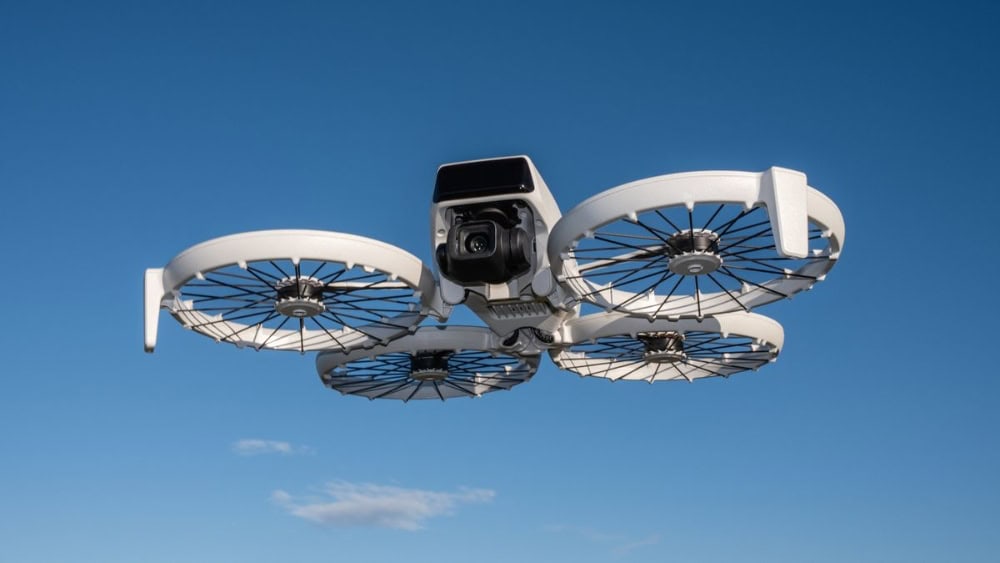
The DJI Flip | Credit: DJI
- Best for: Responsible teens who want a more capable camera drone with added safety features
- Skip if: The child is still learning basic flight control or mainly flies indoors
- Why it stands out: Full propeller protection combined with a more advanced camera-drone experience
The DJI Flip stands out because it approaches safety differently than most camera drones. Instead of exposed propellers, it uses a foldable design with full propeller protection, which reduces the risk of propeller contact during flight.
That makes it an interesting option for teens who are ready for a more capable drone but still benefit from an extra margin of safety—especially in environments where space is limited or where small mistakes are more likely.
Here’s a quick overview of the DJI Flip’s main features:
- Flight style: Traditional GPS-assisted flying
- Best environment: Outdoor flying in open or moderately tight spaces
- Safety features: Full propeller protection
- Camera: 4K/60fps HDR video
In practice, the Flip flies more like a standard camera drone than a toy or beginner drone.
It still requires awareness, control, and good decision-making. But the added protection doesn’t make it crash-proof. It just makes minor contact less likely to cause damage or injury.
This is best thought of as a step-up option. It’s more advanced than a beginner drone, but more forgiving than a traditional camera drone with exposed propellers.
Check pricing for the DJI Flip.
4 Steps to Help You Find the Right Drone for Your Child
Once you’ve seen the options, the decision usually comes down to a few practical considerations.
The goal isn’t to find the most advanced drone—it’s to find the one that fits how it will actually be used.
Here are four steps to help you choose.
1. Start with the child’s age, maturity, and patience level
Age can be a useful starting point, but maturity and patience are just as important—after all, some younger kids can be really patient, and some older kids can be really impulsive.
Thinking about age first, younger kids usually do better with simple, durable drones that can handle mistakes. That often means a small indoor drone with propeller guards, slower controls, and a lower price point.
And many older kids, including teens, can do well with more capable drones.
If you’re unsure, start simple.
A drone that’s easy to fly and hard to break—and inexpensive enough that breaking it won’t matter that much—will teach more than a drone that you’re worried about breaking.
2. Match the drone to where it will actually be flown
This is one of the most important decisions.
Indoor flying favors small, slow drones with propeller protection. A living room, hallway, or basement isn’t a good place for a more capable camera drone, even if the drone is technically easy to fly.
Outdoor flying is different. In an open park or field, a GPS-assisted drone can be much easier to control because it can hold position, hover steadily, and return home if needed.
But outdoor drones also need more space, better judgment, and calmer weather.
3. Decide whether this should be a toy drone or a real camera drone
Toy drones are designed for learning, short flights, and mistakes.
They usually don’t have great cameras, long flight times, or advanced features. And that’s on purpose, since their job is to help kids learn basic control without making every crash expensive.
Camera drones, on the other hand, are designed for performance. They’re more stable, more capable, and made for shooting photos and video. But they also require more care, more space, more skill, and more supervision.
If the goal is to fly indoors, learn stick control, or just have fun without much risk, start with a toy drone.
If the child is older, wants to capture real footage, and will be flying outdoors with supervision, a lightweight camera drone makes more sense.
4. Prioritize safety and ease of use over impressive specs
For kids, the best features are usually the ones that reduce stress during the first few flights.
Propeller guards, stable hovering, simple controls, slow flight modes, and easy takeoff and landing matter more than camera resolution or long-range transmission.
Those are the features that help a kid stay in control and keep the drone in one piece.
Self-flying features like those on the Neo and Neo 2 can also help. But they don’t replace supervision or good flying habits.
Drones for Kids FAQ
Here are answers to some of the most commonly asked questions around finding the best drones for kids.
What is the best drone for a 10-year-old?
For most 10-year-olds, a simple beginner drone or a small camera drone used outdoors with supervision is a good starting point. If there’s any uncertainty, a crash-tolerant toy drone is usually the safer choice.
What is the best drone for a teenager?
Teens can usually handle a lightweight camera drone like the DJI Mini 4K. These drones are stable and capable, but still manageable for beginners who are ready to learn real control.
Can kids fly drones legally?
Yes, but an adult is typically responsible for making sure the rules are followed. Flights fall under recreational drone guidelines.
Do kids need to take TRUST?
For younger kids, a parent or responsible adult should take TRUST, keep the certificate, and supervise the flight.
UAV Coach is an FAA-approved Test Administrator of TRUST with over 300,000 recreational drone flyers trained. Take the TRUST with us now.
Should I buy a toy drone or a camera drone for a kid?
If you’re unsure, start with a toy drone. It’s more forgiving and better for learning. Camera drones make more sense once the child is comfortable controlling the drone.
Are drones under 250 grams better for kids?
In many cases, yes. They’re lighter, easier to handle, and don’t require FAA registration for recreational use.