Best New Nighttime Drone? DJI Launches LiDAR-Enabled Air 3S
BY Zacc Dukowitz
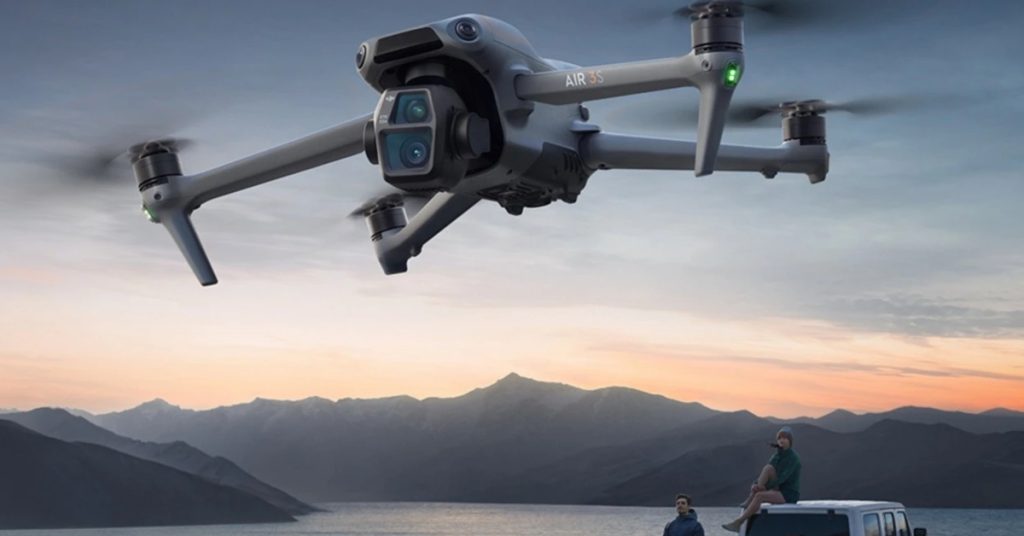
16 October 2024DJI has launched the Air 3S, a dual-camera drone that comes with LiDAR sensing to help it fly at night and in low light conditions.

Like the Air 3, the Air 3S has two cameras and is a solid prosumer platform for shooting aerial stills and video.
But it has two major upgrades, which make it especially suited for night operations:
- Improved image quality—especially for shooting in low light conditions—with a new 1″ CMOS sensor. (As we mentioned, the drone has two sensors—the other one has stayed the same from the Air 3.)
- Nighttime obstacle avoidance, with support from a front-facing LiDAR sensor.
The overall theme with the improvements is clear: the Air 3S is DJI’s answer for low light / nighttime shooting. The Air 3 already performed well in low light conditions, and the Air 3S builds very intentionally on that foundation.
How Much Is the Air 3S?
The Air 3S is selling for $1,099 with the DJI RC-N3 controller (that’s the base package).
It’s also selling in two different Fly More Combos, one that costs $1,399 and one that costs $1,599.
Key Specs & Features for the Air 3S
The new Air 3S is shaping up to be the best consumer nighttime drone out there.
Here are the key specs for the Air 3S:
- Battery life. 45 minutes
- Transmission range. 12.4 miles (20 km)
- Primary camera. 1″ CMOS sensor, 50 MP
- Medium tele camera. 1/1.3″CMOS sensor, 48 MP
- Obstacle avoidance. Omnidirectional sensing with APAS and LiDAR
- Video recording. 4K/120fps, 10-bit D-Log M
- Storage. 42GB internal storage
- Return to Home (RTH). Smart RTH with enhanced night safety
- Weight. 720 grams
Air 3 vs. Air 3S
Wondering how the Air 3 compares to the Air 3S? Here’s a side-by-side comparison:
| Feature | DJI Air 3S | DJI Air 3 |
|---|---|---|
| Camera (Wide-Angle) | 1″ CMOS | 1/1.3″ CMOS |
| Camera (Medium Tele) | 1/1.3″ CMOS 3x | 1/1.3″ CMOS 3x |
| Video Capabilities | 4K/120fps Slow Motion | 4K/100fps Slow Motion |
| Max Pixels | 50 MP | 48 MP |
| Weight | 724 g | 720 g |
| Max Flight Time | 45 mins | 46 mins |
| Obstacle Sensing | Nightscape Omnidirectional | Omnidirectional |
| Max Video Transmission Range (FCC) | 20 km | 20 km |
| Max Video Transmission Range (CE) | 10 km | 10 km |
| Internal Storage | 42 GB | 8 GB |
Key upgrades:
- Air 3S has a 1″ CMOS where the Air 3 has a 1/1.3″ CMOS
- Air 3S has “nightscape” omnidirectional obstacle sensing
- Air 3S internal storage is massively upgraded, from 8 GB to 42 GB*
This internal storage upgrade could be due to DJI dropping file syncing for all of its drones in the U.S.
LiDAR-Supported Obstacle Avoidance—Especially for Flying at Night
When images of the Air 3S were first leaked, several people noticed what looked like a strange sensor on the front of the drone.
This led to a lot of speculation—could it be a LiDAR sensor?
Now we know that the mystery sensor was indeed LiDAR. The sensor is there to improve the Air 3S’ obstacle avoidance, helping it fly better in general, and especially at night.
The Air 3S also has infrared sensors and vision sensors, making for a combination that helps it fly better in low light conditions.
The DJI Air 3S takes our Air Series to new heights by offering professional features like dual primary cameras and omnidirectional obstacle sensing.
– Ferdinand Wolf, DJI’s Product Experience Director.
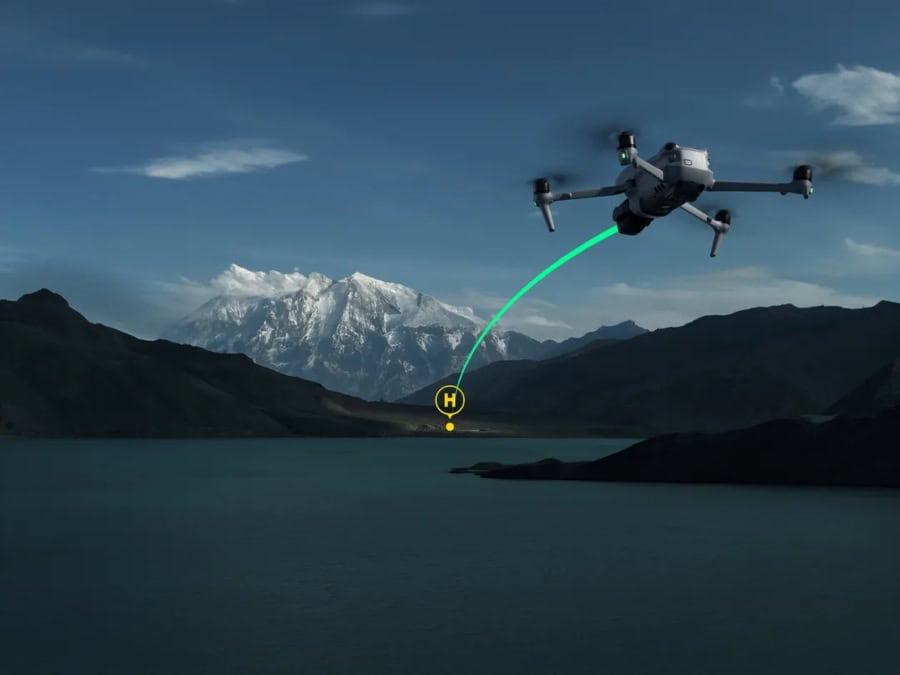
Another feature that helps the Air 3S fly at night is a new, next-generation Smart RTH (Return-to-Home) system, which works at night and in GPS-denied environments.
Want to learn more about the DJI Air 3S? Visit DJI’s website for the full rundown.