What Will DJI and Others Launch in 2026? Predictions & Rumors for the Year
BY Zacc Dukowitz
8 January 20262026 is going to be a strange year for drone launches.
That’s because the FCC has effectively blocked new foreign-made drones from being sold in the U.S.
The key word here is new. Any drone that already has FCC approval can still be imported—only new foreign-made drones can’t.
To make this concrete, the DJI Mavic 4 Pro and Flyability’s Elios 3 can still be imported, even though they’re made by foreign companies, because they already have FCC approval. But a future Mavic 5 or Elios 4 couldn’t be without special permission.
This is important two of the four DJI drones on our list of predictions will be blocked by the new FCC change. (The DJI Avata 360 and the DJI Lito X1 squeaked by, getting FCC approval in late 2025.)
All this being said, here are our predictions for drone launches in 2026:
A Note on Non-Chinese Foreign Drone Companies
It seems likely that non-Chinese foreign companies like Flyability, which is based in Switzerland, may be granted exemptions and allowed to import new drones to the U.S. But specific details haven’t been shared yet, and we don’t know exactly what the future will hold for non-Chinese foreign drone companies.
DJI Avata 360
Launch rating: Very likely
Has received FCC approval: Yes
Rumored release date: This month
If there’s one unannounced DJI drone that feels closest to launch heading into 2026, it’s the Avata 360.
The Avata 360 is expected to combine DJI’s ducted cinewhoop-style FPV drone with an integrated 360-degree camera—the Osmo 360—allowing pilots to capture immersive footage and reframe shots in post.
👉An acquaintance dropped by for a cup of tea.😋 It’s been a while since we last met, DJI Avata 360.🤭#djiavata360 pic.twitter.com/l2c2jKBsy4
— Igor Bogdanov (@Quadro_News) January 7, 2026
Here’s everything we know about the Avata 360 so far:
- 360-degree camera. Integrated Osmo 360 spherical camera designed for full reframing in post.
- Avata-style airframe. Ducted FPV design focused on stability and accessibility.
- Creative FPV focus. Positioned for content creators rather than freestyle FPV pilots.
- FCC authorization. Filed with the FCC, increasing the likelihood of a U.S. launch.
DJI Lito X1
Launch rating: Likely
Has received FCC approval: Yes
Rumored release date: Q1 or Q2 of 2026
One of the more enigmatic DJI rumors heading into 2026 is the Lito X1 (or just the Lito 1), a name that may represent an internal codename rather than a finalized product.
Repeated references suggest DJI may be experimenting with a new product concept or form factor rather than refreshing an existing line.
👉So, there’s a small clue. Although it doesn’t tell us much, it’s still something…DJI Lito X1.)#dji #DJILitoX1 pic.twitter.com/p19byDtYPG
— Igor Bogdanov (@Quadro_News) November 30, 2025
Here’s everything we know about the Lito X1 so far:
- Unclear positioning. Does not map cleanly to an existing DJI product family.
- Possible new form factor. Could represent a compact or experimental platform.
- Early-stage development. Lack of specs or filings suggests it’s further out.
DJI Air 4
Launch rating: Somewhat likely
Has received FCC approval: No
Rumored release date: Q3 or Q4 of 2026
The Air series has been one of DJI’s most reliable and popular lineups, and based on DJI’s historical release cadence, a next-generation Air drone feels overdue heading into 2026.
While concrete leaks remain limited, multiple insiders expect DJI to refresh the Air line with targeted upgrades in 2026.
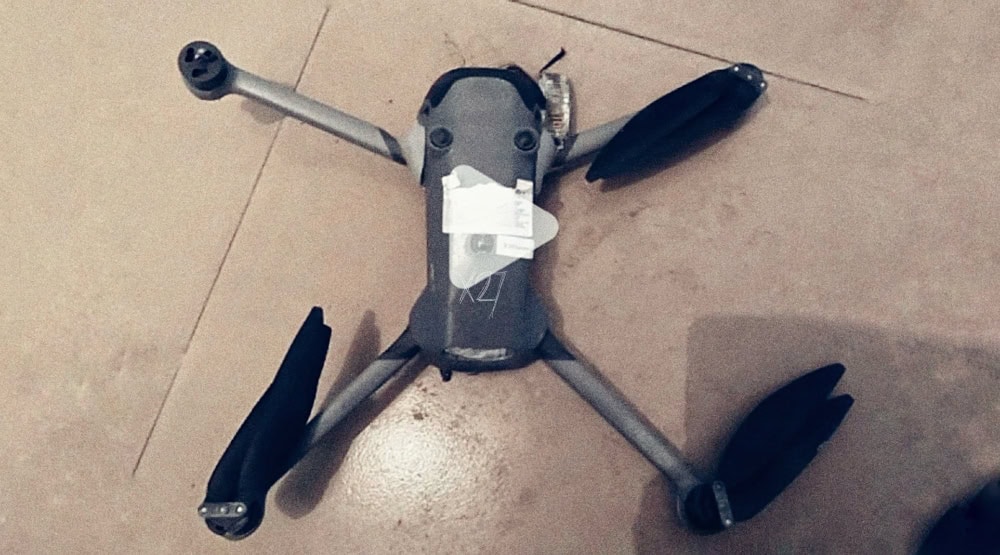
A leaked screenshot believed to show an early Air 4 prototype
Here’s everything we know about the Air 4 so far:
- Camera system. Likely retains a 1/1.3″–class sensor with improved image processing and low-light performance.
- Obstacle avoidance. Refinements to omnidirectional sensing and avoidance software.
- Flight time. Incremental gains over the Air 3 through efficiency improvements.
- Target user. Aimed at advanced hobbyists and prosumers.
DJI Avata 3
Launch rating: Somewhat likely
Has received FCC approval: No
Rumored release date: Q3 or Q4 of 2026
Even with the Avata 360 expected to introduce a new creative direction, a more traditional next-generation Avata still appears to be on DJI’s roadmap.
In the post below from reliable leaker OsitaLV, all of the other drones listed have now launched. This makes it seem likely that the Avata 3 is also in production, though DJI may have pushed it back to get the Avata 360 to market in order to compete with Antigravity’s A1.
Avata 3, Neo 2, Mini 5 Pro, M400A is on the way.
Avata 3 will get a bigger CMOS.
M400A may keep the same design of M350 but more radar and sensors.— OsitaLV (@OsitaLV) May 24, 2025
Here’s everything we know about the Avata 3 so far:
- Larger camera sensor. Expected upgrade for better dynamic range and low-light performance.
- Refined Avata airframe. Continued focus on safety and approachability.
- Incremental flight improvements. Refinements to tuning, stability, and flight behavior.
- FPV ecosystem support. Compatibility with DJI FPV goggles and controllers.
Drones Expected to Ship in 2026
Three drones were announced in 2025 but didn’t start shipping just yet—Skydio’s F10 and R10 and HoverAir’s Aqua.
Keep reading to learn about each one.
Skydio F10
Credit: Skydio
Target industry: Defense, government, ISR
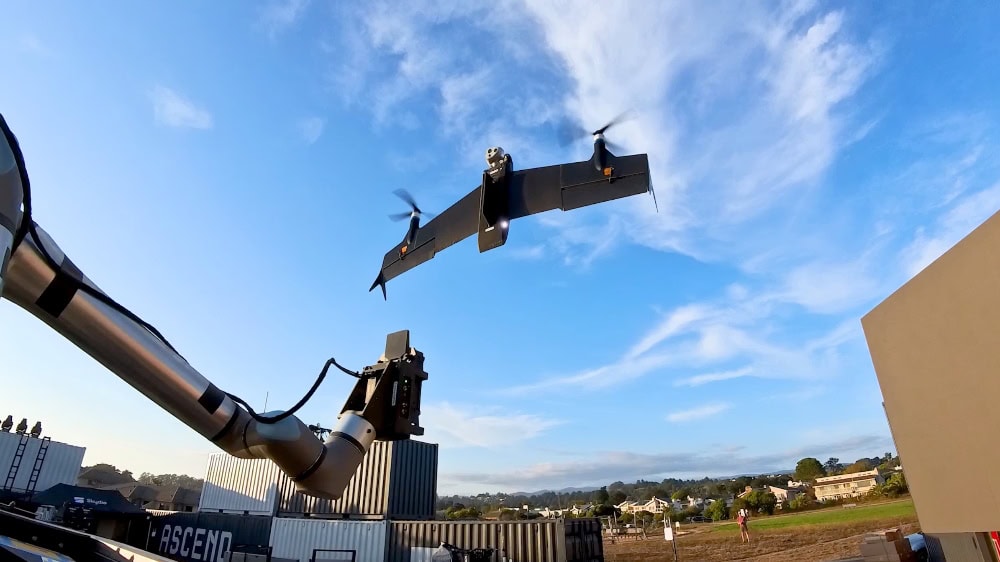
The Skydio F10 is a long-range, fixed-wing platform designed for high-endurance government and public safety missions.
It combines extended endurance and high speed with robust autonomy to support missions far beyond the reach of traditional multirotor drones.
Here are its key specs and features:
- Weight. Approximately 10.8 lbs (4.9 kg).
- Flight time. Up to 90+ minutes per flight on a single battery.
- Max speed. Over 80 mph for rapid response.
- Robotic Takeoff and Landing (RTOL). Vertical takeoff and landing capabilities for operation in tight or remote spaces without runways.
- Autonomy. Fully autonomous operations managed via AI-driven flight control.
- Long-range streaming. Delivers stable, high-quality video feed over dozens of miles to command centers and ground teams.
Skydio R10
Credit: Skydio
Target industry: Public safety
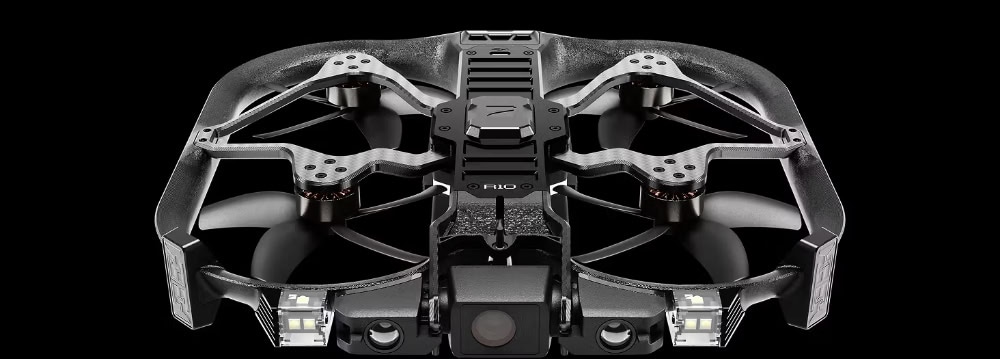
Law enforcement agencies have already used the R10 in real-world field testing to replace riskier manual room clearing and to provide continuous situational awareness during active incidents.
Here are its key specs and features:
- Weight. 1.73 lbs (785 g)
- Flight time. Up to 20 minutes per battery, plus Perch Mode enabling up to 3 hours of stationary streaming
- Camera. 4K with a 1″ sensor optimized for low-light imaging (12.5MP photos, 30 fps video)
- Obstacle avoidance. Full obstacle avoidance with 180° forward navigation cameras and NightSense for zero-light environments
- Two-way comms. Built-in 82 dB speaker and microphone for clear two-way communication from within structures to allow for negotiation with kidnappers, barricaded suspects, and similar scenarios.
- Floodlights. High-power LED floodlights for bright illumination of dark or smoke-filled areas.
- Perch Mode. Allows the drone to land and stream video for up to 3 hours continuously, providing persistent surveillance without draining the battery.
HoverAir Aqua
Credit: HoverAir
Target industry: Consumer, content creators
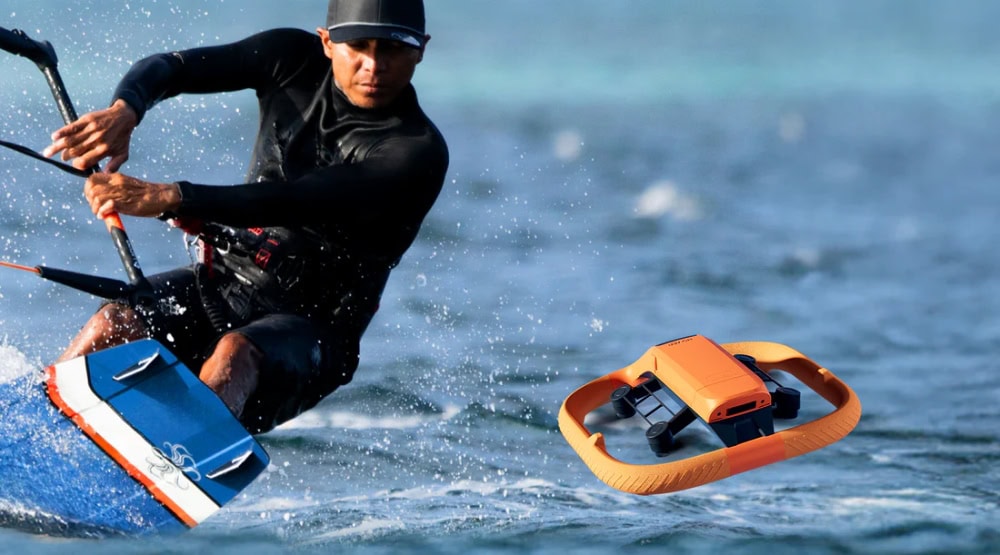
The HoverAir Aqua is a waterproof, self-flying camera drone designed for casual users and action sports. Although already announced, broader availability and adoption are expected in 2026.
Here are its key specs and features:
- Weight. Under 249 grams (no FAA registration required).
- Waterproof design. First self-flying selfie drone made to take off, land, and fully operate on water; floats like a lifebuoy.
- Camera. 1/1.3″ sensor with 4K video at 100 fps.
- Waterproofing. Over 15 features including hydrophobic materials and vacuum seals.
- Wind resistance. Handles gusty winds up to 33 knots.
- Use cases. Designed to follow users on water adventures like surfing and kayaking.