Why Did the FAA Miss Another BVLOS Deadline? A New Report Has Answers
BY Zacc Dukowitz
15 July 2025Last month, President Trump issued an Executive Order calling for the FAA to release a draft BVLOS rule within 30 days.
July 6 marked the 30-day deadline, but the FAA still hasn’t released its rule.
This isn’t the first missed deadline for the BVLOS rule. According to the FAA Reauthorization Act of 2024, the FAA was first supposed to release a BVLOS rule (often called the Part 108) on September 16, 2024—10 months ago.
So where do things stand? And what’s causing the delays?
Fortunately for us, a new report from the Office of Inspector General (OIG) sheds light on why progress has been slow—and what’s happening behind the scenes.
What’s Causing the Delays?
According to the OIG report, the core issue isn’t a lack of effort or interest—it’s execution.
Put simply, the FAA’s current waiver process wasn’t built for scale, and trying to stretch it across the growing volume of BVLOS use cases just isn’t working.
That means the FAA needs to imagine an entirely new way to handle BVLOS approvals. But the path to finding that new way has been bogged down by organizational gaps, staffing shortages, and a mismatch between the FAA’s approval methods and the pace of innovation in the drone sector.
Here are the key findings from the report:
- Outdated internal processes. The current waiver process, originally designed for limited Part 107 operations, doesn’t scale well when applied to complex BVLOS scenarios. Each application often requires extensive individual assessment—sometimes involving coordination with national security and air traffic stakeholders—leading to long delays and repetitive reviews.
- Staffing and resource limitations. The FAA hasn’t been able to keep pace with industry demand. A shortage of trained personnel with the right technical expertise has made it difficult to process advanced BVLOS applications quickly or develop a comprehensive rulemaking framework.
- No standardized evaluation framework. The FAA still lacks a universal risk-assessment model or performance-based metrics for BVLOS operations, making it hard to fairly or efficiently evaluate different drone platforms or CONOPS (Concepts of Operations).
- Interagency coordination challenges. BVLOS flight intersects with concerns from other federal entities, like the Department of Homeland Security and the Department of Defense. The need for multiple agencies to review each request has created additional bottlenecks.
Where Do Things Stand with the BVLOS Rule?
Despite the delays, there has been incremental progress toward creating a new rule.
This forward motion has been made largely through the BEYOND program, through which the FAA collaborates with drone industry partners, and has access to real-world testbed operations.
But the OIG makes it clear that the FAA is still far from ready to roll out a rule that supports routine, scalable BVLOS operations.
Here’s the current status, based on the OIG’s findings:
- Insufficient safety data. Part of the FAA’s hesitance to publish a rule comes down to risk. While test flights and demonstration programs have provided valuable insight, the agency still views the dataset as insufficient—particularly for operations over people or in shared airspace. The OIG notes that test programs were often hampered by delays tied to COVID-19, weather, and shifting project scopes.
- No timeline for the next draft. Although the Trump administration’s Executive Order set a deadline of July 6 for a Notice of Proposed Rulemaking (NPRM)*, the day came and went without a document. As of now, the FAA has not provided a revised schedule or clarified reasons for the missed deadline.
Bottom line, despite the urgency from Trump’s EO and missed deadlines, we may still have a long wait before a draft rule is made public.
*A Notice of Proposed Rulemaking (NPRM) is a formal public notice issued by a federal agency to announce a regulation, and solicits public feedback on that regulation. After the NPRM is published, the public can submit comments, which the agency must review and consider before issuing a final rule.
Why Does the BVLOS Rule Matter?
Right now, it’s incredibly hard to get permission to fly BVLOS.
Navigating the process on your own is complex and, for many, almost impossible. But hiring a company to navigate it requires deep pockets—it could cost about $100,000 to get a third party like Skydio Regulatory Services to help your company acquire a BVLOS waiver.
The FAA’s BVLOS rule promises to change all of this, making it much easier for everyone to fly BVLOS.
The reason everyone wants this is because BVLOS is seen as a type of operation that will supercharge the drone industry, unlocking or expanding a host of use cases:
- Drone-in-a-box automated monitoring and inspections
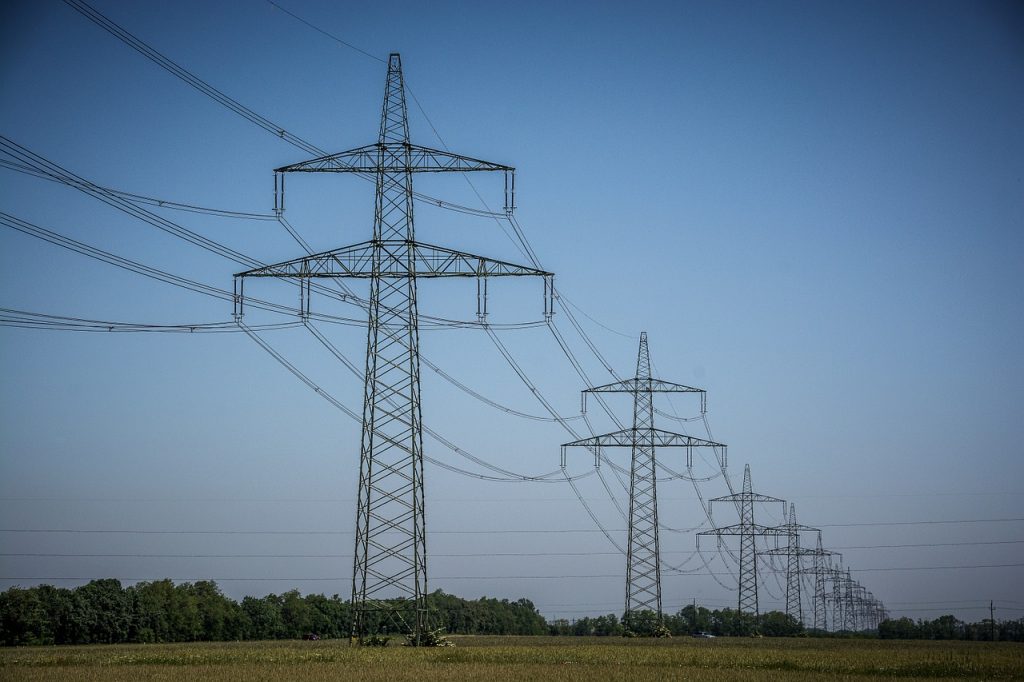
- Long linear infrastructure inspection (power lines, pipelines, railways, etc.)
- Large-area mapping, surveying, and land management
- Industrial facility and perimeter security
- Agricultural monitoring and crop management
- Search and rescue and disaster response
- Environmental and scientific research
- Drone delivery and logistics
Normalizing BVLOS has been a dream for some time. Right now, it feels like we are so close to making it a reality—but it looks like we’ll have to wait a bit longer before it actually arrives.